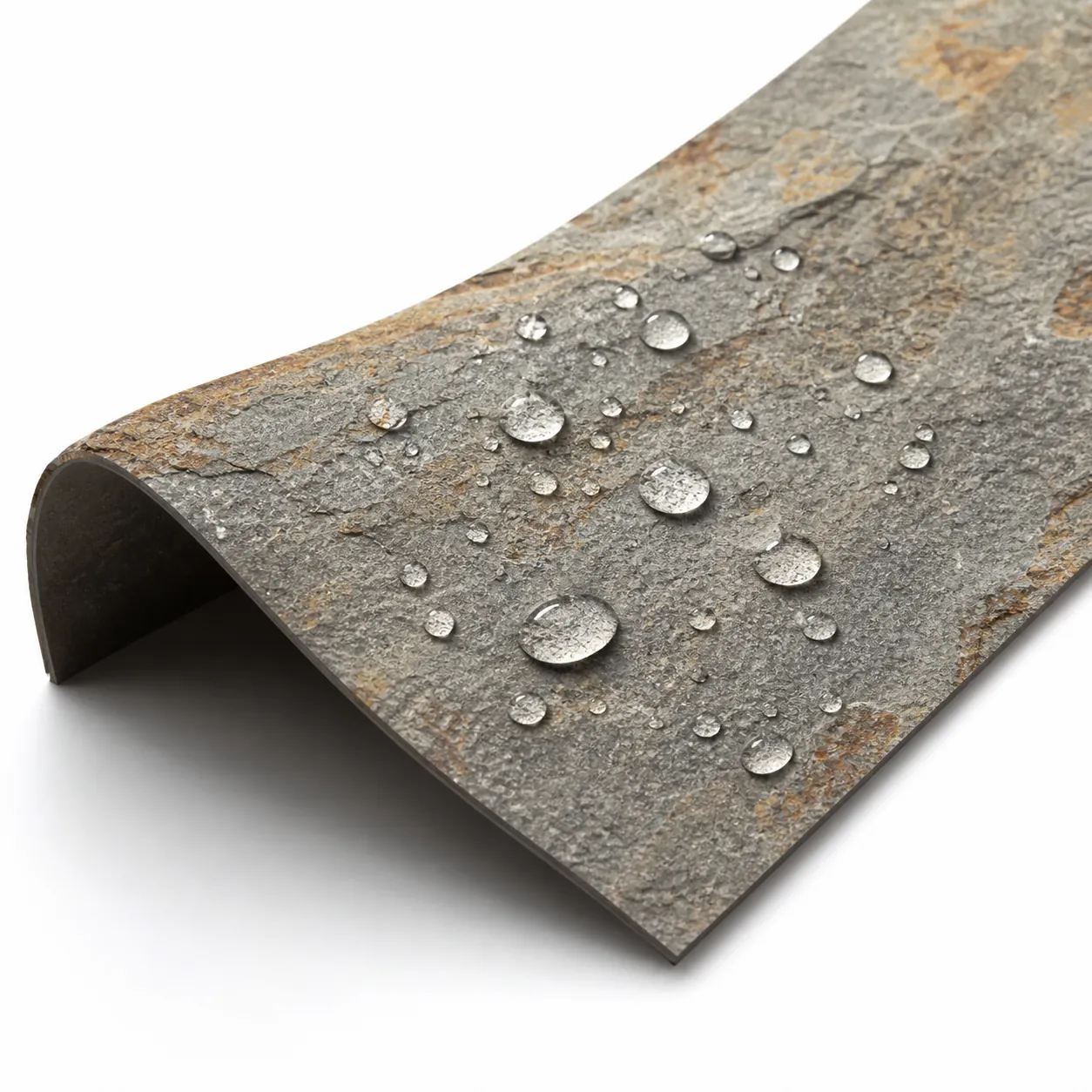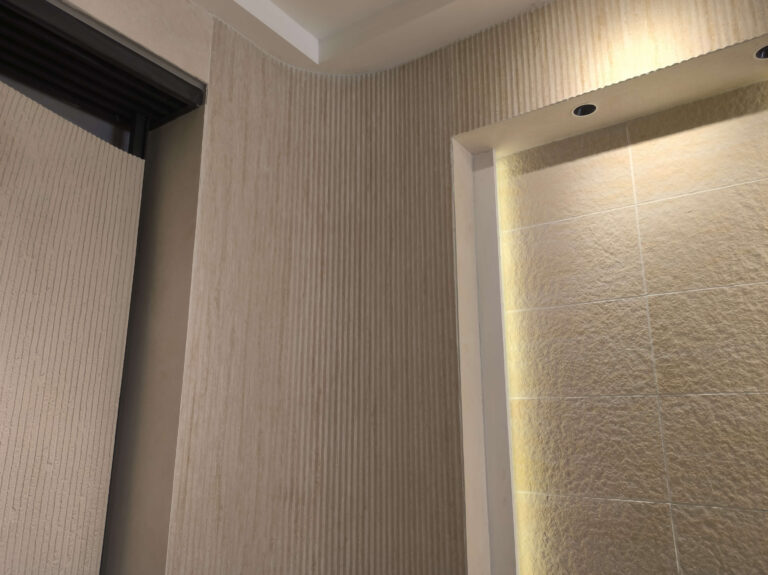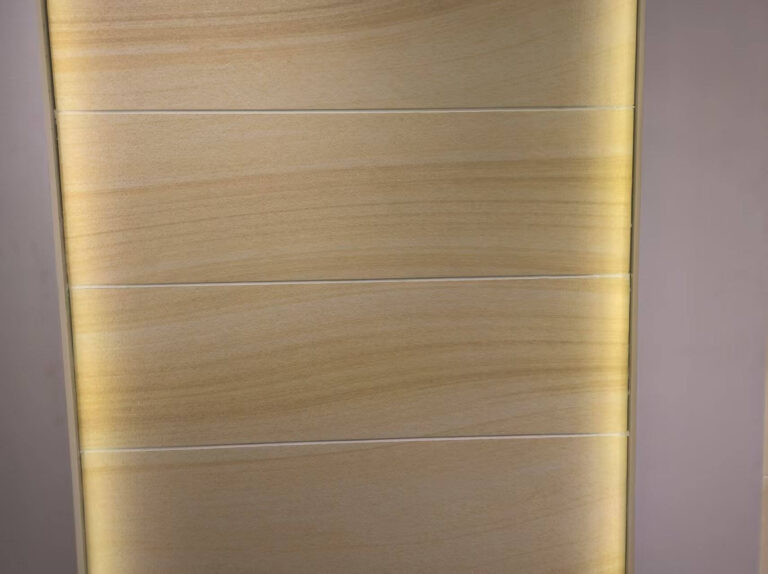
A translucent stone panel is a thin mineral sheet that lets light pass through the face. The sheet is built from natural stone powder, an inorganic gel and a fibreglass mesh. That build carries the grain of real stone at a fraction of the weight of a slab. The thin build is what allows the glow.
The thinnest grade of the panel sits at about 2mm, and it is the one used for backlit work. Light behind the sheet turns the surface into a soft, glowing field, and the pattern reads as a lit vein of stone rather than a flat colour. That effect is the reason a designer picks the material.
A lit stone surface is a study in light and depth. The sheet guides the glow, and the pattern does the rest.
What Translucent Stone Panels Are
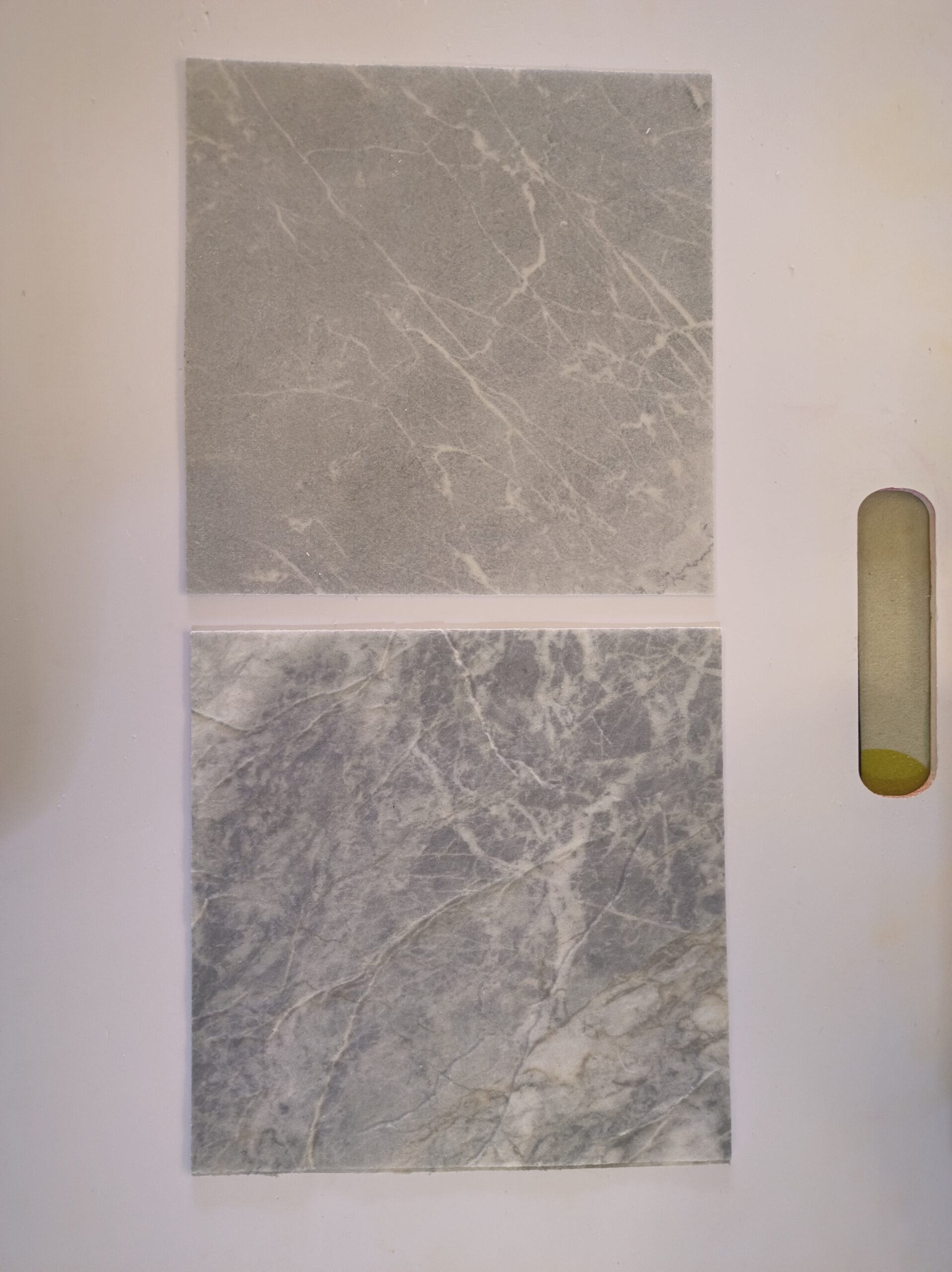
A translucent stone panel is the same mineral sheet as the standard grade, pressed to a thinner build. Natural stone powder gives the face its pattern, an inorganic gel binds the mix and a fibreglass mesh holds the sheet together across the whole width.
In the standard grade the build is dense enough to block light, so the sheet reads as an opaque stone face. In the translucent grade the same ingredients are pressed thinner, and a small amount of light passes from the back to the face.
The low weight carries across the range. A panel runs from 1.5 to 6 kg per square metre, or about one fifth of a quarried slab. A lit wall adds little load to the frame behind it.
The sheet is made at 1200 by 600mm and can reach 1200 by 2900mm. It bends, it travels flat and it cuts like the standard panel, so the same tools and the same fixing method apply. The full family sits on the 유연석 패널 페이지.
The translucent grade keeps the same mineral face as the solid sheet. A client who has seen the standard panel already knows the surface, and the lit version adds a glow rather than a new material. That consistency makes it easy to mix a solid wall and a lit wall in one room.
How Light Passes Through the Panel
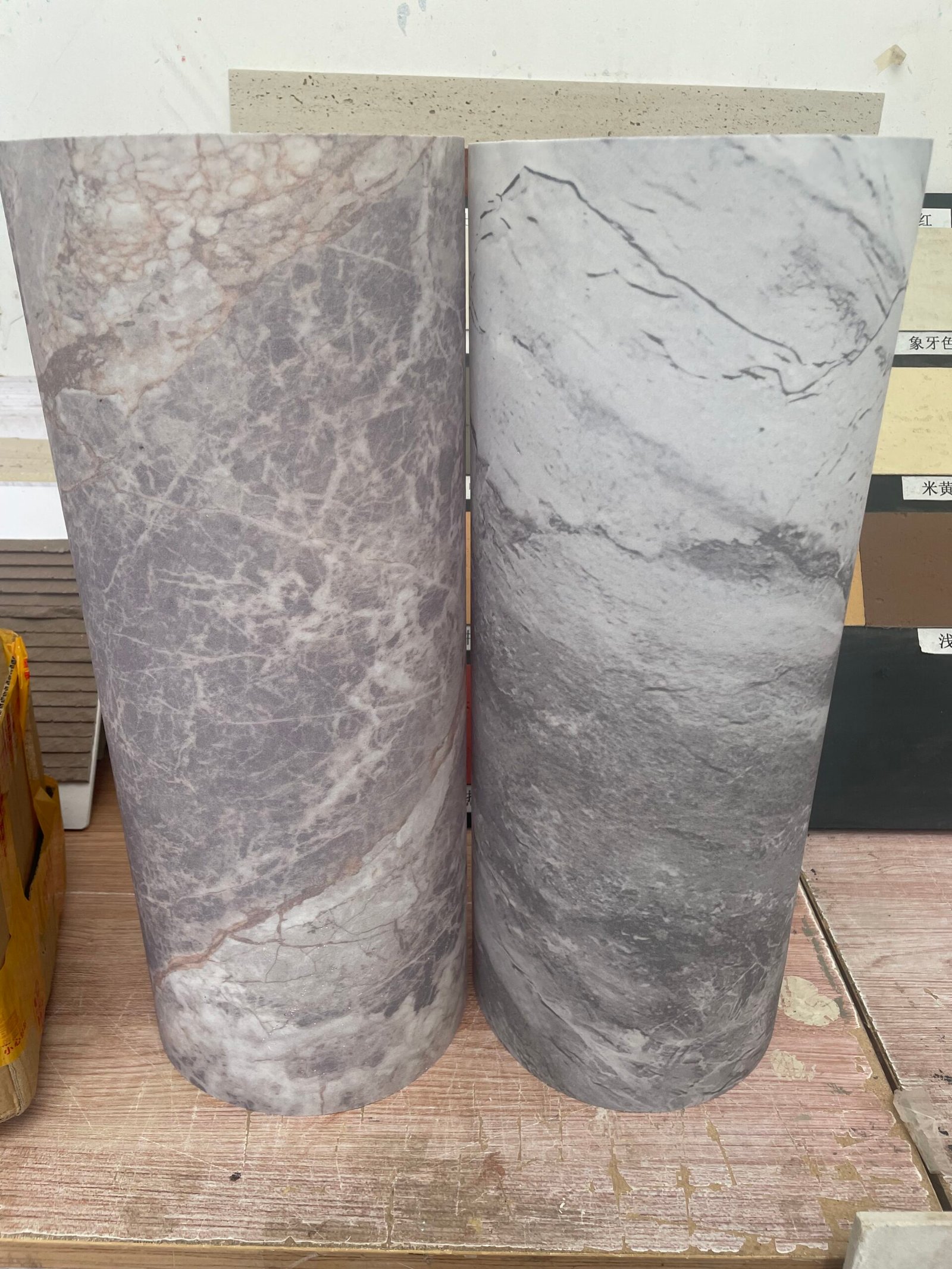
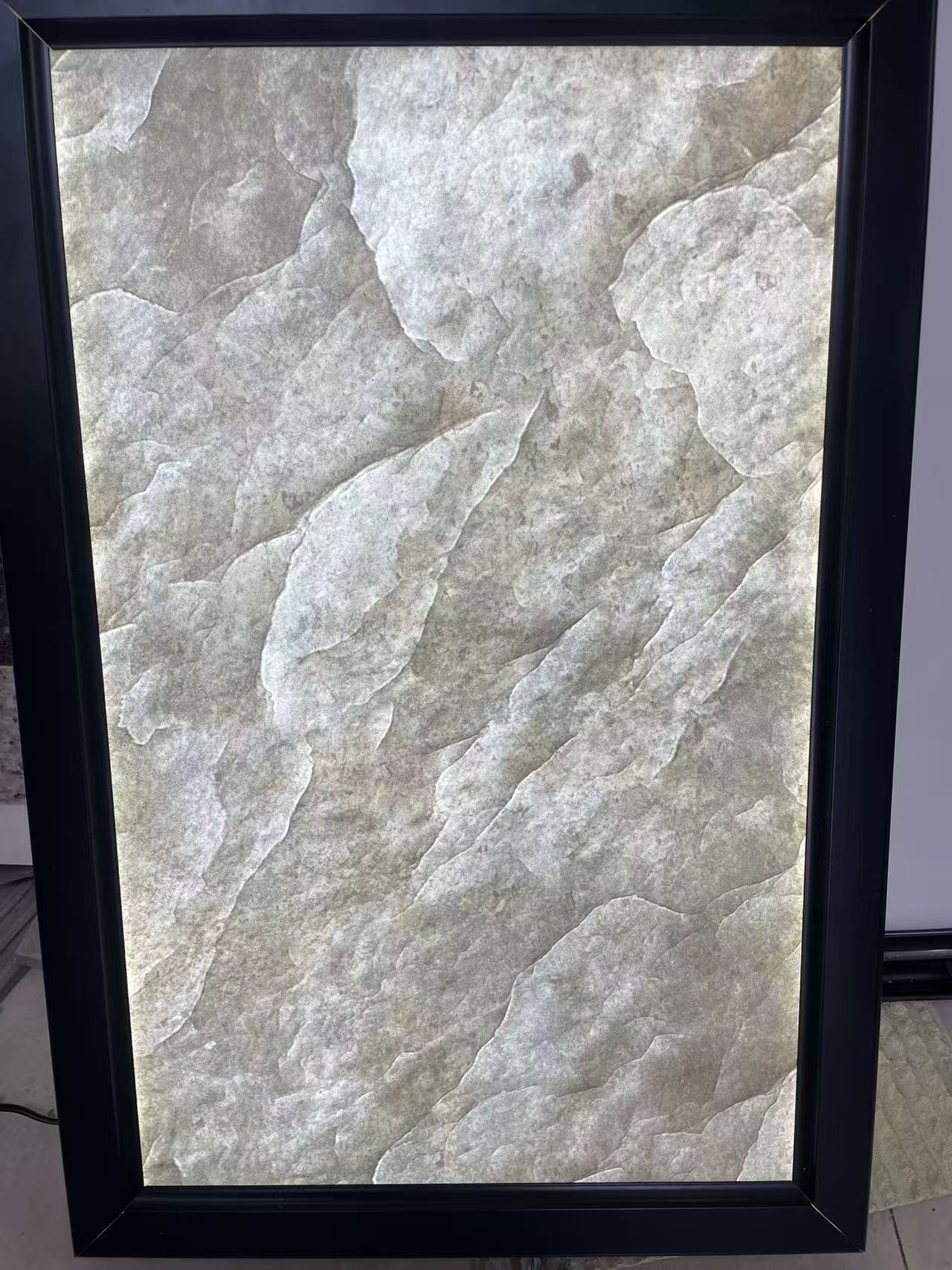
Light behind the sheet is the whole point of the material. The panel sits a short distance from a light box or an LED strip, and the light travels through the mineral face instead of bouncing off it. The glow depends on the build, because the same stone powder, inorganic gel and fibreglass mesh are pressed thin to let light through.
The effect depends on the depth of the sheet and the density of the pattern. The 2mm grade lets the most light through, at the thin end of the 2mm to 8mm range. A thinner area passes more light, and a denser vein holds it back, so the surface reads as a soft map of light and shadow.
The mineral build scatters the light rather than passing it in a hard beam. That gives an even glow across the face, which is why a backlit wall reads as calm at close range and at a distance.
A dark backing stops light from leaking at the edges. The frame and the fixings sit behind the panel, so the face shows only the stone and the glow, with no bright line at the joint.
The distance between the sheet and the light shapes the result. A short gap keeps the light tight and even, and a wider gap spreads it into a softer wash. The framer sets that gap before the sheet goes on, because a change later means taking the panel down.
The 2mm Translucent Panel Grade
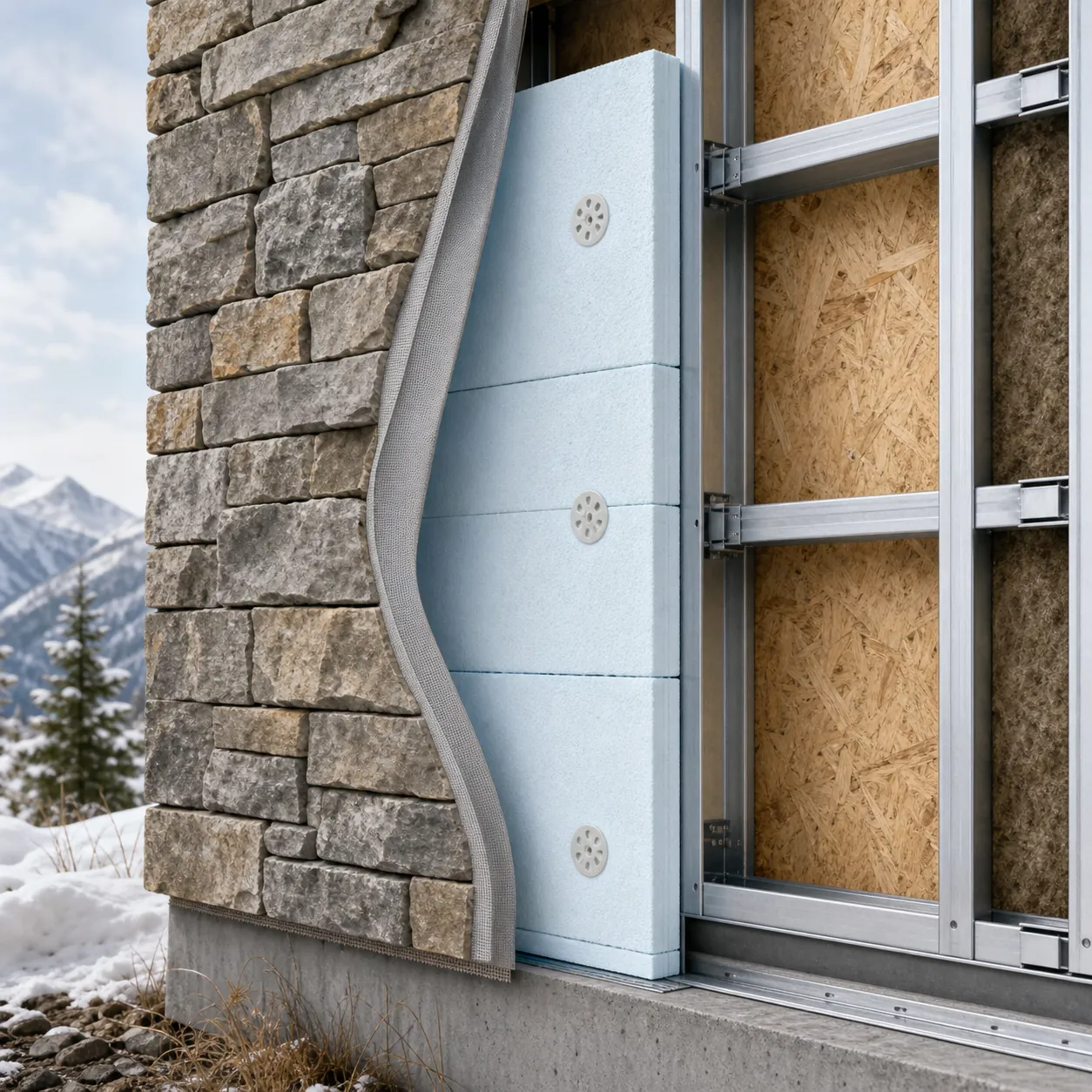
The 2mm sheet is the thinnest grade in the range, and it is the one made for backlit work. The full range runs from 2mm to 8mm, and the depth sets how much light passes and how the surface behaves.
A 2mm panel bends the most of any grade. The general minimum bend radius is about 200mm, so the thin sheet follows a column or a curve while it glows, and the light wraps the same curve.
The thin build also keeps the lit face light. A 2mm panel sits at the low end of the 1.5 to 6 kg per square metre band. A lit wall needs a light frame rather than a heavy one.
The thinnest grade is also the one used for a floating panel, where a small gap around the sheet lets the light read as a halo. The curve and the glow work together on a rounded column. The limit behind any curve is set out in the guide to minimum bend radius.
The thin sheet also cuts cleanly, so a curve can be shaped on site. A fitter trims the 2mm panel with a knife where a corner needs a tight turn. The offcut can cover a small return, which keeps waste low on a fitted wall.
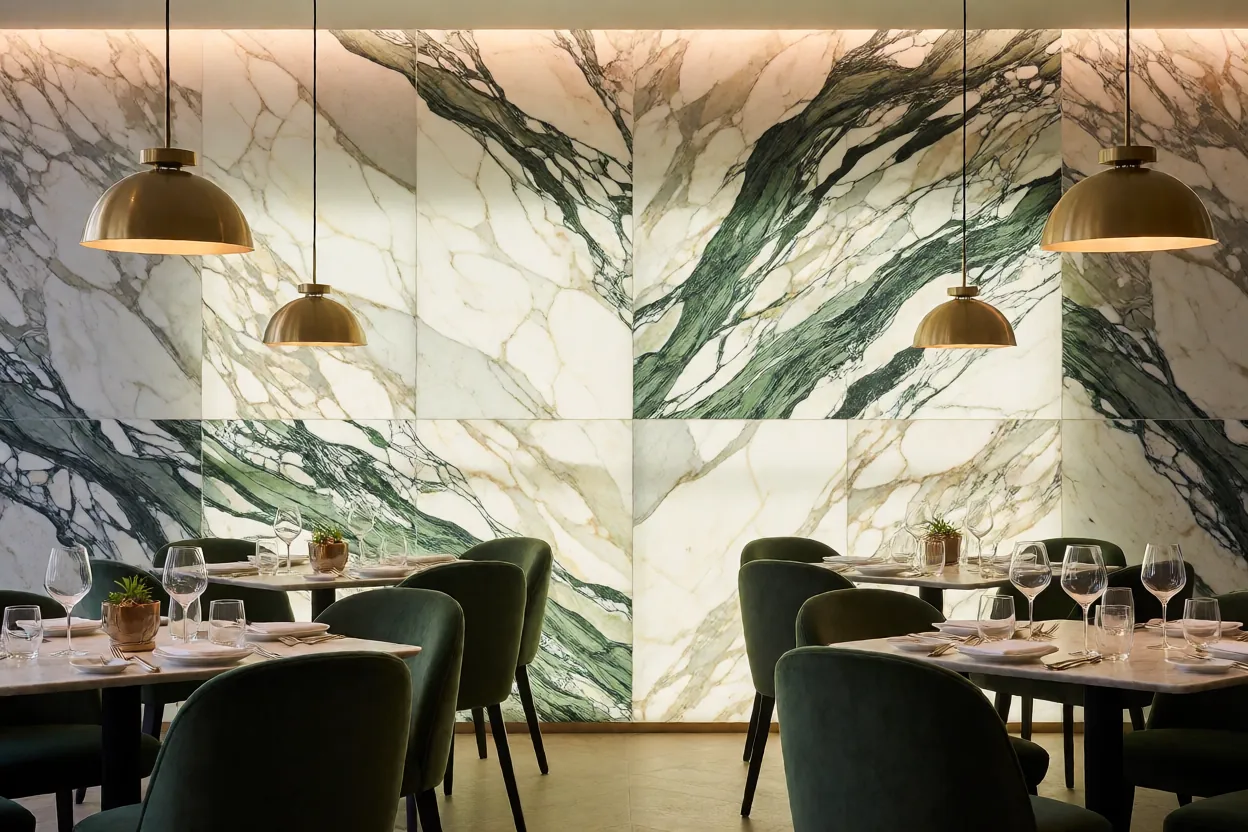
Backlit Design Where It Works
A lit sheet suits a reception desk, a bar front, a hotel lobby and a spa room. In each space the surface is seen up close, so the glow carries the design and the stone pattern carries the detail.
A feature wall behind a bed or a sofa is a common use. The panel runs from floor to ceiling, and the light behind it lifts the stone pattern into view at night while the room is dim.
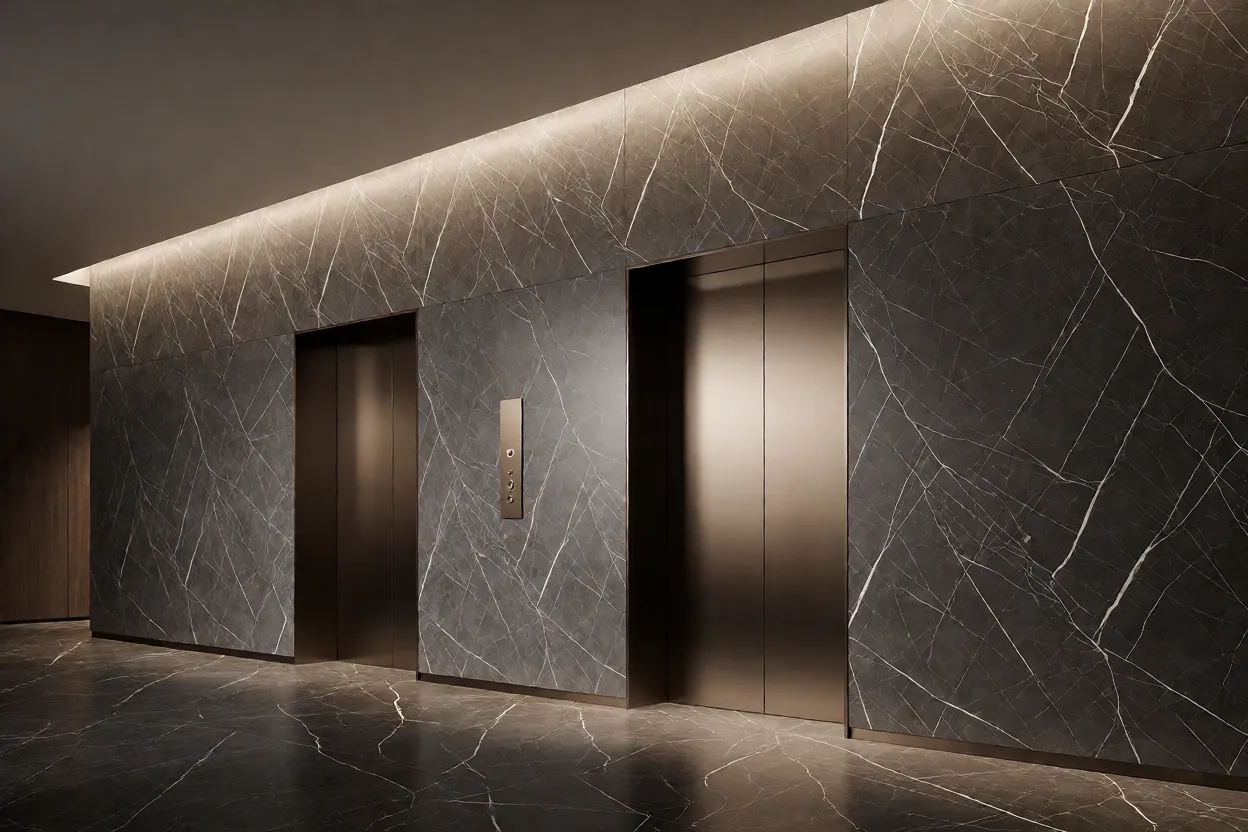
A retail counter and a lift lobby also take the lit panel, because a glowing surface draws the eye to a brand or a direction sign. The sheet is an indoor material, and it is planned as part of the light scheme.
A lit wall fixes over a frame with the light behind the sheet, and that method is covered in the notes on backlit panel installation.
A lit wall is often paired with a solid wall in the same room. The contrast does the work: the solid face rests the eye, and the lit face pulls it back. A designer sets the balance across the plan rather than on a single wall.
Matching Light Colour and Intensity
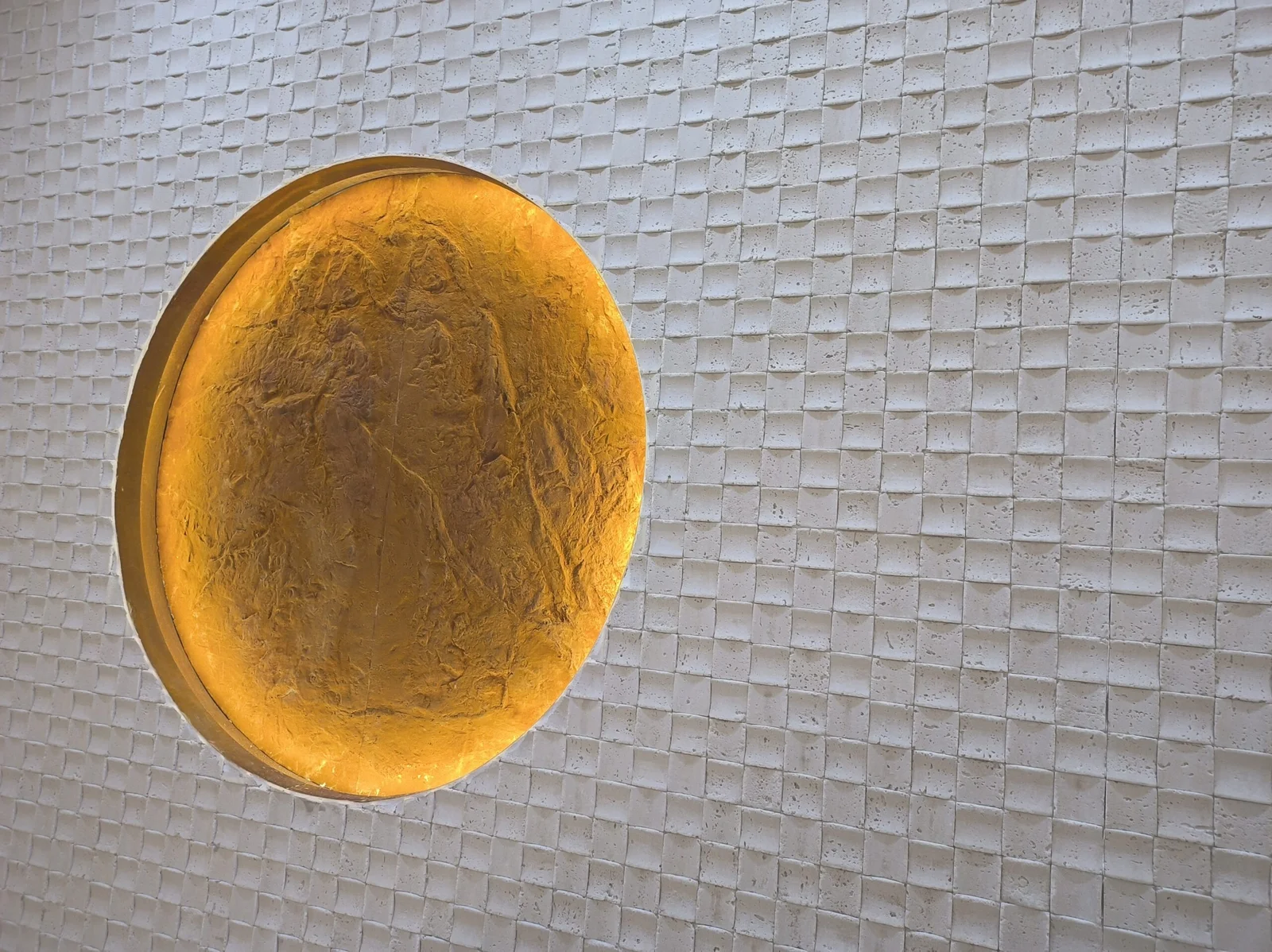
Light colour sets the mood of the wall. A warm white keeps the stone tone true to the sample, while a cool white reads as a cleaner and brighter surface behind the same sheet.
Fire class holds across the range. The flexible stone is tested to ASTM E84 Class A, with a flame spread index of 25 or below, and to EN 13501-1 Class A2 for European projects. That matters where a lit wall sits in a public or a commercial space.
The pattern guides the light. A sheet with an even vein glows in a flat and calm field, and a sheet with a bold vein reads as a more graphic surface. The choice is made from a sample under a real light.
A dimmer gives control across the day. A low setting at night and a brighter setting for a service period let one wall carry two moods without a change to the sheet.
A test in the space beats a test on a desk. Light from a nearby window, a ceiling fitting or a screen changes how the sheet reads, so a sample is best viewed in the room it will serve. That check takes a few minutes and avoids a surprise on the fitted wall.
Specifying and Ordering Translucent Panels

샘플은 첫 번째 단계입니다. 표준 패턴은 2~3일, 주문자 색상 맞춤형은 약 7일 내에 견본 제작이 가능합니다. 유광 석재 패널은 빛을 등받이로 한 샘플이 외관을 가장 정확히 판단할 수 있습니다.
표준 최소 주문 수량은 300제곱미터이며, 프로젝트가 대량 발주 전에 우선 물량을 필요로 할 경우 항공 운송으로 소량 공급이 가능합니다.
| 사양 | 도면 |
|---|---|
| 최박형 두께 | 2mm |
| 전체 두께 범위 | 2mm~8mm |
| 패널 크기 | 1200×600mm |
| 최대 크기 | 1200×2900mm |
| 중량 범위 | 평방미터당 1.5~6kg |
| 최소 굽힘 반경 | 약 200mm |
| 불연 등급 | ASTM E84 Class A, EN 13501-1 A2 |
| 최소 주문량 | 300㎡ |
납기는 주문일에 따라 산정됩니다. 최초 주문은 15~20업일, 재주문은 10~15업일 내에 출고되며, 선박발송(FOB 상하이) 시 계약금 40%와 잔금 입금 시 잔금 정산 방식을 따릅니다.
본 제품 시트는 기본 1200×600mm 규격으로 생산되며, 최대 1200×2900mm까지 연장 가능합니다. 이 때문에 높은 벽면은 패널 이음보다 일체화된 형태로 계획하는 것이 일반적입니다. 사이즈, 깊이, 조도 조건을 설계 초기에 명확히 정해두면 추후 변경 사항을 방지할 수 있습니다. 깊이 규정이 유보된 경우 유연석 두께 가이드를 참조하세요.
대규모 프로젝트에서는 샘플 보드를 제작하는 것이 유리합니다. 박스 라이트 위에 패널을-short-run으로 설치하면 전체 효과를 확인할 수 있으며, 주문 전에 클라이언트가 톤을 승인할 수 있습니다. 보드 하나로 깊이감과 패턴을 한눈에 확인할 수 있습니다. 패턴과 등급이 이미 확정되어 있기 때문에 재주문은 첫 주문보다 훨씬 빠르게 진행됩니다. 2단계 계획을 세우는 구매자는 다음 공간에도 동일한 시트를 재고로 보유할 수 있습니다.
반투명 패널 자주 묻는 질문

주문 전에 조명이나 사양 관련 문의가 흔히 발생합니다. 프레임, 조명, 일정 모두에 영향을 미치기 때문입니다. 아래 답변은 현장 팀과 디자이너들이 가장 자주 제기하는 사항들을 다룹니다.
조명과 프레임에 대한 질문은 보통 동시에 들어옵니다. 시트 설치는 간단하며, 디테일은 시트 뒷면의 간격과 조명 톤에 달려 있습니다.
스톤 패널이 반투명한 이유는 무엇인가요?
시트를 더 얇게 압착 제작하기 때문에 뒷면에서 전면으로 일부 빛이 통과합니다. 동일한 스톤 파우더, 젤, 유리섬유 메시를 사용하지만, 얇은 두께 덕분에 빛이 잘透過됩니다.
어느 두께가 발광 효과가 가장 좋은가요?
2mm 등급은 백라이트 작업용으로 전용 제작됩니다. 2mm~8mm 범위에서 가장 얇은 쪽에 위치하므로 가장 많은 빛을 통과시키고 굴곡성도 가장 우수합니다.
반투명 패널도 구부릴 수 있나요?
네. 2mm 시트는 한 장으로 곡면을 감쌀 수 있으며, 일반적인 최소 굴곡 반지름은 약 200mm입니다. 빛은 돌 표면의 곡선을 그대로 따라갑니다.
백라이트 패널은 어디에 사용되나요?
레셉션 데스크, 바 카운터, 호텔 로비, 스파룸, 피쳐월 등 조명 설계의 일환으로 계획된 실내 공간에 사용됩니다.
반투명 시트는 어떻게 주문하나요?
표준 샘플은 2~3일, 독자 색상 샘플은 약 7일 소요됩니다. 표준 최소 주문량은 300㎡이며, 첫 주문은 15~20 영업일 내에 출고됩니다.
조명이 설치된 제품은 다음과 같은 사양 문서 항목 안에 있습니다. product and specification guides. 시트는 제조 공정은 4. 플렉시블 스톤 월 패널 제조업체 해당 제품군 뒤에 있으며, 품질 시스템은 ~까지 관리됩니다. ISO 9001 및 ISO 14000.