Most disputes over flexible stone walls do not start on site; they start in a contract that never mentioned the material’s real characteristics. A spec written as if the stone were tile, a silent substitution clause, an inspection right nobody scheduled, a warranty line that says less than the buyer assumes — each is a small omission that becomes expensive the first time a batch drifts, an installer walks off, or a hollow panel is found at handover. This guide sets out, clause by clause, what a buyer or main contractor should actually write into a supply-and-install contract for flexible stone cladding, and what each clause is for.
Why a flexible stone clause is not a tiling clause
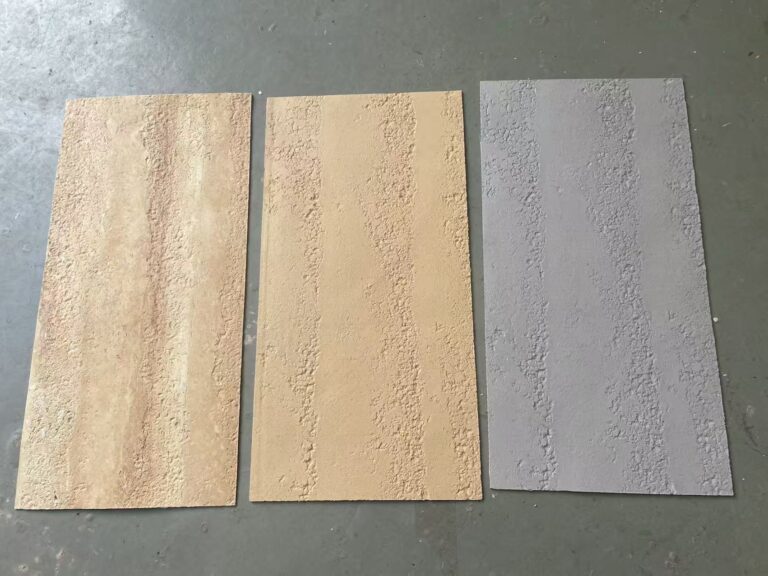
Flexible stone is a printed, molded composite: the face colour and relief are production outputs, not quarry constants. That single fact rewrites several standard clauses. A materials clause written for natural stone assumes tone variation within a declared range; a flexible stone clause instead anchors the standard to a retained physical sample from the actual production batch. An inspection clause written for tile assumes any panel can be swapped from stock; a flexible stone clause needs the inspection to happen before shipment, because a replacement panel printed months later will not match the wall it joins.
The same logic reaches acceptance. “Free from defects” is nearly meaningless for a thin bonded finish; what is enforceable is a named defect list — hollow-sounding panels beyond an agreed standard, face chipping at cut edges, delamination, joint width beyond tolerance — each with a remedy. The contract’s job is to convert taste arguments into checklist items while the materials are still in crates.
Which clauses belong in the supply contract?
- Approved sample as the standard. Name the retained sample, its batch, and the condition that delivered panels must match — tone, relief depth, thickness and weight within the declared band. The sample is the referee, not the catalogue.
- No-substitution and no-recipe-change clause. Binder system, pigment recipe, mold and mesh may not change between the approved batch and the delivered one without written approval. This is the clause that catches a quiet reformulation; our batch consistency guide explains what it protects.
- Pre-shipment inspection rights. The right to inspect, photograph and measure panels before loading, and the consequence if the pre-shipment check fails. Inspection after arrival is negotiation; inspection before loading is leverage.
- Documentation package. COA per batch, test reports for the declared fire class, installation manual, and batch traceability on packaging — all named as conditions of payment, not favours.
- Spare allowance and matching duty. A stated percentage of spare panels from the same batch, held for future repairs. A repair panel from a different batch is a visible patch; the spare clause is what makes repairs invisible.
- Lead time with a definition. What “delivery” means — ex-works, loaded, arrived — and what happens if the window slips. Ambiguity here is how schedule disputes start; the deadline structure is covered practically in our lead time and scheduling guide.
Which clauses belong in the installation contract?
The supply contract pins the material; the installation contract pins the workmanship. Four items carry most of the weight. First, the substrate as a defined handover condition: flatness, soundness and cleanliness are the installer’s precondition, and the contract should say what happens when the substrate fails it — who pays for the delay. Second, the method by reference: the installation manual and the approved adhesive system are contract documents, so a crew improvising a different trowel or coverage is in breach, not just being casual. Third, named acceptance tests: the lift-and-read transfer check at first fixing, the tap test for hollows at completion, joint-width tolerance, and photographs as the record. Fourth, protection and sequencing: who protects the finished wall from following trades, and the rule that cover plates and trims are fitted last.
Where the installer is new to the material — most crews are, the first time — the contract can also carry a training or supervision line, which the next section treats as its own topic.

How should the liability be allocated?
Liability follows control, and the contract should say so explicitly rather than leaving it to whoever complains loudest after a failure. The failure modes divide cleanly. A tonal mismatch against the retained sample, a wrong fire class, or a batch that fails the pre-shipment check sits with the supplier. A hollow panel, a cracked face at a cut edge, or a joint outside tolerance sits with the installer, because those are method outcomes. A substrate that moved, a wall built out of square, or water reaching the bond line from an unbuilt detail sits with whoever owned that layer — usually the main contractor.
The clause that makes this work is not a blame paragraph; it is an evidence chain. Retained samples, pre-shipment photographs, transfer-check records at first fixing and a completion tap-test map let each failure be assigned to the layer that owned it. Without the records, liability collapses into whoever cannot afford the argument — which is rarely the party actually at fault. Responsibility between the material and the workmanship layers is unpacked further in our inspection and COA guide.
What should the warranty line actually say?
Two clauses are routinely confused: the manufacturer’s material warranty and the contractor’s workmanship warranty. The material warranty covers the panel doing what the specification says — staying bonded as installed, keeping its declared fire class, not delaminating in normal interior service. The workmanship warranty covers the installation: coverage, joints, edges, protection. They have different durations, different exclusions and different claim paths, and a contract that merges them into one sentence gives the buyer the weaker of both.
Buyers should also resist warranty inflation. A long warranty is only as good as the conditions behind it — approved adhesive, approved substrate, installed to manual — and every one of those conditions is already in the clauses above. A contract where the installation section and the warranty section agree is worth more than a contract with a hero number and no method.
How does the clause set handle changes and extras?
Two change scenarios dominate flexible stone jobs. The client changes the pattern after the order: the contract should state what is renegotiable at that point — the retained sample, the batch, the lead time — rather than treating it as a free swap. The site requires extra panels after the field is up: the contract’s spare clause answers it, and where spares are exhausted, the contract should say that a new batch is a new approval, not an automatic delivery. Both clauses exist to keep the approved-sample chain intact, which is the single thread every other clause hangs from.
How should the training and supervision of a new crew be handled contractually?
Because most crews meet flexible stone for the first time on someone’s project, the installation contract is where the learning curve has to be paid for deliberately rather than absorbed by the wall. The clean mechanism is a named mock-up: a small area of the actual wall, installed by the actual crew with the actual adhesive, accepted against the retained sample, and photographed as the standard. The contract should say that field installation does not begin until the mock-up is accepted, and that if the mock-up fails, re-training or supervision time is included rather than negotiated.
The cost asymmetry makes this an easy clause to win. A mock-up costs a few panels and half a day; a wall installed by an untrained crew costs the elevation. Our guide to factory installation method and the manual attached as a contract document give the crew the reference; the mock-up clause gives the reference teeth.
What happens when the parties disagree about a defect?
The clause set should anticipate one argument and pre-solve it: what counts as a defect versus what counts as the material’s nature. Flexible stone is inherently variable in tone and relief within a batch — that is a property, not a fault — while a hollow, a chip or a delamination is a fault. The contract draws the line by reference to documents that already exist: the retained sample defines acceptable variation, the acceptance test list defines faults, and the pre-shipment photographs define what the material looked like before it left the factory. With those three references in the contract, most arguments end in an afternoon instead of a month.
Where a claim does proceed, the evidence chain decides it. Batch traceability on packaging ties the failed panel to its COA; the transfer-check record ties the bond to the method; the tap-test map ties the hollow to its location. None of this is exotic — it is the same documentation discipline our container documents guide walks through for shipments — but it only works if the contract required the records to be made in the first place.
FAQ
Can I just attach the supplier’s installation manual to the contract?
はい、付けるべきです。版num付きの契約書明文として。マニュアルは手配保証が前提とする施工手法を定義しており、付属させることで「専門業者による設置」を検証可能なものにします。
軟质石材で最も重要な条項はどれですか?
保存見本条項です。色のトーン、浮き彫りの深さ、厚さに関する紛争のほぼ全ては、誰かが物理的なパネルを手に取り「納入された壁と何が変わらないか」と問いかける所で終わります。そのパネルを契約書で特定し、封印して保管してください。
支払いを書類一式と紐付けるべきですか?
一般的にはYESです。COA、試験報告書、ロット追跡情報は製品に同行し、それを支払い条件とすることでコストはかかりませんが、請求が必要な時に書類が存在することが保証されます。
資材のみ供給の場合と、設置付き供給の場合で異なる条項セットが必要ですか?
資材供給条項は単独で成立し、設置条項は同一契約で-fixing-をカバーする場合にのみ適用されます。資材のみ供給契約では設置条項は設置下請け契約に移行しますが、どちらの場合でも資材は同じ証拠連鎖の下で納品されるべきです。
全てが合意できるうちに条項を作成すれば、契約書は仕事の静かなる Backbone となります。作成のための製品・フォーマット参照は flexible stone veneer ページに掲載されており、クラディングパッケージに関する一般的な契約実務の読書は、 Associated General Contractors of America などの団体によって刊行されています.