 Skip to content
Specifying the wrong flexible sandstone product can directly lead to failed adhesion and budget overruns tied to mismatched surface coatings and substrate requirements. Architects and contractors often seek the classic look of quarried stone but face the immense logistical and engineering challenges of its weight. This single factor drives up structural reinforcement needs, complicates transport, and inflates the labor costs required for safe installation.
This guide serves as a technical comparison between traditional stone and its lightweight veneer alternative. We will analyze the critical differences in weight and cost, examine how modern nano-coatings solve the persistent issue of a friable, sandy surface, and outline the application methods for achieving smooth, continuous finishes on curved walls and architectural features.
The Timeless Appeal of Sandstone
Flexible sandstone merges the classic aesthetic of quarried stone with modern material engineering, creating lightweight, durable, and cost-effective cladding solutions for complex architectural designs.
Blending Natural Aesthetics with Modern Engineering
Flexible sandstone panels successfully merge the visual texture of quarried stone with the performance of advanced composites. This blend opens up new design possibilities that were previously impractical or cost-prohibitive with heavy, solid stone slabs. By leveraging manufacturing processes like Modified Clay Material (MCM) technology, these panels deliver the authentic appearance of natural sandstone for both interior and exterior applications, without the traditional constraints.
Lightweight, Durable, and Flexible Design
Modern production creates ultra-thin sandstone veneers that dramatically reduce weight. A typical flexible panel weighs between 3.5 to 6.0 kg/m², which is roughly one-sixth the weight of traditional dimensional stone. This significant weight reduction minimizes the structural load on buildings, eliminating the need for costly reinforcements. Its engineered flexibility allows the material to wrap around curved facades, columns, and other complex structures without cracking, providing durability for creative and ambitious architectural projects.
A Sustainable and Eco-Friendly Material
Flexible sandstone directly addresses the growing demand for sustainable building materials. The manufacturing process consumes far fewer natural resources than quarrying and processing solid stone slabs. This reduced material consumption supports green building standards and aligns with environmentally conscious design principles. Products certified with ISO 14001 confirm a commitment to responsible production methods, making it a sound choice for projects focused on minimizing their ecological footprint.
Cost-Effective and Efficient Installation
The lightweight nature of flexible sandstone panels generates significant cost savings across the project lifecycle. It lowers transportation and logistics expenses while simplifying on-site handling. Installation is faster and requires less specialized labor or heavy lifting equipment. Features like dust-free cutting and the ability to overlay directly onto existing surfaces—such as old tile or concrete—further reduce project timelines and labor costs, making it a highly efficient alternative to traditional masonry.
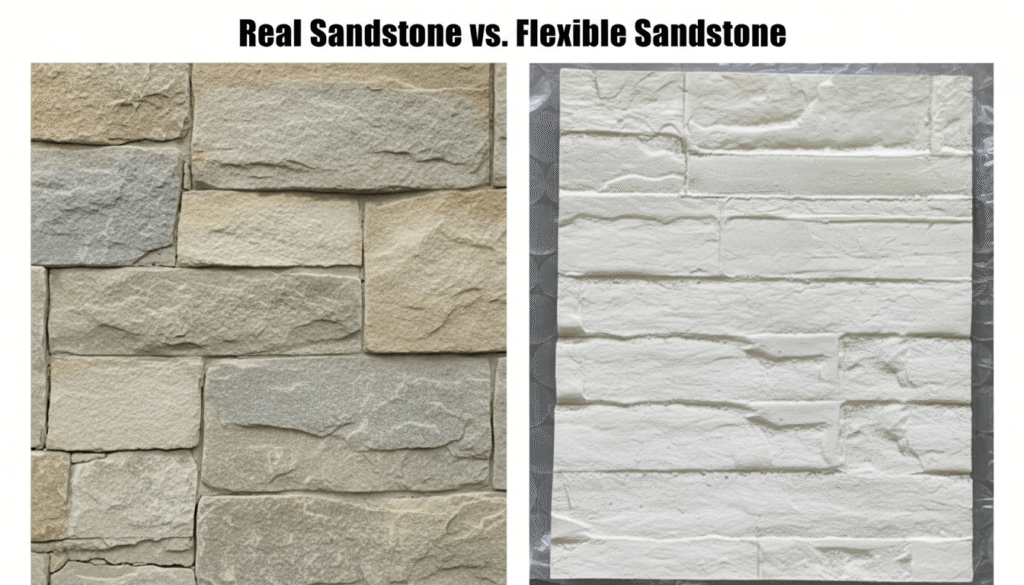
Real Sandstone vs. Flexible Sandstone (Weight/Cost)
The decision between traditional and flexible sandstone hinges on total project cost, where material weight directly dictates structural load, installation complexity, and labor expenses.
Weight and Structural Load
The primary distinction between quarried stone and engineered panels is mass. Real sandstone slabs weigh between 15-25 lbs per square foot, a significant load that often requires additional structural steel or concrete reinforcement, especially in renovations or high-rise applications. This adds hidden costs and complexity to the project. Flexible sandstone, composed of lightweight composites, weighs only 1-2 lbs per square foot. This drastic weight reduction eliminates the need for extra structural support, making it a practical solution for projects where load-bearing capacity is a constraint.
| Specification | Real Sandstone | JMS Decor Flexible Sandstone |
|---|---|---|
| Weight per Square Foot | 15–25 lbs | 1–2 lbs (Approx. 3.5–6.0 kg/m²) |
| Structural Impact | Often requires additional reinforcement | No extra reinforcement needed; reduces building load |
| Installation Labor | Requires specialized masonry skills and equipment | Standard labor using basic tools (utility knife, trowel) |
Installation and Labor Expenses
Material handling directly translates to labor costs and project timelines. Installing real sandstone is a slow, labor-intensive masonry process that requires specialized equipment and generates significant dust and noise. By contrast, JMS Decor flexible sandstone is installed using standard tile adhesives and can be cut on-site with a simple utility knife. This allows for faster, cleaner, and quieter work, which is critical for commercial renovations in hotels or retail spaces where business continuity is a priority. The ability to directly overlay the panels on existing surfaces like old tiles further reduces demolition costs and accelerates project completion.
Material Composition and Durability
Real sandstone is a natural, porous stone that requires consistent sealing to prevent water absorption, staining, and potential damage from freeze-thaw cycles. JMS Decor flexible sandstone is an engineered composite made from natural stone powders and polymers bonded to a fiberglass backing. This process creates a durable, non-porous material with excellent resistance to moisture and UV degradation. It offers the authentic texture of stone without the inherent vulnerabilities, leading to lower long-term maintenance costs and more reliable performance in extreme weather conditions.
Unlock Designs with Customizable Stone Veneer
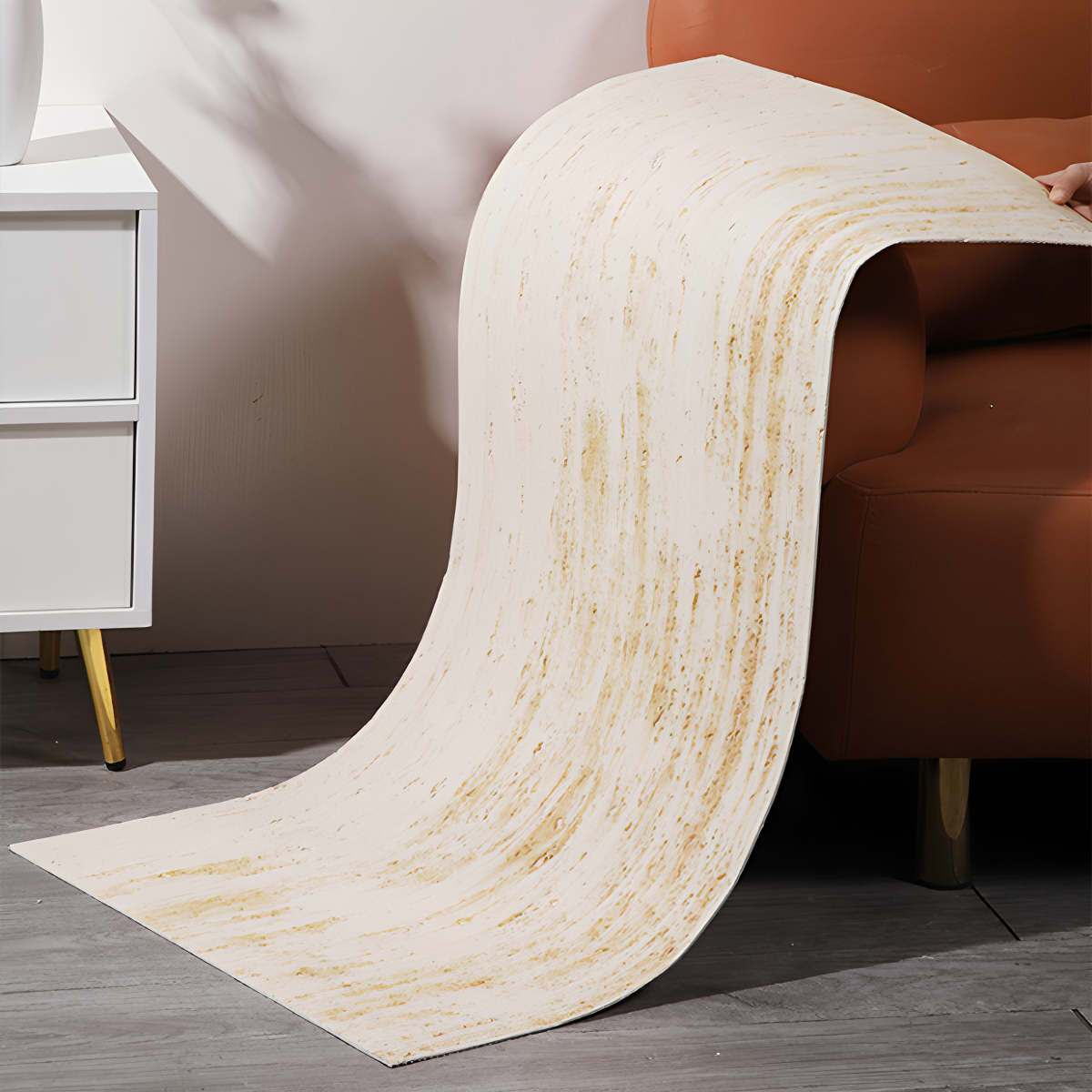
Texture Varieties: Desert, Gold, Grey
Aesthetic diversity is no longer an afterthought; engineered sandstone now provides a wide palette of textures and colors that support any design intent, from rustic to ultra-modern.
Desert Tones for Warm, Natural Aesthetics
JMS Decor provides flexible sandstone panels in a range of desert-inspired earth tones. These finishes capture the authentic look of natural sandstone, making them ideal for projects that call for a warm, organic feel. They fit well within both traditional and rustic architectural styles, delivering an immediate sense of grounded authenticity to a space.
- Replicates the rich, varied colors found in natural desert rock formations.
- Available in multiple textures, from rugged and coarse to smoothly finished surfaces.
- Excellent for creating welcoming exterior facades or natural-looking interior feature walls.
Gold and Metallic Hues for Luxury Finishes
For projects that require a touch of elegance, our collection includes sandstone panels with gold and metallic accents. These options introduce a subtle shimmer that enhances light and adds a premium feel to interior and exterior applications. The effect is sophisticated without overpowering the overall design, providing visual depth and interest.
- Integrates fine metallic flecks to create a refined, light-catching surface.
- A popular choice for feature walls in hospitality, retail, and high-end residential projects.
- Offers a unique and cost-effective alternative to traditional luxury materials like solid marble or metal panels.
Grey and Neutral Palettes for Modern Designs
Our selection of grey and neutral-toned sandstone panels is tailored for contemporary and minimalist aesthetics. These versatile shades deliver a clean, understated backdrop that complements modern architectural elements such as polished concrete and exposed steel. They provide a sophisticated canvas for designers to build upon.
- Provides a sleek, professional look for corporate offices and modern residential spaces.
- Offers consistent color profiles that ensure visual uniformity across large-scale installations.
- Serves as a neutral base that pairs well with bold accent colors and diverse materials.
Custom Textures and Finishes
Beyond our standard collections, JMS Decor can develop custom colors and textures to match specific project requirements. With over 24 design variations available, we give architects and designers the control to create unique surfaces that align perfectly with their vision. This capability moves beyond simple selection to true design partnership.
- Allows for precise color matching for brand-specific or unique architectural palettes.
- We can adjust the texture from a rough, natural finish to a smooth, polished surface.
- Combines the authentic aesthetic of stone with the benefits of complete design flexibility.
Solving the “Sandy Surface” Issue (Nano-Coatings)
A recurring problem with natural sandstone is its tendency to shed sand-like particles over time, a result of surface erosion. Modern nano-coatings solve this by creating a breathable, molecular-level barrier that stops water damage without altering the stone’s appearance.
Understanding Surface Degradation in Sandstone
Sandstone’s porous structure is its primary vulnerability. The material naturally absorbs water and environmental salts, which becomes a critical issue in climates with freeze-thaw cycles. When trapped moisture freezes, it expands, creating micro-cracks that degrade the stone from within. Over time, this cycle breaks down the surface, causing the familiar “sandy” texture and gradual erosion. An effective protective treatment must let the stone breathe, allowing moisture vapor to escape while blocking liquid water from entering. This prevents the internal pressure build-up that leads to failure.
How Nano-Coatings Create a Protective Barrier
At JMS Decor, we apply an advanced nano-coating formulated with SiO₂ (silicon dioxide) nanoparticles. Unlike traditional sealers that form a plastic-like film on the surface, these nanoparticles penetrate the stone’s pores and chemically bond with the substrate. This process creates an ultra-thin, completely invisible barrier that becomes part of the stone itself. The resulting surface is both hydrophobic (repels water) and oleophobic (repels oil), providing robust protection without changing the sandstone’s natural texture or color.
| Feature | Traditional Silicone Sealers | JMS Decor Nano-Coating (SiO₂) |
|---|---|---|
| Protection Mechanism | Forms a surface film that can trap moisture, leading to peeling. | Bonds molecularly with the stone, creating a fully breathable barrier. |
| Durability | Degrades under UV exposure; requires frequent reapplication. | Excellent UV resistance and abrasion tolerance for long-term performance. |
| Aesthetics | Often alters color, adds a gloss or “wet look,” and feels unnatural. | Completely invisible, preserving the stone’s original color and texture. |
Key Benefits: Durability and Self-Cleaning
Treating our flexible sandstone panels with this nano-coating dramatically increases their lifespan, especially in harsh exterior environments. The technology provides superior resistance to damage from water, salt, and freeze-thaw conditions. It also has a functional self-cleaning effect; water beads up and rolls off the surface, taking dirt and contaminants with it. This significantly reduces maintenance requirements and keeps the cladding looking clean. The formulation is eco-friendly, free from the harsh silicones and solvents found in older products, which aligns with modern green building standards.
Curved Applications for Sandstone
Flexible stone veneer systems have fundamentally solved the challenge of applying real stone to curved surfaces, making complex architectural geometries practical and cost-effective.
Flexible Veneer Technology for Curves
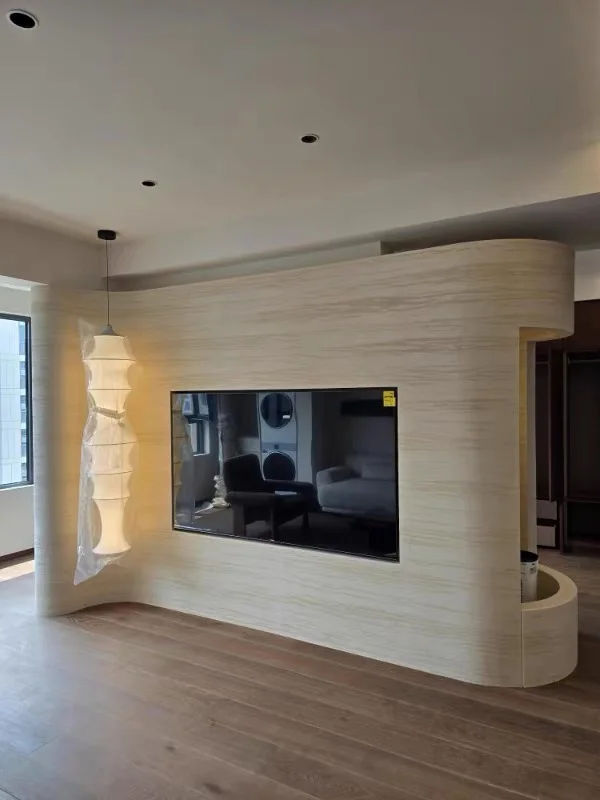
Modern sandstone applications on curved structures use flexible stone veneer systems. This technology bonds an ultra-thin layer of natural stone to a flexible backing, which allows the panel to bend and conform to curves without the cracking risk associated with traditional thick stone. This method overcomes the historical limitations of rigid masonry and makes natural stone a viable option for non-linear designs.
- Our flexible panels at JMS Decor utilize a genuine sandstone layer, which preserves the authentic texture and visual depth of the quarried material.
- The stone is fused to a backing of fiberglass and specialized polymers. This backing provides the necessary flexibility for installation while ensuring structural support.
- The resulting composite structure is exceptionally lightweight (typically 3.5-6.0 kg/m²), which simplifies both transportation and the installation process on complex architectural forms in 2026.
Architectural Design Possibilities
The ability to clad curved geometries with sandstone has expanded design freedom for architects. It enables the integration of natural stone’s warmth and texture into contemporary designs that feature flowing lines and organic shapes. Instead of being limited to flat planes, designers can now specify authentic stone finishes for a much wider range of structural elements.
- Cladding rounded building facades for a seamless and natural exterior finish.
- Wrapping interior or exterior columns to add textural elegance to structural components.
- Constructing smooth, stone-finished arched entryways and other custom curved features without complex masonry.
Current Trends and Project Suitability
Demand for flexible sandstone is growing across commercial, hospitality, and residential sectors. This growth is driven by its cost-effectiveness, simple installation, and alignment with modern construction methods that prioritize unique designs and efficient material use. The technology opens up new possibilities for renovations and high-impact designs that were previously too expensive or technically challenging.
- The lightweight nature of the panels makes installation accessible for a wider range of projects, including large-scale renovations and even some DIY applications.
- It provides a practical, cost-effective alternative to sourcing, shipping, and installing custom-cut curved blocks of solid stone.
- Adoption is increasing in commercial projects like hotels and retail spaces, where creating distinctive, “Instagrammable” features is a key business driver.
Conclusion
Flexible sandstone veneer delivers the visual appeal of natural stone while solving key architectural challenges like structural load and complex curved applications. Modern nano-coatings provide a durable, non-shedding surface, making it a reliable material for both exterior facades and interior walls. This combination of authentic texture and practical performance opens up new design possibilities.
To evaluate the material’s texture and flexibility for your next project, request a sample kit. Our team can also provide the technical specifications needed for your design documentation.
Frequently Asked Questions
Sandstone veneer sheet price?
As of 2026, the price for sandstone veneer sheets typically ranges from $15 to $45 per square foot. The final cost depends on several factors, including the sheet’s thickness, the complexity of the natural stone pattern, the underlying manufacturing technology (such as advanced MCM processing), and the order volume. Premium, ultra-thin, and highly flexible sheets command a higher price, while standard-grade options are more budget-friendly.
Flexible sandstone cladding?
Flexible sandstone cladding is an advanced architectural material that blends a thin layer of natural sandstone with a flexible composite backing. This engineering allows the cladding to be bent and applied to curved surfaces, columns, and complex architectural features where traditional rigid stone would be impossible or prohibitively expensive to use. It offers the authentic look and texture of stone but with significant advantages in weight, installation speed, and design versatility, as highlighted by its growing use in modern facade and interior projects.
Lightweight alternative to sandstone?
An excellent lightweight alternative to traditional solid sandstone is flexible sandstone veneer. These products are ultra-thin and engineered to be significantly lighter, reducing structural load requirements and simplifying installation. Other common alternatives include Faux Stone Panels (made from high-density polyurethane), Glass Fiber Reinforced Concrete (GFRC) panels that mimic stone, and Modified Clay Material (MCM) stone, which offers a lightweight, thin, and pliable option with a natural finish.
Faux sandstone wall panels?
Faux sandstone wall panels are manufactured replicas of natural stone, typically made from materials like high-density polyurethane, fiberglass, or fiber cement. They are designed to be extremely lightweight, cost-effective, and easy for DIY or professional installation. While they convincingly mimic the color and texture of real sandstone, they differ from engineered flexible sandstone, which incorporates a genuine layer of natural stone. Faux panels are a popular choice for interior accent walls, fireplaces, and exterior siding where budget and ease of installation are primary concerns.
Curved sandstone wall?
Yes, creating a curved sandstone wall is highly achievable with modern materials like flexible sandstone veneer. Unlike traditional heavy stone blocks which are difficult and costly to shape, these flexible sheets are specifically engineered to bend and conform to concave or convex surfaces. This technology allows architects and designers to incorporate the natural beauty of sandstone into fluid, contemporary designs for both exterior facades and interior feature walls, without the immense structural and labor challenges associated with solid stone.

 English
  Spanish
  French
  Arabic
  German