 Skip to content
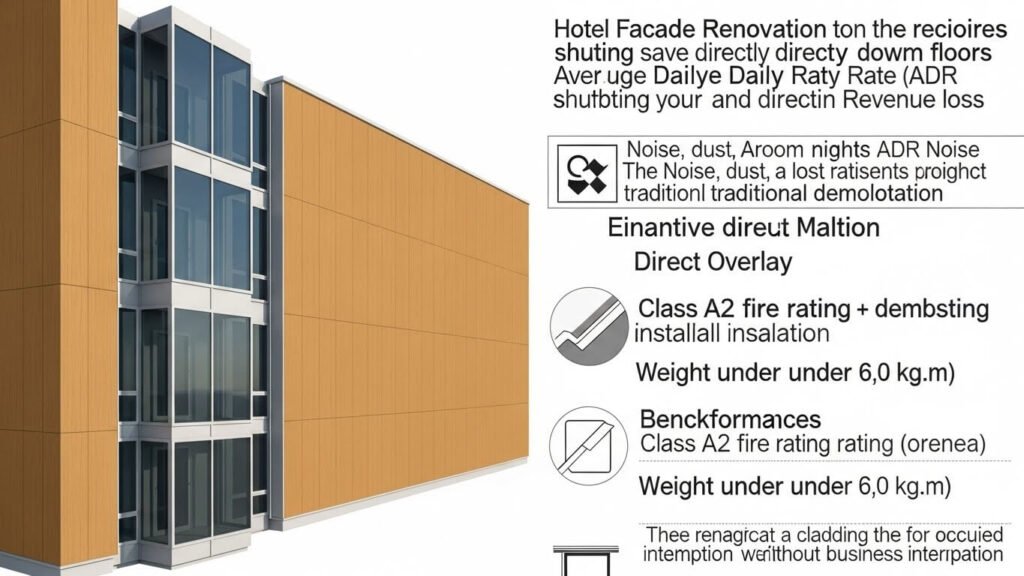
A Hotel Facade Renovation that requires shutting down floors directly impacts your Average Daily Rate (ADR) and guest satisfaction. The noise, dust, and lost room nights from traditional demolition turn a capital improvement project into a direct revenue loss.
This analysis compares cladding solutions that enable ‘direct overlay’ installation, eliminating demolition entirely. We benchmark materials on key performance metrics like a Class A2 fire rating and a weight under 6.0 kg/m², criteria essential for renovating occupied properties without business interruption.
Ranking Criteria: CAPEX vs. OPEX
Capital Expenditures (CAPEX) are major investments that add long-term value. Operating Expenses (OPEX) are routine upkeep. The right materials can significantly lower the upfront CAPEX for renovations.
Understanding Renovation Cost Categories
For any hotel renovation, every dollar gets classified. The distinction is simple but has massive financial implications for your project’s budget and the property’s balance sheet.
- CAPEX (Capital Expenditure): This is a major, long-term investment that increases the property’s value. Think a complete facade replacement, structural changes, or a new roof. It’s an asset, not just a cost.
- OPEX (Operating Expense): These are the routine, day-to-day costs needed to keep the property functional. Repainting a hallway or fixing a minor fixture falls squarely in this category.
Lowering Initial Investment with Flexible Stone
A full facade upgrade is a classic CAPEX project, but the upfront cost can be a deal-breaker. Choosing a modern material like flexible stone directly attacks the largest line items in the budget, making the project more feasible without compromising on a premium look.
- Eliminate demolition costs with ‘Direct Overlay’. You can apply these panels straight over old, dated tiles or existing walls. This means zero budget spent on demolition, dust, noise, or waste removal, which is critical for renovations that can’t afford to shut down business.
- Reduce shipping and structural expenses. At just 1/6th the weight of traditional stone, the panels slash shipping and logistics costs. More importantly, the lighter load often removes the need for expensive structural reinforcements on the existing building.
Top 4 Exterior Cladding Materials for 2026
The 2026 cladding market favors lightweight, sustainable materials that mimic natural textures. Performance metrics like fire-resistance, installation speed, and long-term maintenance now drive purchasing decisions.
For 2026, the selection criteria for exterior cladding have shifted beyond just aesthetics. Architects, contractors, and developers are weighing the total cost of ownership, which includes upfront capital expenses (CapEx) against long-term operating expenses (OpEx). Materials that reduce structural load, cut down installation time, and minimize future maintenance are gaining significant market share. Below is a breakdown of the top-performing materials based on durability, installation efficiency, fire safety, and overall project value.
| Rank | Material | Best For | Key Consideration |
|---|---|---|---|
| 1 | Flexible Stone Veneer | Old building renovation & curved surfaces | Requires sealant for exterior use |
| 2 | Fiber Cement | Humid climates & fire-prone areas | High density adds significant weight |
| 3 | Aluminum Composite Material (ACM) | Commercial high-rises over 40 ft | Fire rating is assembly-dependent |
| 4 | Natural Stone | Premium projects seeking longevity | Requires structural support & skilled labor |
#1 Flexible Stone Veneer (MCM)
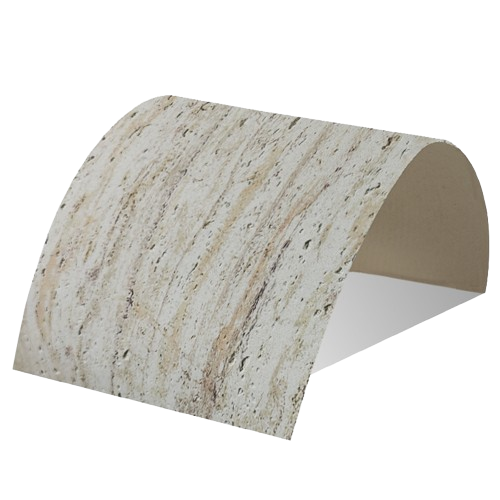
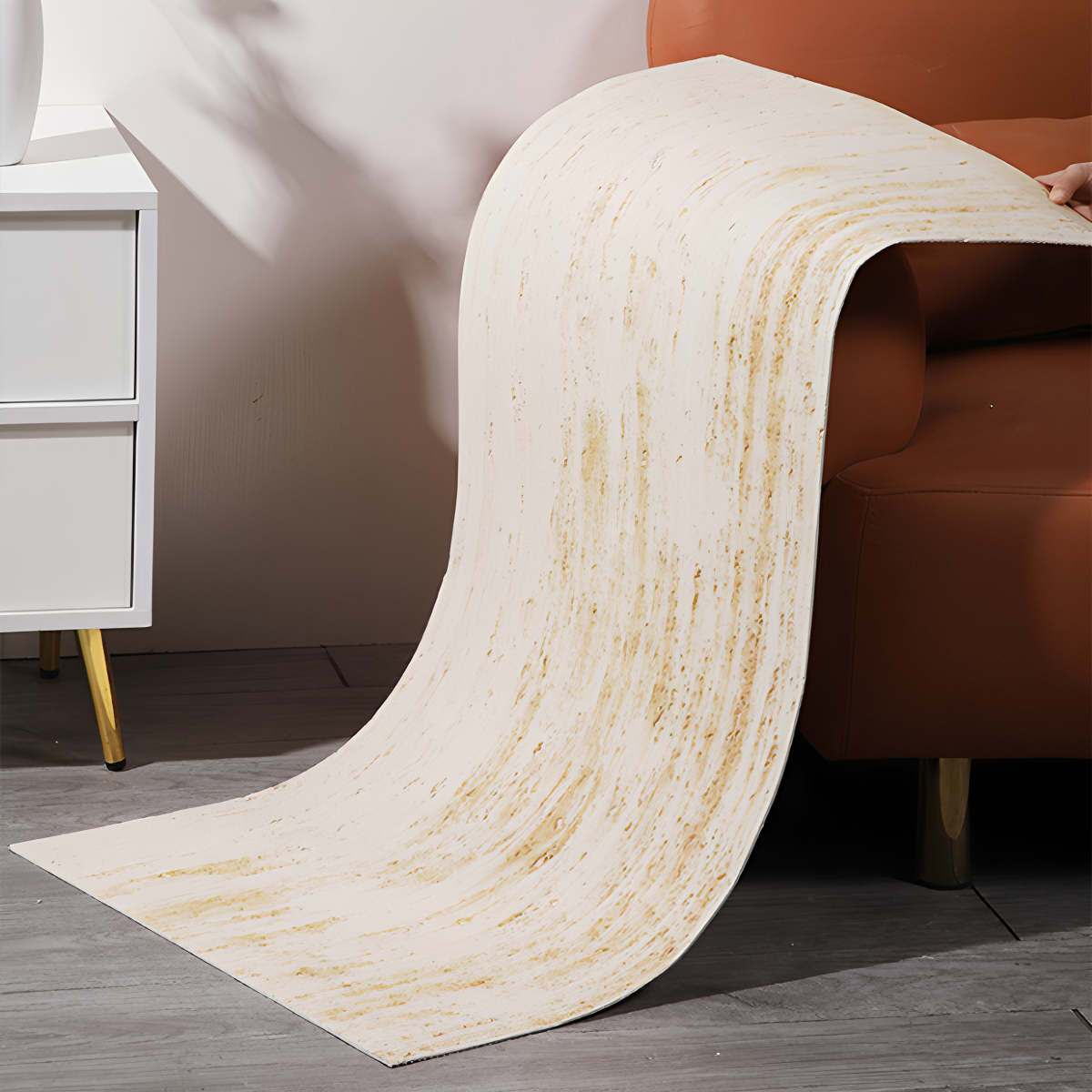
This is not plastic or vinyl. It’s a composite of modified clay and natural stone powder, engineered for performance. Its primary value proposition for B2B channels—contractors, architects, and wholesalers—is “Zero-Demolition Renovation.” The material is light enough (3.5 – 6.0 kg/m²) to be installed directly over old tiles or existing walls, which eliminates costly demolition and disposal. Its flexibility allows for “crack-free curves” on columns and archways, a common failure point for rigid materials.
For commercial clients like shopfitters or hotel renovators, the dust-free cutting (with a simple utility knife) and low-noise installation allow for renovations without shutting down business operations. From a logistics standpoint, its weight is roughly 1/6th that of traditional stone, drastically cutting shipping costs.
- Fire Rating: Class A2 (Non-combustible), a hard requirement for most commercial projects.
- Weather Resistance: Tested to withstand extreme temperatures from -40°C deep freezes to high heat, making it climate-adaptive for global projects.
- Water Absorption: Less than 0.5%, suitable for high-humidity and coastal areas.
- Pros: Reduces structural load, authentic stone appearance, fast installation, highly resistant to moisture and weather.
- Cons: Requires a penetrative sealant for exterior applications, natural stone patterns vary between batches, requires specialized tools for precise cuts.
#2 Fiber Cement
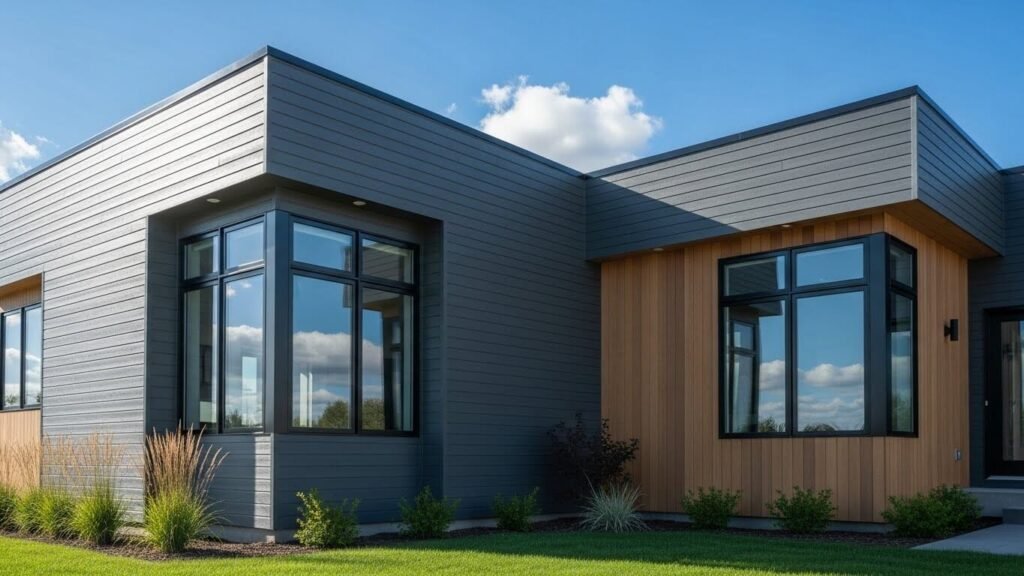
Fiber cement is a workhorse material composed of cement, cellulose fibers, and mineral additives. It’s known for its durability and has a long track record of performance. This material is particularly effective in rainy or high-humidity climates where resistance to moisture and rot is critical. It can mimic the look of wood, stucco, or stone without the associated maintenance headaches.
- Pros: Excellent structural integrity over time, high fire and UV resistance, requires minimal maintenance.
- Cons: Its density makes it heavy, which can increase structural and labor costs. Water absorption can be up to 20%, and installations above 150 feet have special fastening requirements.
#3 Aluminum Composite Material (ACM)
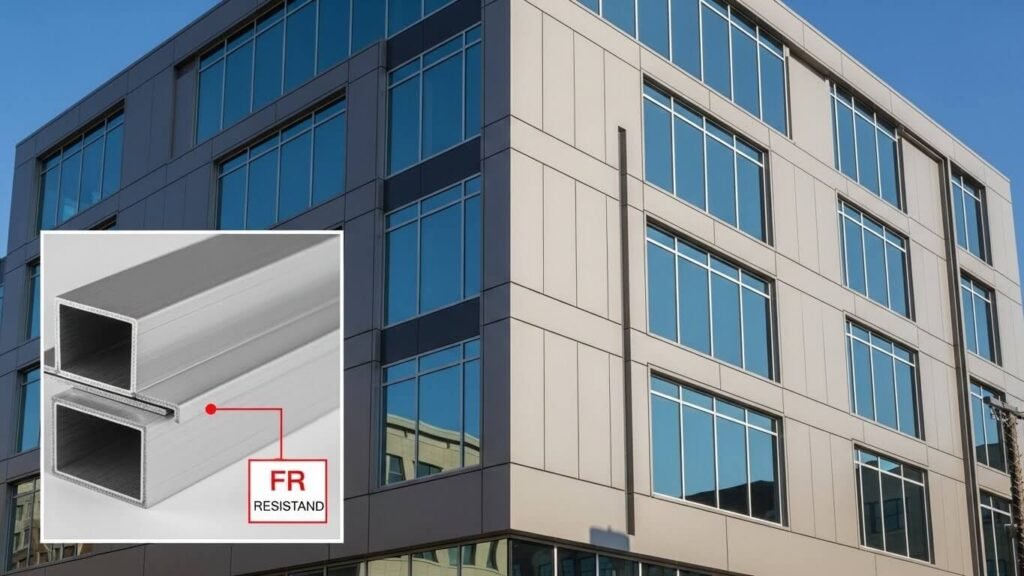
ACM panels are standard for modern commercial facades, especially on buildings taller than 40 feet. The system consists of two aluminum sheets bonded to a fire-resistant (FR) core. The key factor here isn’t just the panel but the entire wall assembly, which must pass rigorous NFPA 285 fire propagation tests to be code-compliant. The specific rating (A2, B1) required is determined by local building codes, not the manufacturer.
- Pros: Tested as a complete wall assembly to limit vertical (under 10 ft) and lateral (under 5 ft) flame spread. A2-rated cores offer the highest level of non-combustibility.
- Cons: The performance is highly dependent on the *entire* assembly—if insulation or other components change, re-testing is required. A2 panels are more expensive, and some approved systems have shown poor performance in certain real-world fire tests.
#4 Natural Stone
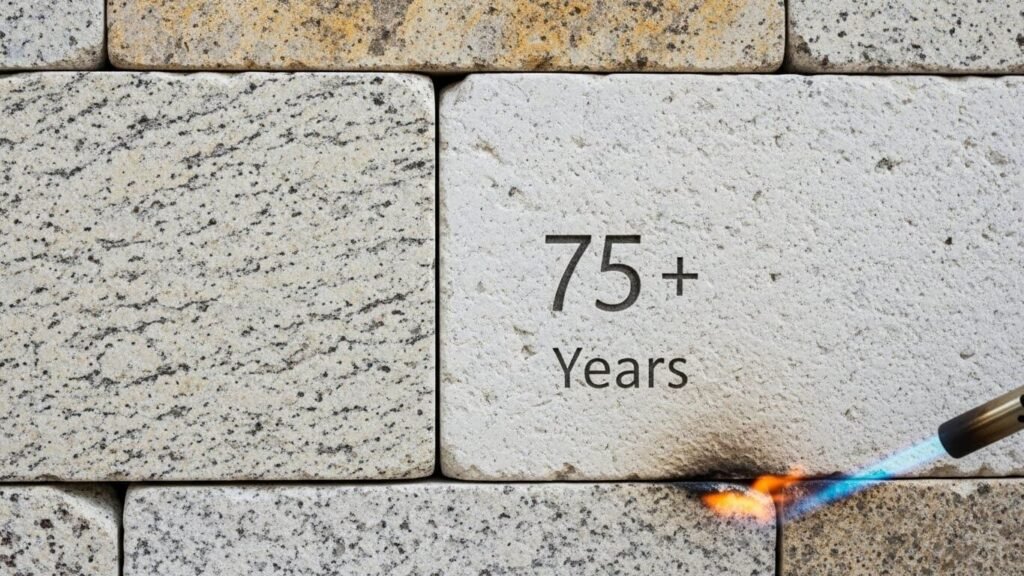
For projects where budget is secondary to aesthetics and longevity, natural stone like granite or limestone is unmatched. It offers a lifespan of 75+ years and is completely non-combustible. While the material cost is high ($35–$50/sq ft), it often delivers a return on investment over 100% due to its durability and premium appeal.
- Pros: Exceptional durability, fire and water resistant, premium aesthetic, and high ROI.
- Cons: The extreme weight requires significant structural support and engineering. Installation is labor-intensive and demands skilled masonry expertise, adding another $20–$30/sq ft to the total cost.
Customizable, Lightweight Flexible Stone Veneer
Frequently Asked Questions
What are the best exterior cladding materials for commercial buildings in 2026?
For 2026, flexible stone panels are a leading choice for commercial projects. They combine a lightweight design, typically 3.5 to 6.0 kg per square meter, with a Class A2 fire rating and excellent durability in climates from -40°C upwards. Other strong options include Aluminum Composite Panels (ACP) for design flexibility and fiber cement for its durability and resistance to rot and fire.
Which facade material is most cost-effective for a hotel renovation?
True cost-effectiveness considers both initial price and long-term maintenance. While materials like vinyl have a low upfront cost, they often have a shorter lifespan. Fiber cement and aluminum offer a good balance of durability and long-term value. Flexible stone panels also present a strong case by reducing costs in other areas, like shipping and structural support, because they are only about one-sixth the weight of traditional stone.
How do flexible stone panels compare to traditional materials like solid stone or ceramic tiles?
The main differences are weight, flexibility, and installation. Flexible stone is significantly lighter, which lowers shipping costs and means it can be installed on structures that cannot support heavy stone. Its ability to bend allows it to cover curved walls and columns, a task difficult for rigid tiles or stone. Installation is also simpler and can often be done directly over existing surfaces, saving time and demolition costs.
What are the major design trends for building facades in 2026?
The key trends are sustainability, the use of 3D textured surfaces, and combining multiple materials for a modern look. There is a strong move toward materials that are either recycled or reduce environmental impact through efficient logistics. Textured and customizable panels are popular because they create unique visual appeal and help buildings stand out. Flexible stone aligns with these trends by offering custom 3D-printed textures and being lightweight, which reduces transportation emissions.
Final Thoughts
While other materials may seem cheaper upfront, their true cost includes demolition, structural upgrades, and lost room revenue from downtime. Our “Direct Overlay” method guarantees a renovation with zero guest disruption. This protects your ADR during the project and boosts it afterward, delivering a clear return.
Don’t just read about the weight savings and premium textures—verify them. Request our Hotel Renovator’s Sample Kit to see the Travertine and Concrete finishes firsthand. Contact our project team to discuss a custom texture that aligns with your brand.

 English
  Spanish
  French
  Arabic
  German