
A failed pre-shipment inspection is not a reason to cancel the order; it is a decision point. For flexible stone veneer, the decision depends on whether the defect is isolated, systemic, or a specification dispute — and on whether the evidence ties the panels to a batch. Most inspection advice stops at “hold the shipment and file a report.” This guide covers the next steps: how to classify the defect, what to measure, which documents to pull, and what remedy to ask for before the container is loaded. The goal is a documented decision, not a shouting match.
What should I do in the first hour after a failed inspection?
Stop the loading. Instruct the supplier in writing that the shipment is on hold and that no panels from the affected batch are to be loaded, mixed with conforming stock, or shipped. If the container is already closed, keep it at the factory until the decision is made. The inspection is valuable because it happens before the goods leave; once the container sails, your leverage drops and the remedy becomes a claim.
Do not sign an acceptance document for the affected lot. Read the full inspection report before you reply, and separate three things: confirmed defects with photographs, measured values against the specification, and open questions that need clarification from the factory. A defect that looks serious in one photo may be a handling mark on a single sheet; a thickness reading outside the band is a batch problem. The classification in the next section depends on getting this distinction right.
Preserve the evidence. Keep the defective panels, the packaging, and the batch labels; photograph them next to the inspection report and a date reference. If the inspection was done by a third party, ask for the raw measurement data, not only the summary page. Do not send the panels back or allow the factory to “fix” them until the evidence is recorded.
How do I classify the defect: isolated, systemic, or a specification dispute?
The classification decides the remedy. A sorting problem is solved by sorting; a production problem is solved by rework or replacement; a specification dispute is solved on paper, before anyone touches the production line.
| Type | Typical findings | Evidence needed | Remedy |
|---|---|---|---|
| Isolated | A few sheets with edge chips, surface marks, or handling damage; the rest of the batch measures within the band | Counts, photos, panel IDs, batch label | Sort out the affected panels and replace them from conforming stock |
| Systemic | Thickness or weight outside the declared band across the batch; delamination; pattern misregistration; a color drift against the approved sample | Measurements across multiple panels, retained sample comparison, production record | Rework or replace the batch; identify the root cause before re-inspection |
| Specification dispute | Disagreement about acceptable color variation, surface texture, or dimensional tolerance | Purchase order, approved sample, product data sheet, test method | Compare against the agreed reference; measure; use a third party if needed |
An isolated defect is the easiest to resolve but the easiest to under-document. Count the affected panels, record their positions in the pack, and photograph the batch label in the same frame. A systemic defect needs more than a replacement promise: ask what changed in the batch — the binder, the pigment lot, the mold, the line — and what will be different in the replacement. A specification dispute is not a quality failure until the reference is agreed; if the purchase order is silent, the approved sample and the product data sheet become the reference.
Which measurements should I take on flexible stone panels?
Measure the properties that the product actually declares, and measure enough panels to see whether the problem is local or spread across the batch.
- Thickness. Use a caliper at three points on each sampled panel. Flexible stone veneer is declared in a 2–8 mm band depending on the pattern; thin styles such as travertine sit around 2.5–3 mm, while heavier patterns reach 8 mm. Compare the readings with the band for the pattern, not with a generic range.
- Weight per square metre. Weigh a representative sample and convert to kg/m². The declared range is 1.5–6 kg/m² depending on the design. A batch that drifts to the top of its band may be denser; a batch below the band may have a thinner binder layer.
- Dimensions. Check the sheet size against the ordered format. The standard is 1200 × 600 mm, with larger formats up to 1200 × 2900 mm.
- Bend behaviour. Flex a corner over a cylinder and inspect for cracks or delamination. The general minimum radius is about 200 mm; thick or complex patterns such as Starmoon are around 300 mm, and thin styles can go tighter.
- Backing. Look at the back edge for fiberglass mesh coverage and separation between layers. A panel with exposed mesh at the edge or a lifting backing is a defect even if the face looks perfect.
- Color and relief. Compare the batch with the retained first-article sample under daylight, at normal viewing distance and close up. If the visual comparison is borderline, ask for a measured color difference (ΔE) from the factory or an independent lab.
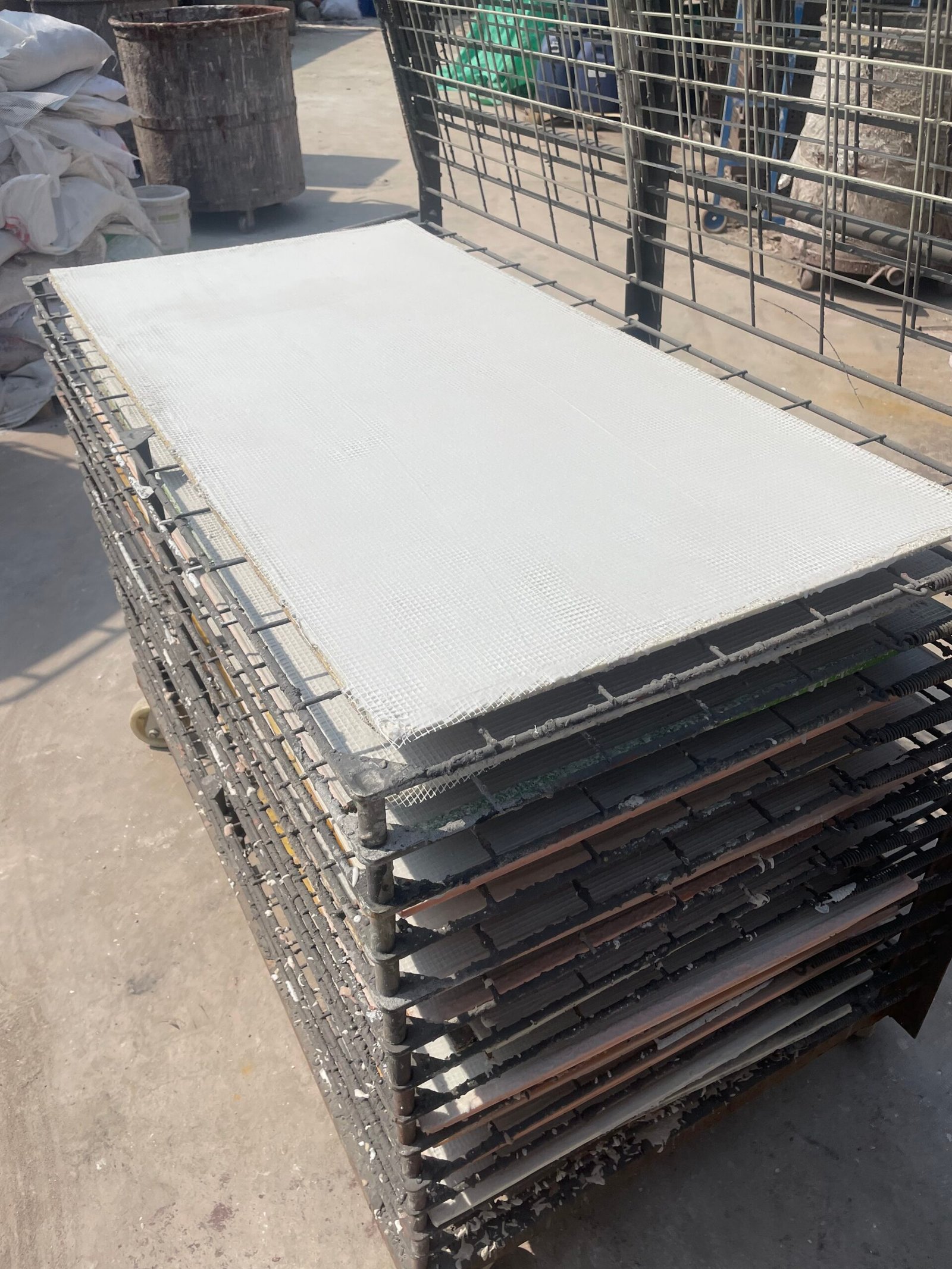
Sampling is a statistical decision, not a guess. Agree the sample size and the acceptance rule in the purchase order before production. The NIST/SEMATECH handbook on acceptance sampling explains the logic of sampling plans; you do not need to invent an AQL number on the inspection day. If the contract has no sampling clause, inspect enough panels to support the decision you are about to make, and record the sample size.
What documents should I pull before contacting the supplier?
Put the reference documents in one folder before you send the notice. The supplier will ask for them, and the third-party inspector may need them to interpret the findings.
- The purchase order and any technical annex, including the thickness and weight band, pattern code, backing, and packaging requirements.
- The approved first-article sample record, with the signed sample identifier and photographs.
- The batch-specific COA, plus the test reports for the product and thickness supplied.
- The packing list, the pallet or crate labels, and the batch number that ties the shipment to the production record.
- The inspection report, the raw measurements, and the photographs.
- The product data sheet and the installation manual, in case the dispute is about a declared property or a substrate requirement.
If the purchase order does not define acceptance criteria, say so explicitly in the notice. The fallback reference is the approved sample and the declared product data, not the inspector’s personal preference. The batch consistency check shows how the same documents are used on a reorder, and the manufacturer-versus-trading-company guide explains what to verify before the first order.
What remedies can I ask for?
The remedy should match the classification and should be written down with dates. A practical sequence is:
- Sort and replace. For isolated defects, require the supplier to remove the affected panels, replace them from conforming stock, and provide photographs of the sorted pack before loading.
- Rework or replace the batch. For systemic defects, require a new production run or a documented rework, with the root cause identified and the corrected batch re-inspected before shipment.
- Re-inspect. Make the re-inspection a condition of loading, not a promise after arrival. The cost of re-inspection can be agreed in the purchase order; if it is not, negotiate it before the second inspection.
- Delay the shipment. A short delay is usually cheaper than a container of material that has to be replaced at the destination.
- Cancel the affected lot. Reserve cancellation for a systemic failure that the supplier cannot correct in time. It is the last resort, not the opening move.
Who pays for the remedy depends on the contract and the Incoterm. Our standard term is FOB Shanghai; under FOB, risk passes when the goods are on board, so a defect caught before loading is a supplier conversation, while a defect found after discharge is usually an insurance or claim conversation. That is why the inspection happens before the container is closed.
Do not accept a verbal promise to “fix it in the next batch.” Ask for a corrective action plan with a responsible person, a date, and the evidence that will be provided. Do not let the affected panels be mixed with conforming stock; a mixed container makes the claim harder and the installation risk higher.
How do I prevent the same failure on the next batch?
Prevention starts in the purchase order. Lock the thickness and weight band for the pattern, the backing construction, the pattern or color code, the packaging spec, and the inspection rights. If the order is a reorder, reference the approved sample and the batch number that was accepted. The أدلة المشتري cover the sourcing side of this in more detail.
Keep the first-article sample and the inspection report with the order file. Use the same measurement sheet on every batch so the numbers are comparable; a report that changes format every time cannot show a trend. Ask for the batch number on the COA, the packing list, and the pallet label, and check that the three agree before the container is loaded.
If the same defect appears twice, treat it as a process problem rather than a shipment problem. The factory’s corrective action should address the cause — the binder mix, the pigment lot, the mold condition, the packing line — not only the panels in front of you. A factory that can explain what changed is easier to trust than one that promises the next batch will be better.
What should the final inspection report contain?
A useful report is short enough to read and specific enough to act on. It should include:
- Header: purchase order number, product and pattern, batch number, inspection date, inspector, quantity inspected, and sample size.
- Findings by category, with counts and photographs, separated into isolated, systemic, and specification issues.
- A measurement table with the declared band, the measured values, and the pass or fail result for each property.
- A conclusion: pass, fail, or conditional pass with the conditions listed.
- The corrective action requested, the responsible party, and the deadline.
- Signatures from the inspector and the factory representative, with the date.
The report is also the record for the next order. File it with the COA and the approved sample, and use the same inspector or checklist if the project continues. A well-written failure report is not a complaint; it is the baseline for the next acceptance decision.
الأسئلة الشائعة
Should I reject the whole batch if the inspection fails?
Only if the defect is systemic. Isolated edge chips or surface marks can be sorted and replaced; a batch that is out of tolerance across multiple panels cannot be sorted into conformity.
Can I inspect after the container is loaded?
You can, but the remedy is weaker. Once the goods are on board, risk and cost shift toward a claim. The inspection is most useful before loading, when the supplier can still sort, rework, or replace.
Who pays for a re-inspection?
It depends on the contract. Agree the re-inspection cost and the acceptance criteria before the first inspection, so the second one is a procedure rather than a negotiation.
What if the supplier disagrees with the inspector?
Go back to the agreed reference: the purchase order, the approved sample, and the product data sheet. Measure the disputed property and, if needed, send a sample to an independent lab. A measured disagreement is easier to resolve than an opinion.
Does a COA guarantee the batch?
No. A COA describes one production run and the tests performed on it. It is evidence, not a guarantee; the inspection and the batch record are what connect the document to the panels in the container.