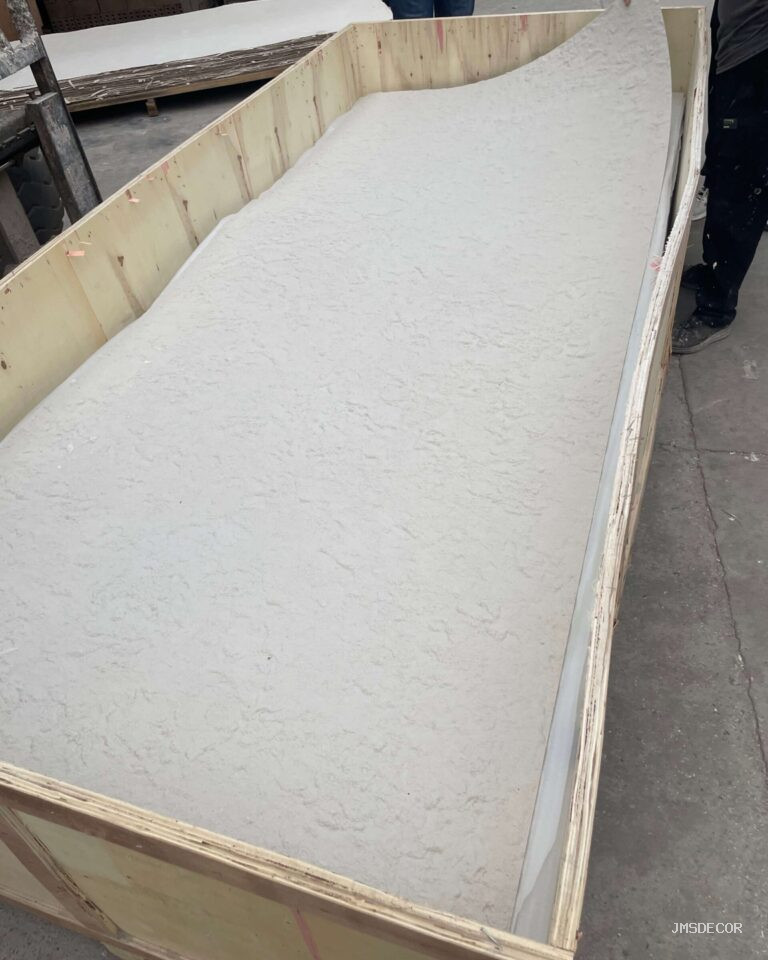
Every bonded-stone project produces the same handover archaeology: tape marks from the protection sheets, adhesive smears from the sealant gun, glue ghosts from stickers and tapes, dust film bonded into the texture, and the occasional blob of adhesive squeezed from a panel joint. Removing them wrongly is how premium walls get their first permanent scars — a scraping blade, an aggressive solvent, a melamine sponge with enthusiasm — and removing them right takes about an hour for a whole wall. This guide covers post-works residue removal as a handover discipline: what each type of residue is, the removal method per type, the solvents that are safe and the ones that are not, and the final inspection that decides whether the wall is genuinely clean or just looks it.
Why handover cleaning is its own skill
Construction residues differ from daily dirt in three ways, and each changes the method. They are aged — a tape mark from six weeks ago has bonded itself harder than one from yesterday. They are mixed — a corner can carry tape adhesive, dust bonded into the texture, and a sealant smear, each needing a different approach. And they sit on a printed mineral face that tolerates solvents well but abrasion badly — the exact inverse of what a scraping instinct wants to do. The handover clean is therefore a planned pass with a method per residue type, not a general wipe-down with the strongest thing in the cupboard.
The stakes justify the discipline: the residue pass is the last touch the installing crew has on the wall, and every mark left behind becomes the client’s first impression. The hour it takes is the cheapest reputation insurance on the project.
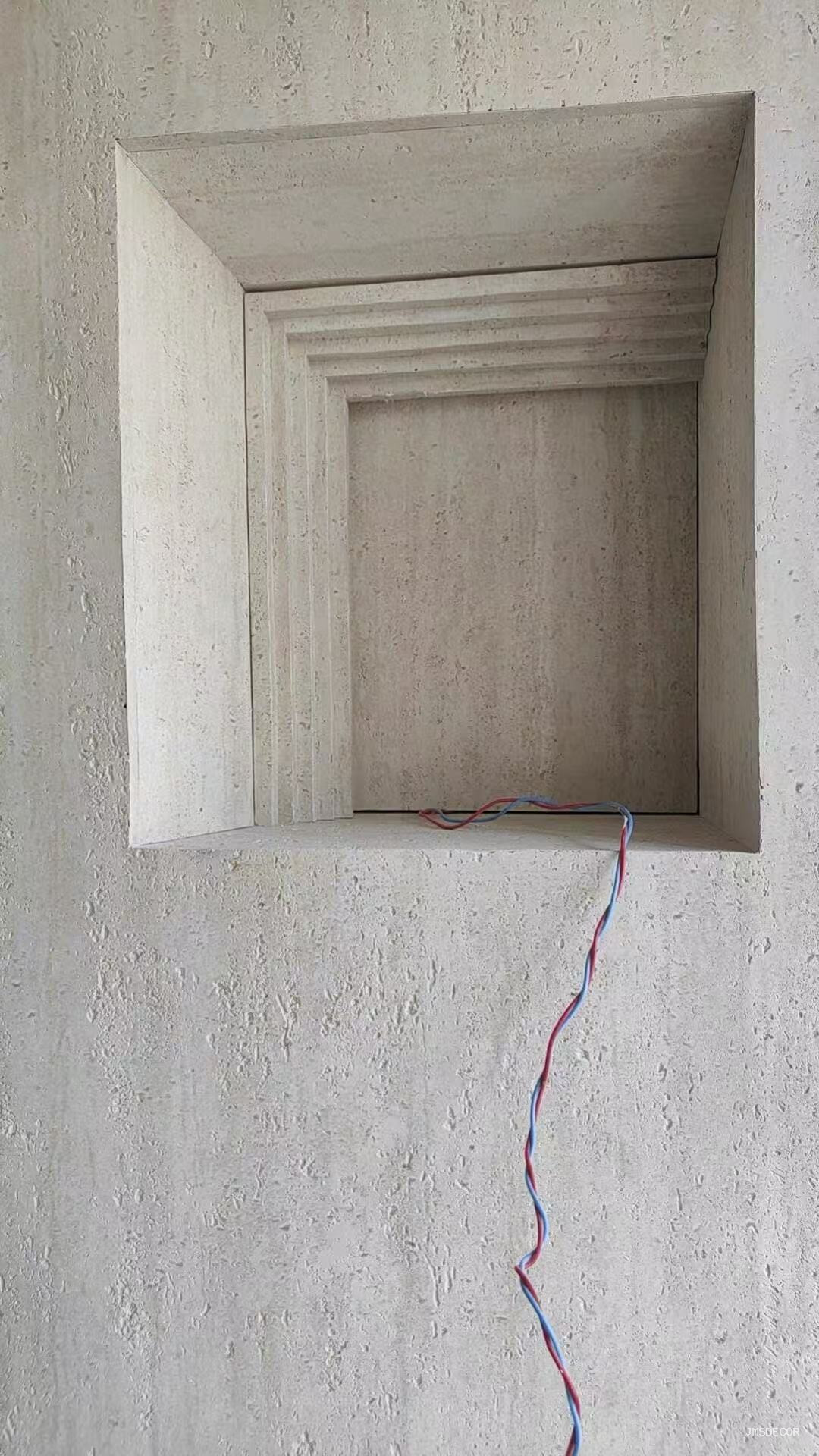
Residue type one: tape and film marks
Protection tape and film leave two things: the adhesive residue and, on long-aged tape, a ghost line where the face weathered differently under the film. The removal sequence: peel the film and tape slowly and flat — fast peeling snaps adhesive onto the face; then remove the residue with isopropyl alcohol on a microfibre cloth, working small circles from the outside of the mark inward. The ghost line usually lifts with the same alcohol pass plus time; a stubborn ghost after a week is the face’s sheen having changed under the film, and it is judged at final inspection rather than attacked — sheen differences relax over weeks of normal cleaning, and attacking one with abrasives turns a ghost into a scar.
The prevention that makes this section short: remove protection films as soon as the works allow rather than at handover, per the timing rules in our protection guide. Film that comes off within weeks leaves rung-one marks; film that comes off at handover leaves rung-three archaeology.
Residue type two: adhesive smears and blobs
Squeezed adhesive from panel joints and smeared beads from the sealant gun are the handover clean’s hardest residents, because they cure to the face. Fresh squeeze-out is cut and tooled off during installation, per the joint discipline in our دليل السيلانت; the handover pass deals with what escaped. Cured adhesive blobs are softened, not scraped: the recommended remover is applied to a cloth and taped over the blob to dwell, then the softened mass peels and the ghost film lifts with an alcohol pass. Smears respond to the same dwell-and-wipe. What never touches cured adhesive: razor blades and scrapers — they remove the blob along with the printed surface’s sheen, and the scar reads worse than the blob ever did.
The prevention is the installer’s habit: tool joints immediately, wipe the gun’s path as you go, and mask edges before any bead. The handover clean then has nothing harder than tape marks to face.
Residue type three: dust bonded into texture
Construction dust does not sit on textured faces; it bonds into the valleys with moisture and time. Dry brushing lifts the loose fraction; the bonded fraction needs a wash — neutral detergent, warm water, a soft brush worked into the relief, rinsed and dried — the texture-cleaning method our maintenance guide describes for routine care, scaled up for the one-time handover pass. What the wash must never include: acid or alkaline builders’ cleaners, which etch the face’s binder and dull the sheen in one application. The rinse matters as much as the wash — detergent left in the texture reappears as a grey film within weeks.
The final inspection: clean or just looks it?
- The raking-light pass. A torch held low across the whole field shows residue, ghosts and sheen changes that room light forgives — the same inspection the handover photos from our submittal guide should include.
- The touch pass. A clean hand reads adhesive residue that eyes miss — grit and tack announce themselves.
- The cloth test. A white cloth wiped across the field after cleaning; colour on the cloth means the wash left detergent or dust in the texture.
- The sheen comparison. Cleaned sections compared against untouched areas — any local sheen change is recorded and left to relax, not attacked.
- The photograph set. The cleaned wall photographed as handed over — the baseline the maintenance file starts from.
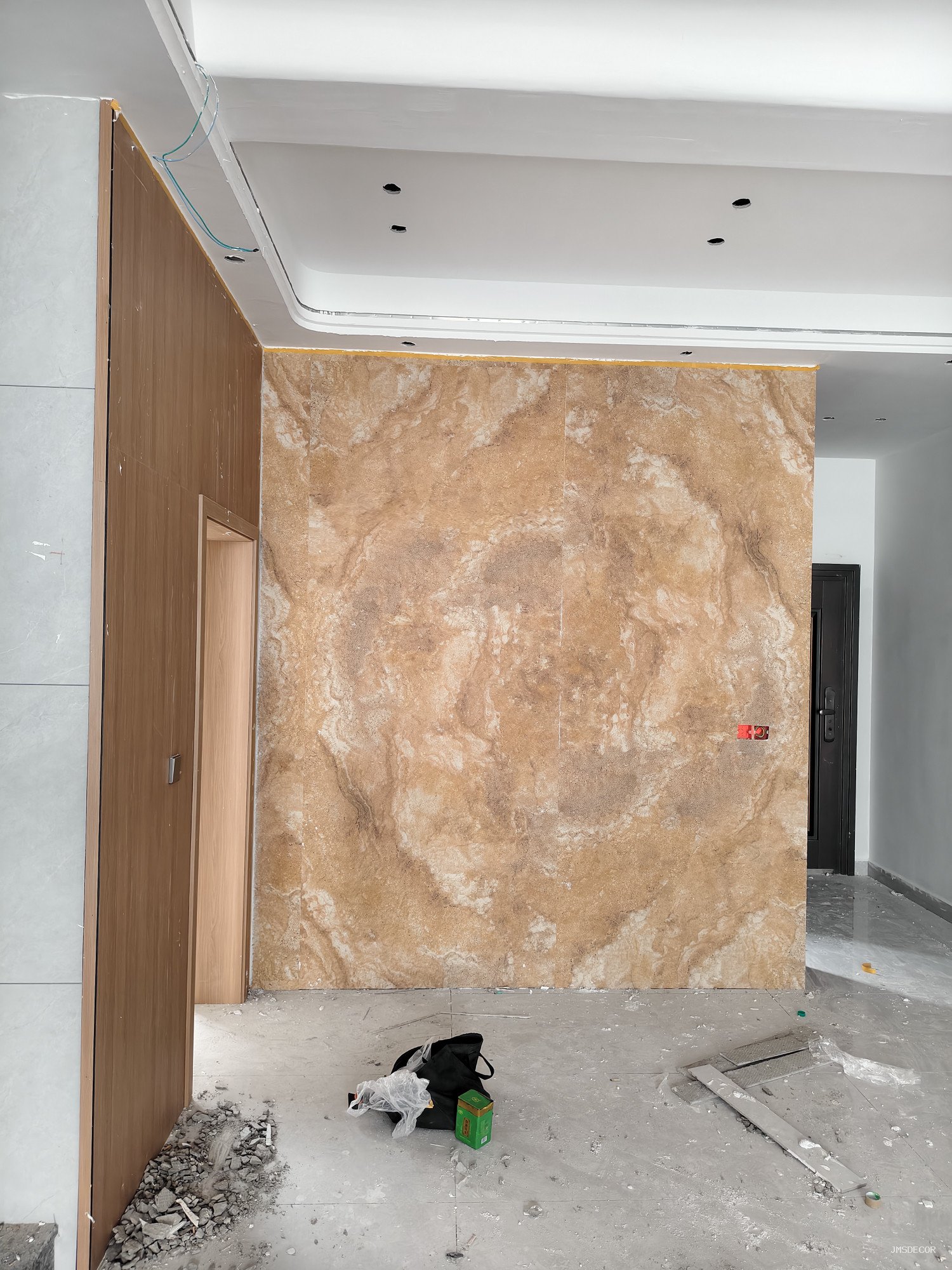
Residue type four: the smears you cannot see until the light moves
Some residues are invisible at handover and appear at the client’s first evening — the adhesive ghost that room lighting forgives and the wall washer exposes, the finger marks in the texture’s valleys, the cleaning product’s own film dried into the relief. The handover clean therefore ends with the raking-light pass described above, and where a ghost is found, the response is the measured one: alcohol pass for adhesive ghosts, a clean-water rinse for detergent films, and the sheen record for anything that persists. What the pass is not is a reason to escalate chemistry — most evening-visible ghosts are one more alcohol pass away from gone, and the impatient ones become the sheen scars our repair guide cannot fix.
Scheduling the pass at dusk, with the room’s actual lighting on, finds these residues when they can still be fixed. A handover clean performed in bright daylight inspects in the most forgiving light the wall will ever have, which is why the last hour of the job is scheduled against the sun rather than against the clock.
What the handover clean kit contains
The pass is quick because the kit is small and specific: isopropyl alcohol and the system’s approved adhesive remover for dwell work; neutral detergent and soft brushes for the wash; microfibre cloths in quantity — one per residue type, because a cloth that lifted adhesive smears it on the next panel; masking tape for protecting adjacent finishes during solvent work; the torch for the raking pass; and a white test cloth. What the kit never includes: blades, abrasive pads, acetone, and the confidence that comes from having cleaned other surfaces successfully — the printed mineral face is forgiving of solvents and unforgiving of friction, which is the one fact every person doing the pass needs to hold.
The kit lives in the same box as the spare-panel register and the care instruction — the handover file from our maintenance plan guide — because the residue pass is the first page of the wall’s maintenance life, and the tools that did it should be the tools that maintain it.
Why the handover clean belongs in the contract, not in goodwill
The residue pass is work — hours of it on a large project — and its absence from the contract is why it gets skipped, rushed, or argued about. The drafting fix is one line in the installation scope: the handover clean, specified as the residue-type pass with the raking-light inspection and the photographed baseline, per the clause logic in our contract guide. What that line buys both sides is the handover standard: the client walks the wall with the photographs as the reference, and “clean” is what the pictures show, not what the mood says.
The same line protects the finisher from the trades that follow. A wall cleaned and photographed at handover is a wall whose later marks have a birth date — the scuffs and residues that appear after the photographs belong to whoever came after, and the baseline is what proves it. Protection schedules and handover photos are the same argument, made once and reused for the life of the wall.
الأسئلة الشائعة
Can I use a heat gun to soften old adhesive?
No — concentrated heat on a thin bonded sheet risks the adhesive bed beneath the finish, not just the residue on it. Chemical dwell is slower and safe; heat is neither.
ما الأفضل لإزالة غبار البناء من النقوش العميقة؟
الغسيل المحايد الدافئ بالفرشاة الناعمة، جزءاً تلو الآخر، مع الشطف أثناء العمل. يدفع الهواء المضغوط الغبار أعمق في الملمس، والمسح الجاف ينقله عبر البروزات.
كم من الوقت يستغرق للاختفاء التدريجي لخطوط الفيلم؟
تختلف التباينات اللامعة تحت الفيلم وتتلاشى تدريجياً مع أسابيع من التنظيف الطبيعي — ويختلف المدى الدقيق حسب الغرفة. القاعدة هي تسجيل الخطوط الظليلة عند التفتيش النهائي ومقاومة إغراء استخدام المواد الكاشطة؛ فالزمن وروتين العناية هما الحل.
من يصادق على نظافة التسليم؟
فريق التركيب، وذلك بفحص الضوء المائل واختبارات Cloth — مع حفظ الصور كأصل مرجعي للتسليم. يتفقد العميل الحائط بالاستناد إلى تلك الصور، وهكذا يتحول مفهوم “النظافة” من رأي إلى معيار موثق.
خطط لمرحلة إزالة البواقي كمرحلة عمل، واستخدم الطريقة المناسبة لكل نوع من البواقي، وافحص تحت الضوء المائل قبل اعتقادك بأن العمل انتهى. وثائق العناية بالمنتج موجودة في الـ قشرة حجرية مرنة صفحة، كما يتم نشر سلامة مواد التنظيف الكيميائية في الموقع بواسطة OSHA.