Choosing the right Flexible Travertine is often the key difference between achieving a luxury Roman aesthetic and creating a long-term maintenance liability for housekeeping staff. While authentic travertine offers a timeless appeal, its porous, pitted surface is notorious for trapping dirt, grime, and moisture—a significant sanitation challenge in hotel lobbies and spa environments.
This natural characteristic quickly turns a design feature into an operational bottleneck, driving up cleaning costs and risking negative guest feedback on property cleanliness.
This technical overview details how a modern travertine collection solves these issues at the material level. We will explain the “hole-free” sealed surface technology that mimics the visual texture of classic travertine without the actual pits. We will also compare the distinct profiles of the Romantic 3D and Classic finishes and cover the installation specifications that allow these lightweight panels to mount directly to drywall without structural reinforcement, saving significant time and budget on renovations.
The “Roman Aesthetic” in Modern Hotels
By 2026, the most successful hotel designs in Rome blend the city’s architectural legacy with modern functionality, using classic materials to create an authentic atmosphere that commands a premium.
Blending Historical Elements with Contemporary Needs
In 2026, luxury hotels in Rome are artfully combining the city’s deep architectural history with modern design principles. This approach uses classic materials in fresh ways, creating spaces that feel both timeless and current for today’s traveler.
- Designs frequently incorporate traditional materials like travertine and marble to evoke a sense of place.
- The objective is to respect historical proportions while seamlessly integrating modern technology and comfort.
- This fusion offers guests a unique experience that is firmly rooted in Rome’s rich cultural heritage.
The Central Role of Natural Stone

Natural stone is fundamental to achieving the Roman aesthetic. Its visual and tactile richness provides a direct link to the city’s architectural legacy, adding a layer of luxury and authenticity to hotel interiors.
- Travertine remains a key material for evoking the feel of classical Roman buildings.
- The use of natural stone highlights a commitment to quality craftsmanship and durability.
- Its inherent texture adds visual depth and sophistication, often within a minimalist design framework.
Creating an Authentic Atmosphere
This trend focuses on capturing the emotional resonance of Roman design rather than simple imitation. It involves celebrating artisanal traditions to develop individualized spaces that feel genuine and carefully planned.
- Hotels now prioritize the authentic restoration of historical details and features.
- Designs emphasize Italian craftsmanship, bringing a sense of artisanal quality to the forefront.
- The resulting spaces are sophisticated and refined, allowing the quality of the materials to define the environment.
The Problem with Real Travertine (Pits & Dirt)
The defining characteristic of real travertine—its natural pits—is also its greatest operational liability, creating a cycle of dirt accumulation and costly maintenance.
Natural Pits Trap Dirt and Grime
Travertine’s classic aesthetic comes from its porous structure, which is also its main operational drawback. The stone is defined by natural pits, holes, and voids that are highly effective at collecting dirt, dust, and grime from spills. In any commercial or high-traffic residential setting, this creates a significant cleaning challenge. Over time, these pockets become reservoirs for dirt that standard mopping and cleaning can’t remove, leading to a permanently grimy appearance.
- The stone’s signature pitting presents a persistent maintenance headache for facility managers.
- These voids act as collection points for grime, making regular cleaning protocols ineffective long-term.
Ongoing and Costly Maintenance Cycles
Maintaining real travertine is not a one-time task but a recurring operational expense. The standard procedure involves a labor-intensive cycle of deep cleaning the pits, re-filling them with specialized grout, and re-sealing the entire surface. This process must be repeated periodically to keep the stone looking presentable, adding significant long-term costs that go far beyond the initial material and installation investment.
- Modern upkeep relies on polymer-modified grouts or epoxy fillers, which must be reapplied as they wear down.
- The industry positions travertine upkeep as an ongoing service, confirming it is not a “set and forget” material.
Surface Degradation in High-Traffic Areas
In commercial spaces like hotel lobbies and busy entryways, the structural integrity of travertine is put to the test. The constant pressure from foot traffic, luggage wheels, and cleaning equipment causes the fragile edges of the stone’s pits to chip and crumble. This physical degradation not only makes the surface look worn but also expands the voids, worsening the dirt-trapping problem and accelerating the stone’s overall decline.
- The natural voids inherently compromise the stone’s surface durability over its lifespan.
- Even rigid fillers can fail under constant impact, leading to more frequent and expensive repairs.
Source Premium, Customizable Soft Stone Panels
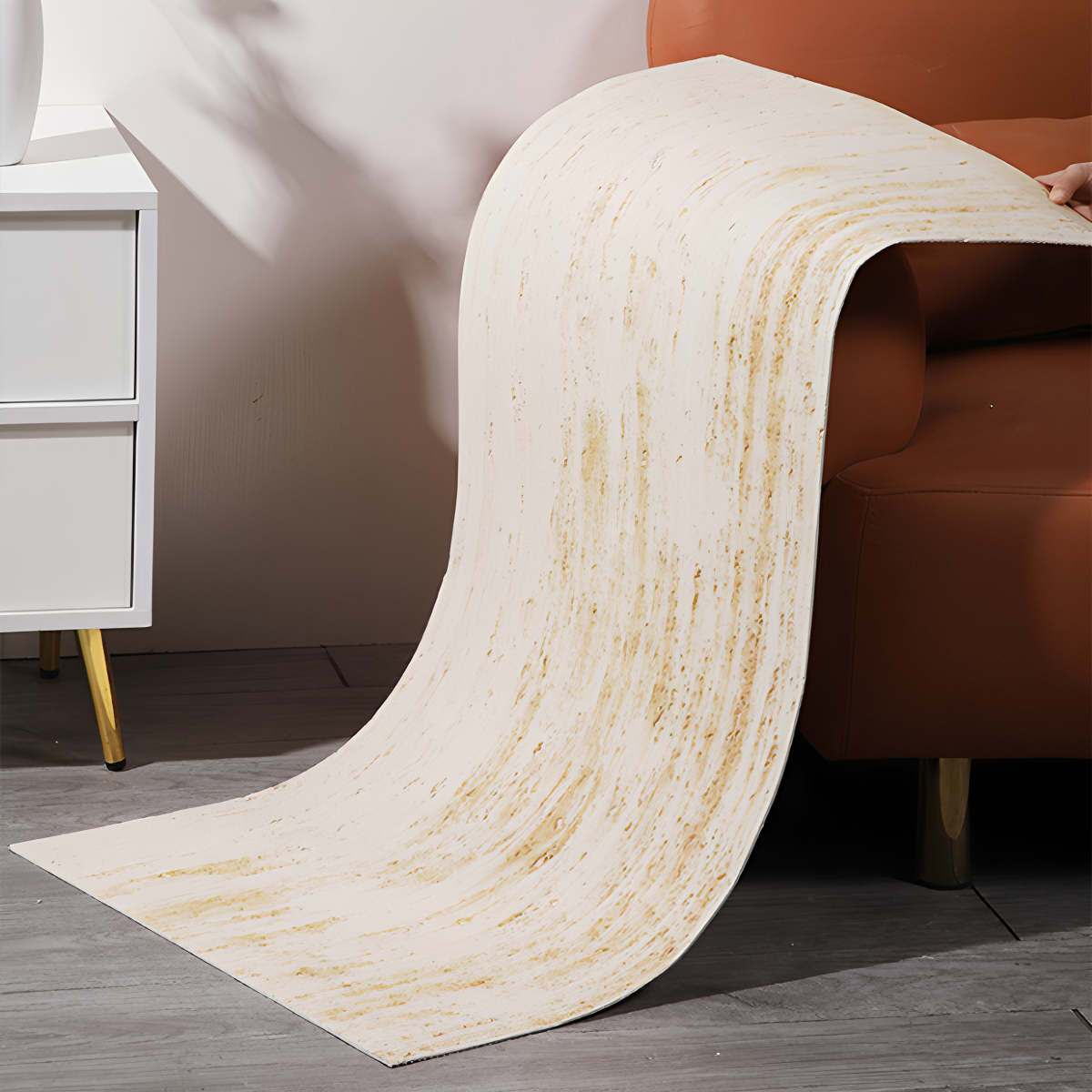
JMS “Hole-Free” Tech (Visual Holes, Sealed Surface)
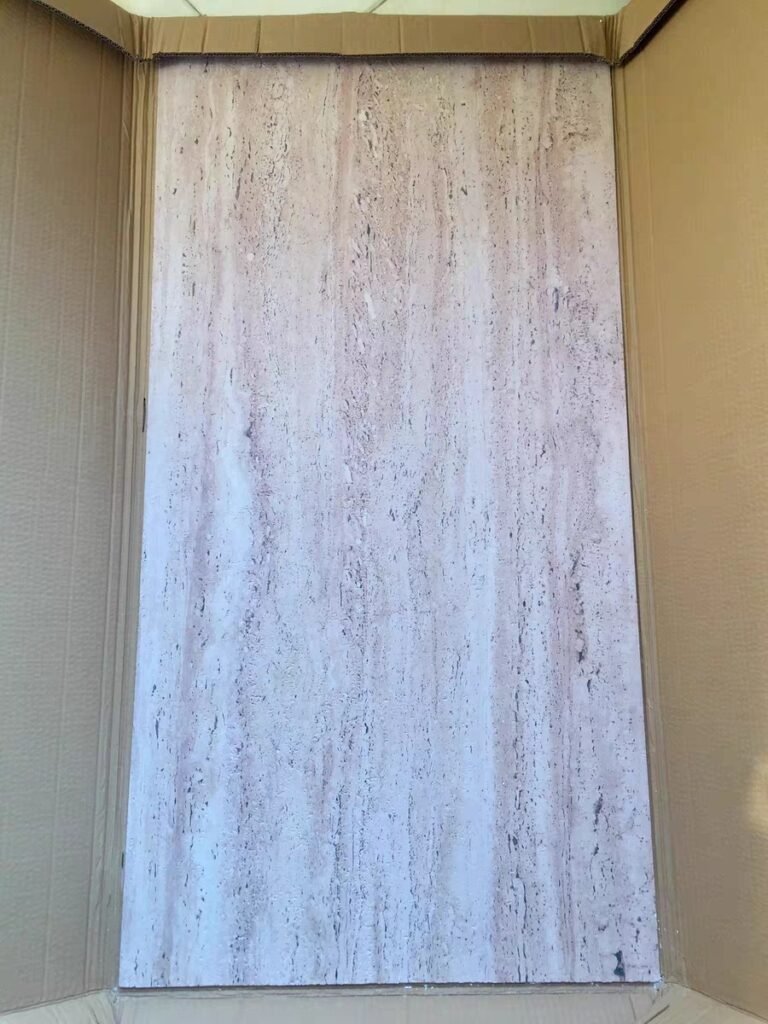
Our system engineers the classic pitted look of travertine into a completely sealed, non-porous surface, solving the persistent hygiene and maintenance challenges of natural stone in commercial spaces.
Addressing Hygiene and Maintenance Demands
The sealed surface of our flexible travertine panels is specifically engineered for the high standards of hospitality, retail, and healthcare environments. The completely non-porous finish prevents any accumulation of dirt, grime, or bacteria within the visual surface pits, which simplifies cleaning protocols dramatically. This design directly translates to long-term operational cost savings in high-traffic areas, as it reduces the labor and chemical usage associated with deep cleaning and maintaining natural stone.
Seamless Finish Without Grout Lines
We achieve a seamless, monolithic appearance by combining a thin natural stone veneer with a reinforced fiber mesh backing. This composite structure provides the authentic texture and depth of travertine pits while maintaining a perfectly smooth and sealed top layer. By eliminating grout lines, the final wall surface has fewer weak points, which improves its overall durability and resistance to moisture penetration—a common point of failure in traditional tile installations.
| Attribute | Traditional Travertine Slabs | JMS “Hole-Free” Flexible Travertine |
|---|---|---|
| Surface Pits | Physical, porous holes that trap dirt and bacteria. | Visual pits with a smooth, non-porous sealed surface. |
| Maintenance | Requires frequent, costly sealing and specialized cleaning. | Simple cleaning with standard agents; no sealing required. |
| Joints | Requires grout, creating weak points for moisture and stains. | Grout-free installation for a seamless, durable finish. |
| Hygiene | High risk of bacterial growth in porous pits and grout. | Easy to disinfect, meeting commercial hygiene standards. |
Faster Installation and Design Flexibility
Our flexible panels are installed using adhesive-based methods, which reduces project timelines by 60–70% compared to traditional tile or stone slab work. This speed offers significant labor savings and minimizes operational downtime during renovations.
The lightweight, bendable nature of the panels allows for clean application on curved walls, columns, and other irregular architectural features without the risk of cracking. Because the system imposes minimal structural load, it is a practical solution for a wide range of buildings, including both new construction and retrofits where weight is a critical concern.

Romantic 3D vs. Classic Travertine
Classic travertine offers timeless authenticity, but its weight and installation complexity make JMS 3D flexible travertine a superior choice for modern projects demanding design freedom and operational efficiency.
Classic Travertine: The Heritage Material
Classic travertine is the benchmark for a natural, Mediterranean aesthetic. As a quarried stone, it provides an authentic patina that architects value for high-end projects, particularly for flooring and patios. This authenticity comes with significant practical limits. The material is incredibly heavy, requiring substantial structural support and specialized labor for installation. Its porous nature also creates ongoing maintenance challenges, demanding regular sealing to prevent dirt accumulation and staining in its natural pits.
| Feature | Classic Travertine | JMS 3D Flexible Travertine |
|---|---|---|
| Weight | Extremely heavy; requires structural reinforcement and specialized handling. | Lightweight (3.5–6.0 kg/m²); imposes no structural load burden. |
| Installation | Complex, dusty, and labor-intensive; needs specialized masonry tools. | Simple direct adhesion; cuts with a utility knife and installs without dust or noise. |
| Application | Limited to flat surfaces like floors, walls, and patios due to rigidity. | Highly flexible; ideal for curved walls, columns, arches, and other complex shapes. |
| Maintenance | Porous surface requires frequent sealing to prevent staining and dirt buildup. | Sealed, non-porous, and waterproof surface is easy to clean and requires no routine sealing. |
JMS 3D Flexible Travertine: Modern Innovation
Our 3D flexible travertine delivers the visual depth and texture of classic stone without its physical limitations. By reconstructing natural stone powder with specialized polymers, we created a material that is both lightweight and highly durable. This composite structure is engineered for modern construction, where speed, cost-efficiency, and design flexibility are critical. It’s particularly effective for projects where traditional tiles are impractical, such as wrapping columns, cladding curved reception desks, or renovating existing spaces without costly demolition.

Choosing the Right Material for Your Project
The choice between classic and flexible travertine depends entirely on the project’s goals. If the primary driver is historical accuracy for a ground-level, flat surface where budget and installation time are not constraints, classic stone remains a valid option. For nearly every other commercial application—especially renovations, high-rise buildings, and spaces with complex architectural features—3D flexible travertine offers a clear advantage. It provides greater design freedom, dramatically reduces installation costs and timelines, and delivers a low-maintenance surface built for long-term performance.
Install on Drywall without Reinforcement
Lightweight flexible stone panels bond directly to drywall using modern polymer adhesives, eliminating the cost and labor of structural reinforcement for retrofits.
The ability to install stone veneer directly onto drywall fundamentally changes project workflows for both renovations and new builds. This process bypasses the traditional requirements for structural support systems, which historically made stone installation a complex, specialized, and expensive task. By leveraging modern material science, we can now achieve the aesthetic of authentic stone without the associated weight and structural burden.
Advanced Adhesives Eliminate Reinforcement Needs
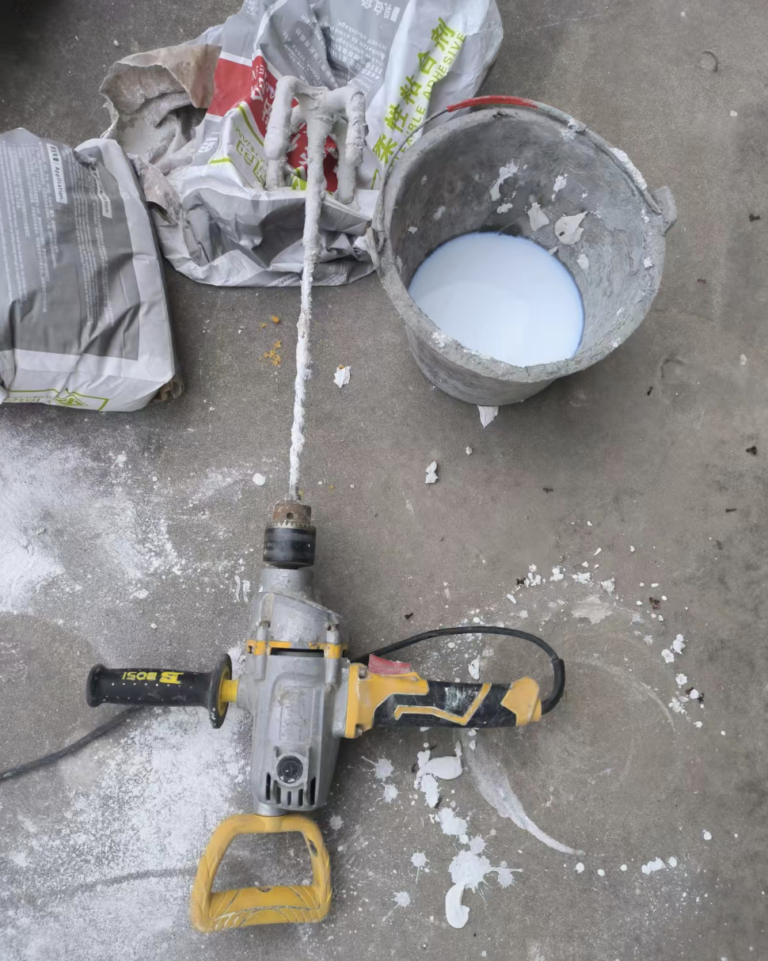
The core technology enabling direct-to-drywall installation is the development of advanced polymer-modified adhesives. These specialized bonding agents are engineered to create a powerful, permanent bond between lightweight stone veneers and standard gypsum board. Unlike traditional mortars, these formulas offer slight flexibility and superior adhesion, securely holding panels that weigh only 3.5-6.0 kg per square meter. This eliminates the need for metal lath or cement backer board, streamlining the installation process and reducing project timelines significantly.
Direct Application for Cost-Effective Retrofits
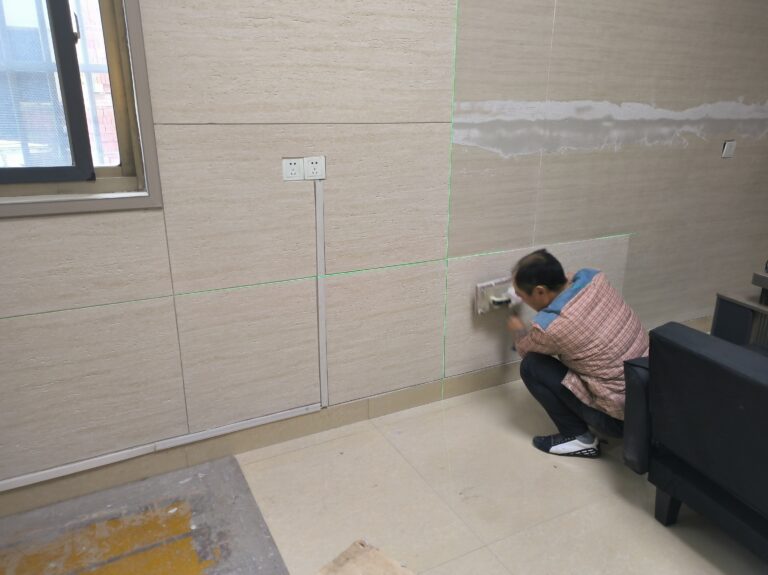
For renovation projects, the primary benefit is the ability to apply panels directly over existing, stable surfaces. This “direct overlay” or “zero-demolition” approach avoids the high costs, labor, and waste associated with tearing out old walls or tiles. Whether the substrate is painted drywall, cement board, plaster, or even old ceramic tile, a direct application minimizes on-site disruption, dust, and noise. This makes it an ideal solution for hotel and retail shopfitters who need to execute renovations quickly without interrupting business operations.
| Factor | Traditional Stone Slabs | JMS Flexible Stone (Direct Adhesion) |
|---|---|---|
| Structural Reinforcement | Required (Metal lath, cement board, structural anchors) | Not Required |
| Demolition of Old Surface | Almost always necessary to reach studs | Not necessary; direct overlay is standard |
| Required Tools | Wet saws, angle grinders, heavy lifting equipment | Utility knife, trowel, level |
| Labor Skill Level | Specialized masonry professionals | General contractors; DIY-friendly |
Simplified Process for DIY and Professional Installers
The installation system is designed for efficiency and accessibility. The process requires minimal surface preparation—just a clean, dry, and flat substrate. Panels can be cut with a standard utility knife, eliminating the dust and noise generated by masonry saws. This makes the system practical for a wide range of installers, from professional contractors looking to improve efficiency to skilled DIYers undertaking residential projects. The versatility across common substrates provides a consistent installation method for nearly any interior wall scenario.
Conclusion
The JMS Flexible Travertine Collection provides the classic Roman aesthetic for hotel and spa environments without the maintenance issues of natural stone. Our sealed-surface technology keeps the visual texture of travertine while preventing dirt buildup, and the lightweight design allows for direct installation on existing drywall. This approach simplifies renovations, reduces structural load, and delivers a high-end finish that is practical for high-traffic commercial spaces.
To see how these textures can fit your next project, contact our team to request a sample kit or view the full catalog.
Frequently Asked Questions
Travertine flexible stone?
Yes, flexible travertine stone is a modern architectural product. It consists of a very thin veneer of genuine travertine bonded to a lightweight, flexible backing, typically composed of fiberglass and a polymer composite.
This innovative format allows the natural stone to be applied to curved surfaces, columns, and feature walls where traditional solid slabs would be impractical. Its primary advantages are its light weight, which simplifies transportation and installation, and its ability to conform to non-linear designs, offering significant creative flexibility for interior cladding.
Lightweight travertine panels?
Lightweight travertine panels are engineered composite systems designed for large-scale architectural applications. They feature a thin, authentic travertine veneer (typically 3-7mm thick) laminated onto a rigid, low-density substrate like an aluminum honeycomb core, fiberglass, or polymer foam.
This construction reduces the panel’s weight by up to 80% compared to solid stone slabs. The benefits are substantial, including reduced structural load on the building, lower shipping costs, faster installation, and the ability to fabricate oversized panels for seamless and impactful wall cladding, ceilings, and elevator interiors.
Travertine alternative for bathrooms?
The best alternative to travertine in bathrooms is high-definition, travertine-look porcelain tile. Advanced digital printing technology allows porcelain to flawlessly replicate the color, veining, and texture of natural travertine while offering superior performance in wet environments.
Unlike natural stone, porcelain is non-porous, making it highly resistant to water, stains, and bacteria without requiring periodic sealing. Other excellent alternatives include engineered quartz for countertops and shower walls, and seamless microcement finishes for a modern, monolithic aesthetic that captures the earthy feel of honed stone.
Faux travertine wall covering?
Faux travertine wall coverings offer the aesthetic of natural stone with enhanced performance and design versatility. The most effective options are large-format porcelain slabs, which provide a highly realistic and durable surface.
For a more artisanal and seamless look, specialty plaster finishes like Venetian plaster or limewash can be applied by skilled artisans to mimic the matte texture and subtle color variations of travertine. Other popular commercial-grade options include luxury vinyl tile (LVT) wall coverings and high-pressure laminate (HPL) panels, which provide cost-effective, durable, and low-maintenance solutions for achieving the travertine look.
Best stone for hotel lobby?
For luxury hotel lobbies aiming for a sophisticated and timeless aesthetic, travertine and marble are premier choices. These materials provide a direct link to classical architectural heritage while suiting modern, minimalist designs. They offer the tactile richness and authenticity that high-end hospitality projects require. The “best” choice depends on the design intent: travertine provides a warm, earthy, and historically resonant feel, while marble offers a more polished and formal elegance.
For extremely high-traffic flooring, hard-wearing stones like granite or quartzite are also considered for their superior durability and lower maintenance requirements.