유연석 공사에서는 접착제 선택이 가격만으로 결정되는 단순한 문제가 아닙니다. 두 가지 결정 중 가장 자주 가격에만 맞춰지는 선택이기도 하죠. 두께 2~8mm의 미네랄 복합 시트는 타일과 거동 방식이 다릅니다. 세라믹 타일처럼 뒷면에 바르는 백버터링(back-buttering)을 무리하게 하면 문제가 생길 수 있으며, 기판을 가로지르지 않고 기판에 밀착되도록 설치해야 합니다. 또한 습기가 있는 공간에서는 접착층이 방수층 내부에 위치하게 되는데, 이 방수 구조가 유연성을 유지해야 합니다. 이러한 조건들은 단순 쇼핑 목록에 적힌 “grab(즉시 고정) 접착제'라는 한 문구로는 결코 충족되지 않습니다. 이 가이드는 구매자와 시공자에게 접착제 계열 간 실제 차이는 무엇인지, 어떤 벽면 상태가 선택을 결정하는지, 제조사 승인서를 어떻게 읽어야 하는지, 그리고 전체 벽면을 시공하기 전에 접착 성능을 입증할 수 있는 순서는 무엇인지에 대한 의사결정 프레임워크를 제시합니다.
시트가 접착제 선택을 바꾸는 이유
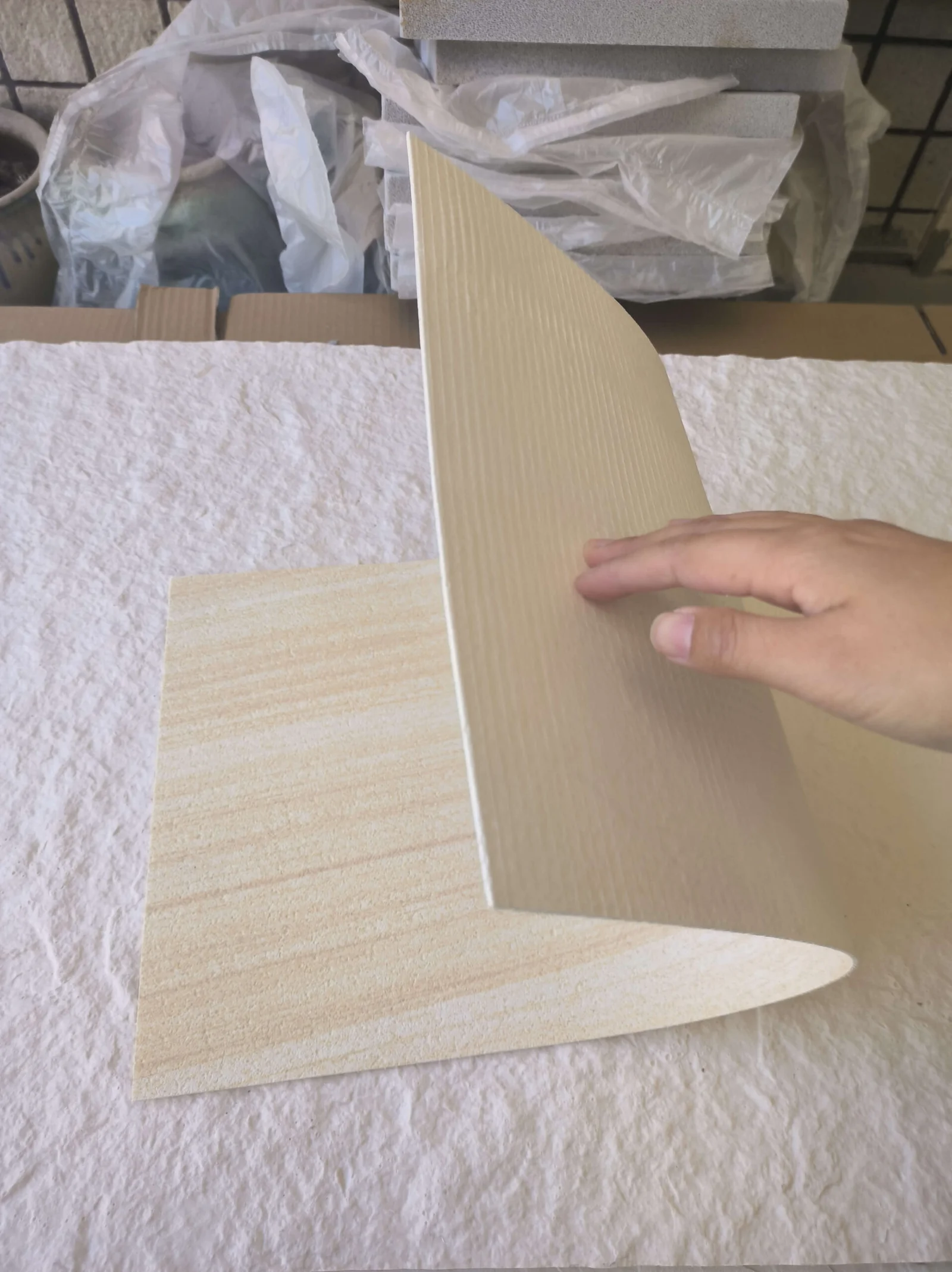
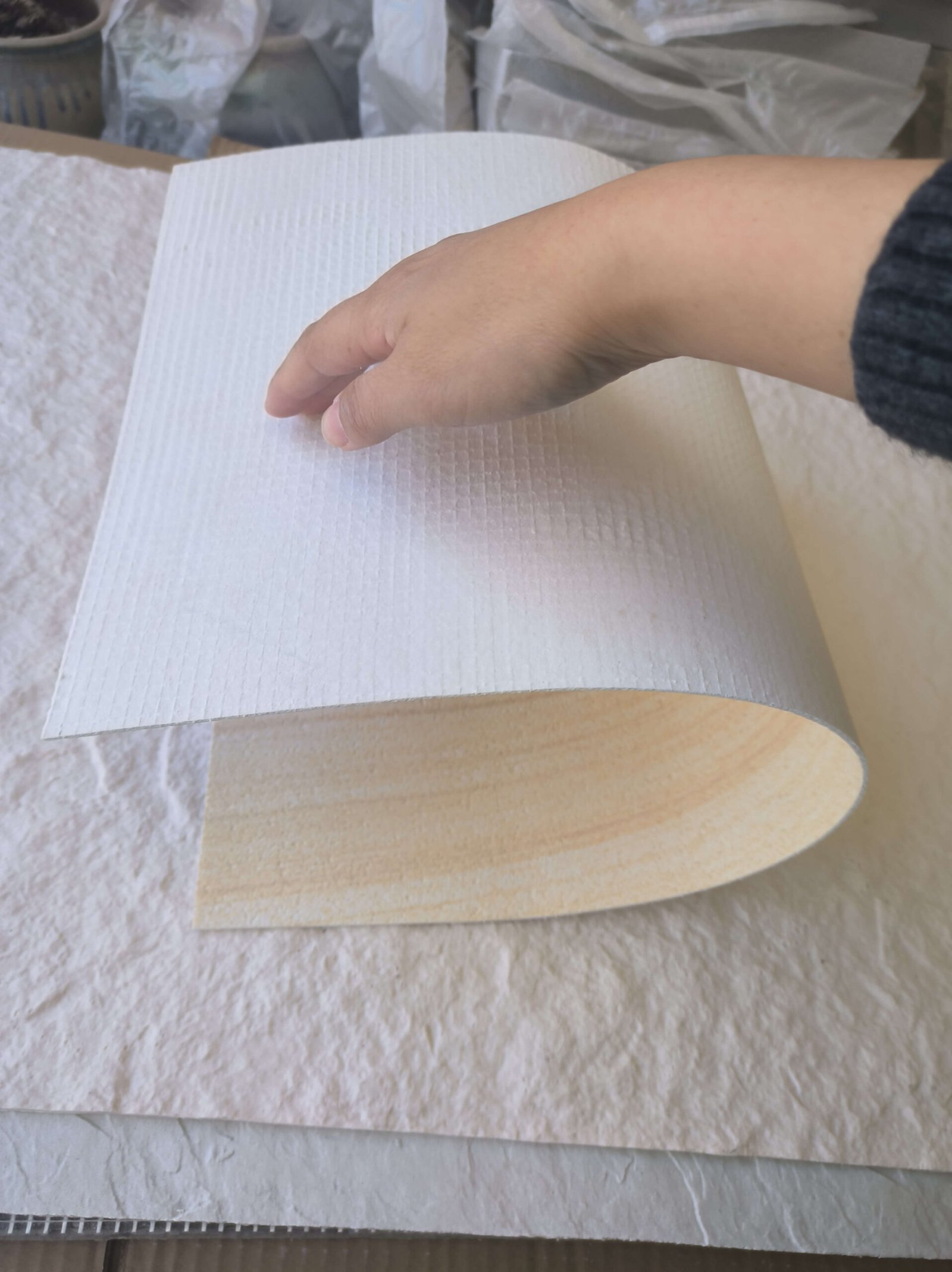
유연석은 무기 바인더에 섞인 천연석 분말에 유리섬유 메쉬를 보강재로 사용한 재료입니다. 메쉬는 시트 전체에 걸쳐 강도를 제공하지만, 강성(stiffness)을 주지는 않습니다. 단단한 타일은 접착층이 약한 부분이라도 자체 평탄성을 유지하며 걸치지만, 얇고 유연한 시트는 기판의 문제를 표면에 그대로 전달하며 휨이나 빈 공간(hollow)이 생길 수 있습니다. 따라서 접착제 beds는 타일보다 훨씬 더 많은 역할을 수행합니다. 접착제 beds는 시트가 벽면과 전체적으로 밀착 상태를 유지하도록 붙잡아 주는 유일한 수단이기 때문입니다.
여기서 사람들이 간과하는 또 다른 결과가 나옵니다. 시트가 기판 형태에 밀착되므로 접착제 리지(ridge)와 그 압착 상태를 이동 전사(transfer)를 통해 확인해야 합니다. 경화 후 시트를 들어 올리고 뒷면에 옮아 붙은 접착제 패턴으로 coverage를 판단하는 것이죠. 단단한 타일이라면 접착제 beds가 얇아도 어느 정도 용납될 수 있지만, 유연한 시트에서는 동일한 두께의 beds가 향후 빈 공간(hollow)으로 이어집니다. 저희 가이드의 백버터링 및 coverage(피복률) 을 자세히 다루고 있는데, 여기서 핵심은 접착제 종류 선택과 시공 방법이 두 개의 별개 결정이 아니라 하나의 통합된 결정이어야 한다는 점입니다.
접착제 계열 간에는 실제로 무엇이 다를까?
구매자가 화학 전공자가 될 필요는 없습니다. 계열을 구분하는 질문들을 알면 됩니다. 네 가지 질문이 대부분을 결정합니다.
- 이 접착제가 유연한 광물 표면 시트용으로 설계되었는가? MDF나 폼보드용으로 승인된 제품이 무조건 석분 표면+메쉬 구조에 적합한 것은 아닙니다. 중요한 승인은 유연석, MCM, 소프트 스톤이라는 재료 등급을 명시적으로 문面で 표기하는 것입니다.
- 오픈 타임(open time)은 어느 정도이며, 작업팀의 속도와 맞는지? 대형 시트를 설치하기 전에 표면에 스킨(skín)이 형성될 정도로 빠르게 grabbing하는 제품은 접착 강도가 어떠하든 잘못된 선택입니다. 이는 라벨이 아닌 제조사의 데이터 시트에서 확인해야 합니다.
- 접착제가 유연성을 유지하는가, 아니면 경화 후 강성(shim)이 되는가? 시트와 벽체는 모두 움직입니다. 경화 후 강성(shim)으로 굳는 접착제는 이 움직임을 표면으로 전달하여 변형이나 박리 문제가 생길 수 있습니다. 영구적으로 유연한 접착 라인(bond line)은 이러한 움직임을 흡수하고 견딥니다.
- Is it rated for the exposure? Interior dry wall, wet rooms and exterior facades are three different environments. A product cannot be assumed across them.
Notice what is not on the list: price per unit and “strongest bond” claims. Bond strength beyond what the system needs buys nothing; the wrong family at high strength is still wrong.
How does the substrate drive the choice?
The adhesive bonds to two surfaces, and the weaker one governs. Drywall, cement board, render, plywood and painted surfaces each absorb, resist or contaminate adhesion differently, and a product that performs on cement board may not be approved over a dusty render or a painted surface that was never meant to receive anything.
This is why the substrate check comes before the adhesive order. A wall that is not flat, sound and clean will defeat any adhesive, and a painted or sealed surface may need preparation or a different product entirely. Our guide to flexible stone over EIFS and render works through what a soft substrate demands before cladding is even discussed. The rule that travels: the adhesive approval names the substrates it covers, and a substrate outside that list is a question to the manufacturer, not a site improvisation.
What changes in a wet room or an exterior?
Water changes the failure mode, not just the risk. In a dry interior a marginal bond shows up as a hollow or a lifted edge. In a wet area water travels the void, so the same marginal bond becomes a leak path behind the finish. The adhesive in a shower or wet zone must be part of a waterproofed assembly: compatible with the membrane, rated for permanent damp, and applied over a system that is already tanked — the sequence is set out in our wet-room detailing guide.
Exterior work adds temperature movement and freeze-thaw where climates demand it. The bond line has to tolerate cyclic movement for years, which pushes the choice further toward products engineered to stay flexible, and the whole build-up — substrate, adhesive, sealant at edges — has to be treated as one system. An exterior wall is also where “the same adhesive as inside” most often fails, because interior products are simply not rated for the exposure.
What does a manufacturer’s approval actually tell you?
An approval is a set of conditions, not a compliment. When a supplier approves an adhesive for its flexible stone, read what the approval covers: which substrates, which exposure class, which application method and notch, and whether the sealant at edges is part of the tested system. The same product can be approved for interior drywall and explicitly excluded from wet zones, and the exclusion is usually in a note, not the headline.
This is also where the one-stop supply question belongs. Flexible stone systems ship with matched components — the panel, the adhesive and the sealant tested together. Buying the panel from one source and the adhesive from a hardware shelf means nobody has tested that pair, and if the bond fails, the panel supplier and the adhesive maker each have a defense. Matched components remove that argument; they are worth asking about at quotation stage, the same way you ask about samples and certification.
How do you prove the bond before committing the wall?
Run the sequence the manual implies, on a small area first, before the field goes up:
- Prepare the substrate to the approved condition — flat, sound, clean, and primed if the system calls for it.
- Apply the adhesive to the specified method and notch, on a day within the stated temperature range.
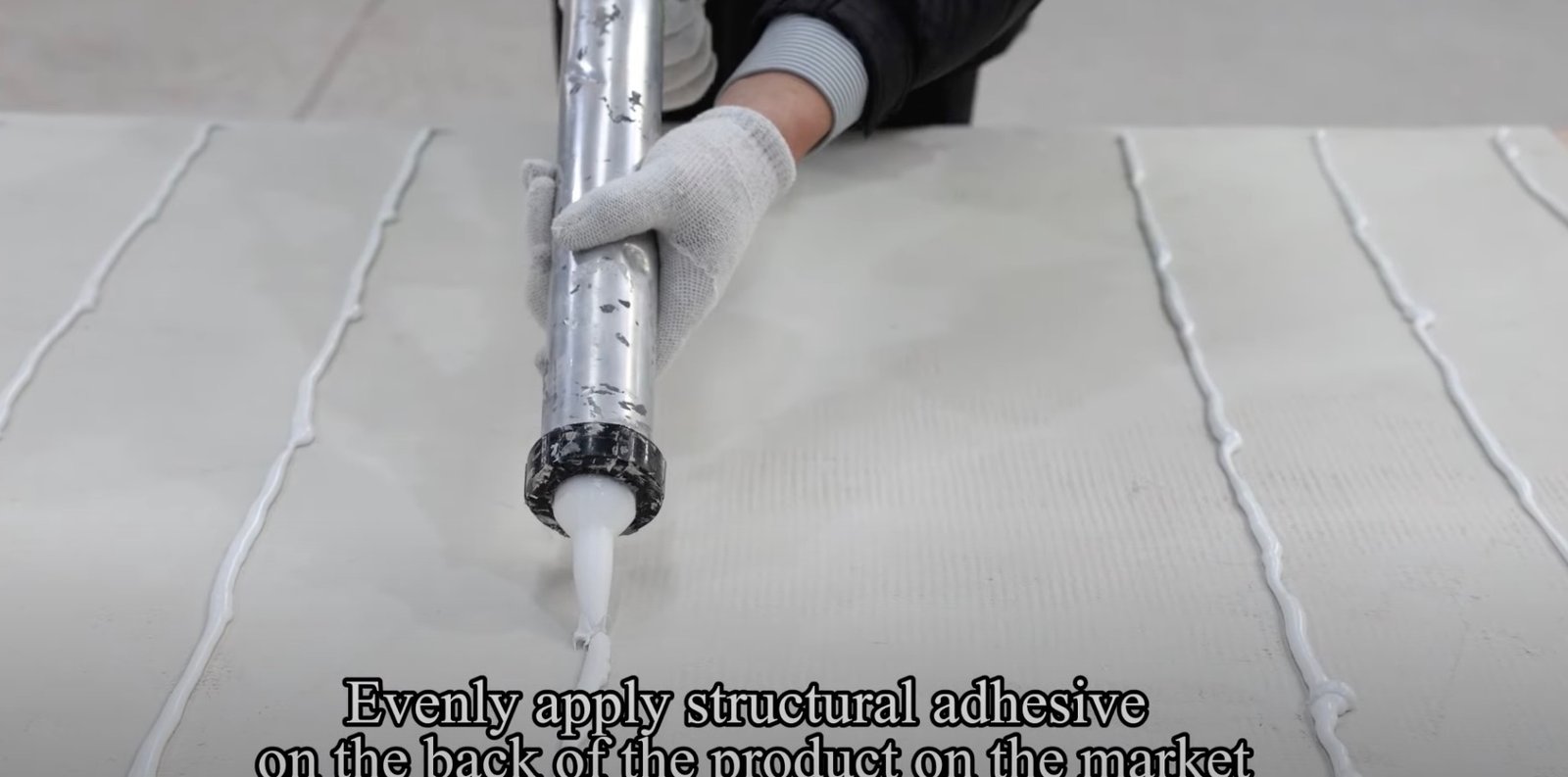
- Set two or three sheets in an inconspicuous place, pressing from the centre out to drive ridges into full contact.
- Lift one before the adhesive cures and read the transfer on the back. Full wet contact is the pass; channels and dry patches mean the method, the timing or the product is wrong.
- Only then lay the field, and keep a photographed record of the transfer test with the batch paperwork.
The lift test costs one panel and ten minutes. A hollow wall found at handover costs the whole elevation. This is the same evidence discipline that protects a buyer through inspection and COA checks — what you can show, not what you assumed.
What are the failure modes that trace back to adhesive selection?
Most callbacks on flexible stone walls arrive in one of three costumes, and each points back to a selection error rather than bad workmanship. Hollow-sounding panels within the first year usually mean the ridges never collapsed — an open-time or notch mismatch, not a lazy installer. Edge lifting at joints and corners traces to a bond line that hardened rigid and could not follow the movement the thin sheet passed into it. Wet-area delamination, the expensive one, is almost always an interior-grade product that met water, or a wet-rated adhesive applied over a tanking system it was never tested with.
The common thread is that none of these show up on the day of installation. Everything looks perfect at handover; the wall files its complaint months later, after the adhesive has cured to its final character and met its first season of movement. That delayed feedback is exactly why the selection decision deserves the same written discipline as the coverage check — when the failure appears, the question “which product, approved by whom, for which exposure” should have a documented answer.
자주 묻는 질문
Can I use the same adhesive indoors, in wet rooms and outside?
Not automatically. Exposure class is part of the approval: interior, wet-zone and exterior use are different conditions, and a product approved for one may be excluded from another. Check the data sheet for the specific exposure before ordering, and ask the supplier to confirm in writing for the zone you are cladding.
접착제가更强하다고 해서 벽 품질이 더 좋은 건가요?
아닙니다. 시스템이 요구하는 수준을 초과하는 접착력은 아무런 이점을 더하지 않으며, 실제로 중요한 특성인 시간이 지나도 유지되는 유연성, 작업팀에 맞는 오픈 타임, 기재와의 호환성은 별도로 평가해야 합니다. 시트 종류와 노출 환경에 맞는 제품군을 지정된 도포량으로 선택하십시오.
패널과 접착제가 다른 공급업체에서 나온 경우 책임은 누가 지나요?
어느 하나가 실패할 경우, 다른 쪽도paired 시험이 되지 않았기 때문에 방어 근거가 됩니다. 시스템 구성품을 매칭하면 이러한 간극이 제거됩니다. 만약 프로젝트상 다른 공급원 사용이 불가피하다면, 제안된 접착제가 해당 패널과 노출 조건에 적합하다는 내용을 패널 공급업체로부터 서면으로 확인받으십시오.
프라이머(primer)가 필요하나요?
일부 기재는 표면 처리가 필요하고, 일부 제품은 프라이머 도포가 필요합니다. 이는 둘 다에 따라 달라지며, 일반적인 규칙이 아닌 시스템 문서에 답이 있습니다. 승인 근거로 의존했던 절차의 논리를 무효화하지 않기 위해 지정된 프라이머를 생략해서는 안 됩니다.
대부분의 접착제 실수를 잡아내는 단일 체크 포인트는 무엇인가요?
첫 번째 시트에 대한 리프트 테스트(lift test)입니다. 이는 여전히 수리가 저렴할 때, 오픈 타임 오류, 잘못된 노치, 피부 형성된 접착제, 오염된 기재 등을 한 번에 확인시켜 줍니다.
특정 프로젝트용 접착제 가이드라인은 항상 시스템 설치 설명서 및 제조업체 데이터 시트와 대조하여 확인해야 합니다. adhered finishes의 기준을 마련하는 기준 기관, 예를 들어 Tile Council of North America, 는 시공자가 준수하는 참조 방법을 게시합니다. 시트 자체의 형식 및 두께 옵션은 flexible stone veneer 페이지.