A curved wall, a wrapped column or a rounded arch asks one question of a stone panel before anything else. How tightly can it bend? The flexible stone minimum bend radius answers that, and it decides whether a design stays a single wrapped surface or breaks into joints and trims. This guide sets out the working radius for the JMS Decor range and the two factors that move it.
The figure is a working number, not a laboratory limit. It says what the sheet will do on a normal site, with standard adhesive, over a sound substrate. Read it before the format and the pattern are locked, because both can change the answer.
Bend radius is set by thickness and pattern, so the same range bends tighter on a thin travertine sheet than on a thick patterned one.
What Minimum Bend Radius Actually Means
Bend radius is the radius of the smallest curve a sheet can follow without creasing, cracking or lifting at the edge. It is measured on the inside of the curve, from the centre point of the arc to the face of the panel. A 200 mm radius describes a curve about 400 mm across at the diameter.
That difference matters on drawings. Architectural schedules often quote a diameter, while a supplier quotes a radius. Halve the figure and a curve looks possible. Keep it whole and the same curve fails. Confirm which one a plan uses before any order is placed.
The working figure is read on the panel face, over a sound substrate and with the standard adhesive system. It describes what a site can build, not what a press can force once. A sheet pushed past the flexible stone minimum bend radius by hand will creep back and lift at the joint within days.
Across the JMS Decor flexible stone minimum bend radius, the general working figure is about 200 mm. That covers the standard sheets most walls, columns and arches are built from.
Why Thickness Sets the Curve Limit
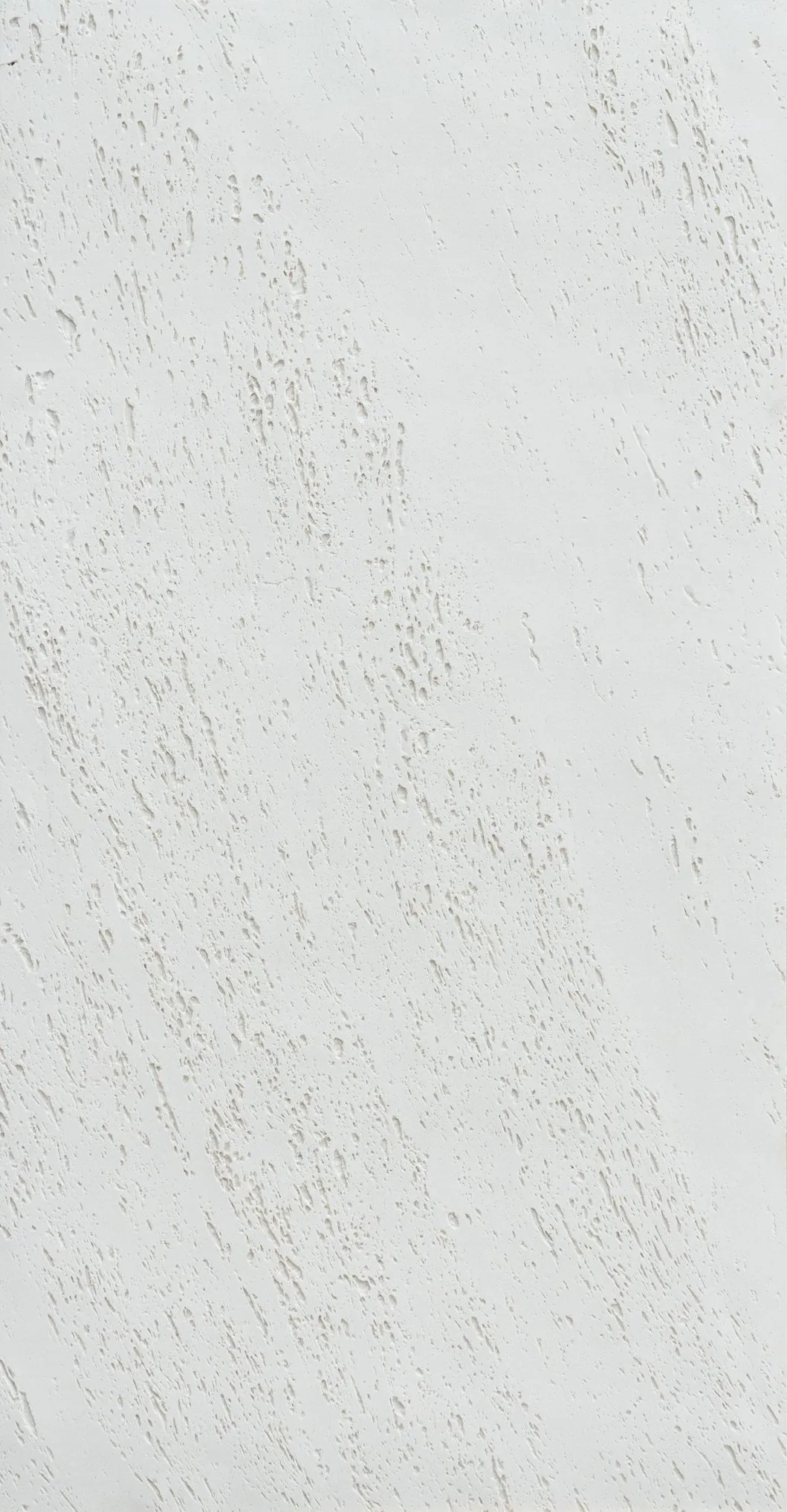
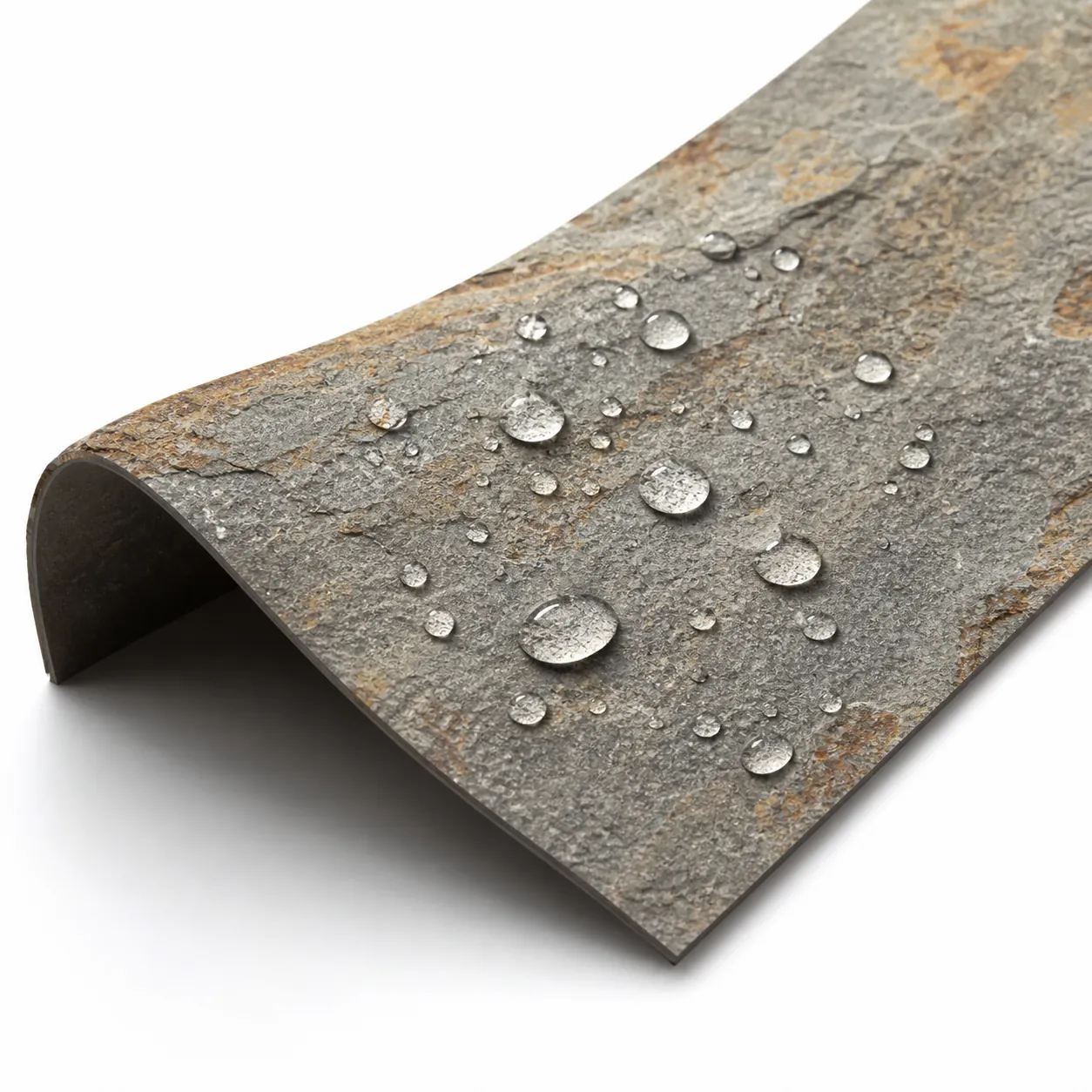
Flexible stone is a mineral skin. Natural stone powder is bonded with an inorganic gel and held together by a fibreglass mesh layer. The thinner that build up, the less material there is to resist the bend, and the tighter the sheet can turn.
The range runs from 2 mm to 8 mm. A thin travertine sheet at 2.5 to 3 mm bends to a tighter radius than the 200 mm general figure, which suits small columns and tight returns. A sheet at the top of the range is stiffer and holds the wider working radius. The standard sheets a specifier buys from our 유연석 패널 range sit across that band.
Thickness sets the flexible stone minimum bend radius more than any other single factor. A specifier who knows the sheet gauge already knows most of the answer, before the pattern is chosen or the substrate is fixed.
The table below sets out the three bands a specifier will meet most often.
| Sheet | 두께 | Working minimum bend radius |
|---|---|---|
| Thin travertine sheet | About 2.5 to 3 mm | Tighter than 200 mm |
| Standard flexible stone sheet | Up to 8 mm | About 200 mm |
| Thick complex pattern | At the top of the range | About 300 mm |
Thickness is chosen with the curve in mind. Where the arc is generous, a heavier sheet gives a deeper surface. Where the arc is tight, the thinner sheet carries it cleanly. Knowing both before the order avoids a redesign on site.
A specifier can hold two sheets of the same pattern at different gauges and feel the difference in stiffness. That is the simplest check before a drawing is committed. A sample set that carries both the standard and the thin travertine sheet saves a revision later.
Bend Radius by Pattern and Grain
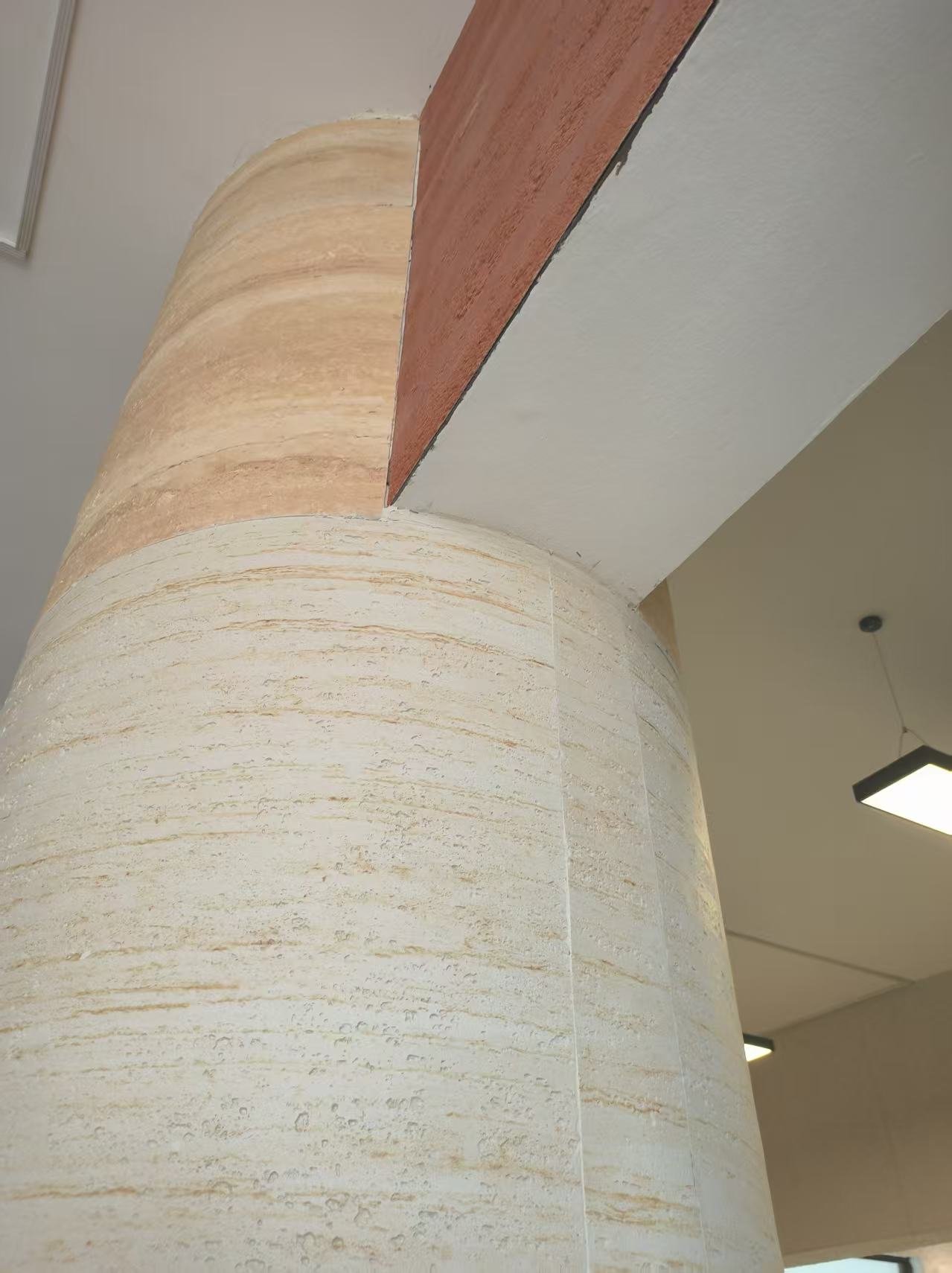
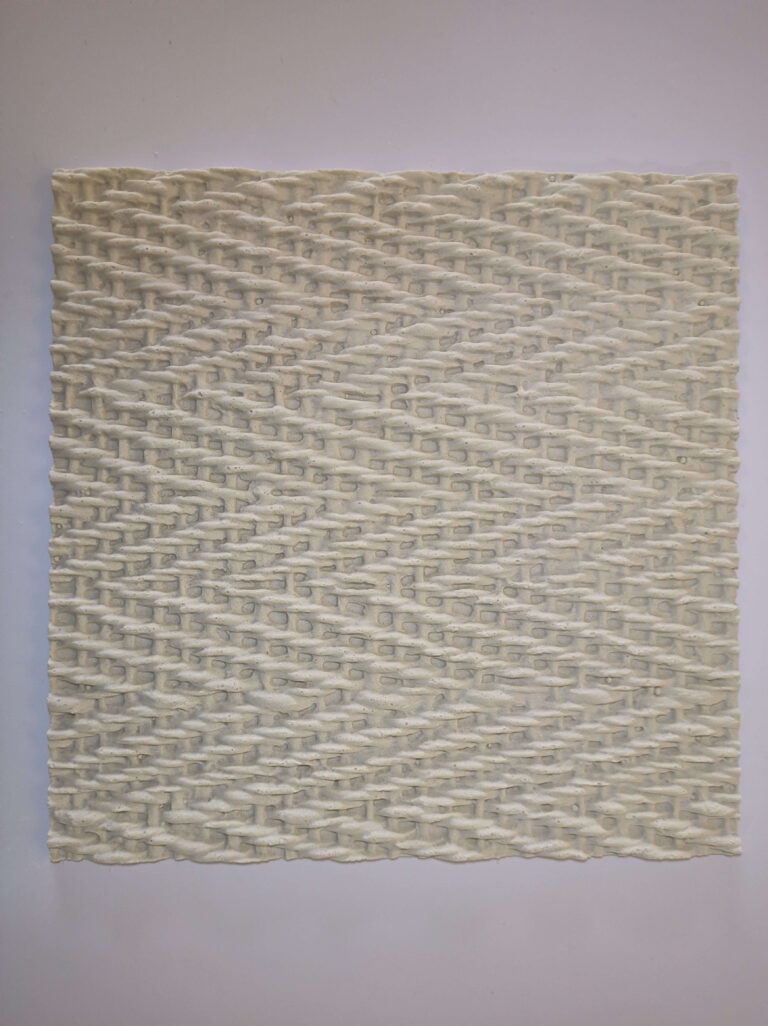
Pattern changes the answer as much as thickness does. A flat concrete or slate print flexes evenly. A deep relief pattern such as Starmoon Stone carries more material and a shaped face, so its minimum bend radius is about 300 mm.
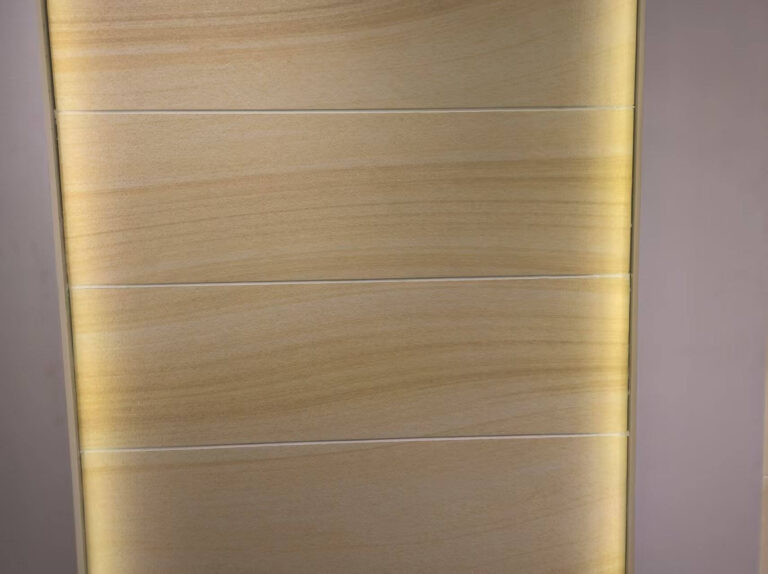
Grain direction adds a second variable. A wood or linear print has a running direction along the sheet. The panel turns most cleanly when the curve runs across that grain. Rotate the same sheet and the working radius tightens, which is where a flat sample can mislead a specifier.
Pattern is the second half of the flexible stone minimum bend radius. A flat print and a deep relief draw on the same gel and mesh. The relief builds more material into the face, though, and shortens the arc the sheet will take. Grain direction then decides how that arc is oriented.
This is why a curve cannot be approved from a small flat sample alone. Pattern, direction and target radius are checked together. A project that needs a matched curve can be produced to a pattern that suits it, since the range is developed pattern by pattern up to 8 mm. The wider choice sits in our guide to using flexible stone veneer on curved walls.
Reading the Bend Radius on a Plan
A radius on a drawing is read against two points. The first is the panel face, since the stone side sits on the outside of the curve. The second is the smallest arc on the run, which often sits at a corner return rather than the main sweep. Miss the small arc and the sheet is chosen for the wrong curve.
Where a curve is tighter than the working radius, the design is not blocked. It is handled in one of two ways. A computer-cut template holds the panel to a segmented arc, so a tight curve is built from a run of small flats. A formed trim closes the outside edge and hides the joint behind it.
두 방법 모두 현장 작업이 아닌 사전 생산 계획 단계에서 진행됩니다. 곡선이 급한 부분의 반경을 도면에 표시해 문의 시 함께 제출해 주시면 시트 규격과 절단 패턴을 일치시켜 준비해 드립니다.
| 곡선 조건 | 방법 |
|---|---|
| 작업 반경 내곡 또는 그 이상의 곡선 | 단일 시트 wraps 적용 |
| 작동 반경보다 더 급격한 곡선 | 컴퓨터 커팅 템플릿의 절단된 호 |
| 단단히 조여야 하는 외측 가장자리 | 이음매 위를 감싸는 포메이션 트림 |
도면 위의 세 점이 해답을 결정합니다: 최소 반경, 무늬(그래인)의 방향, 그리고 패널 하부의 받침체입니다. 이 세 가지가 해당 작업의 유연한 돌 최소 굽힘 반경을 정합니다.
곡선 벽면, 기둥 및 아치
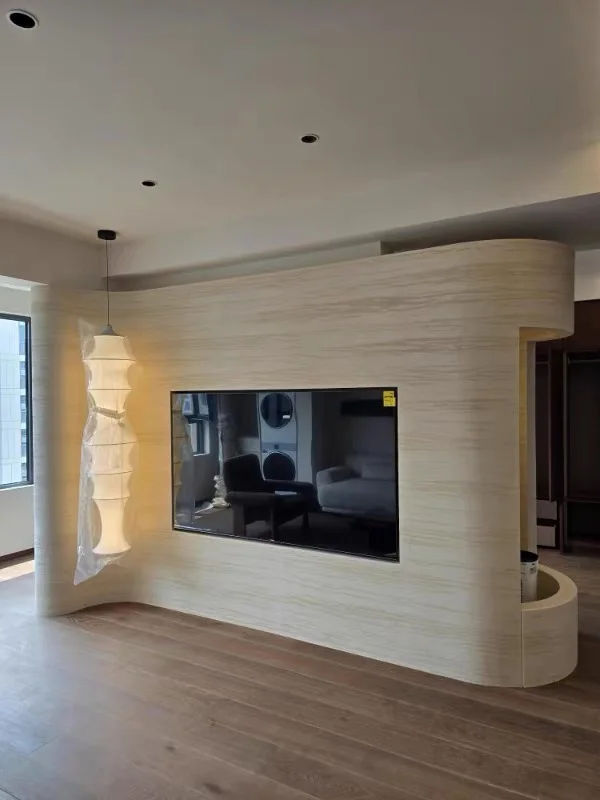
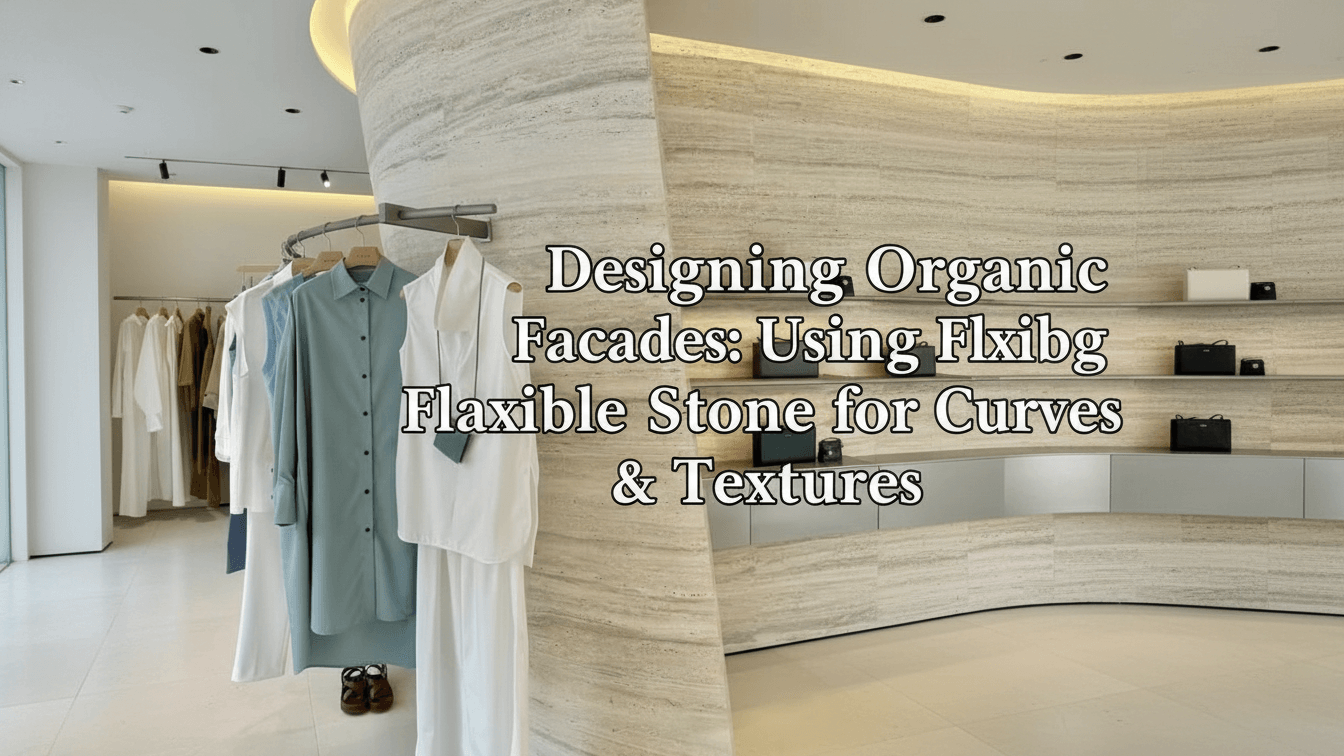
곡선은 세 가지 일반적인 형태로 나타나며, 각각 동일한 작동 반경을 기반으로 합니다. 원통형 기둥이 가장 단순한데, 패널이 단일 반경으로 감싸지고 솔기가 한 선에 떨어지기 때문입니다. 곡선 벽면은 동일한 호의 더 넓은 형태입니다. 아치는 상승하는 반경과 정상의 더 좁은 턴을 더합니다.
감싸기 기둥에서는 유연한 돌 최소 굽힘 반경이 단일 휨으로 시험됩니다. 따라서 전체 주문 전에 패널 샘플을 기둥의 정확한 지름에 대고 구부려 현장에서 수치를 확인하기 가장 쉬운 곳입니다.
리테일 또는 호텔 공간의 감싸기 기둥은 종종 반경이 패널을 결정하는 곳입니다. 일반적인 구조 기둥에 해당하는 약 200mm는 flexible stone veneer 표준을 따릅니다. 그 수치보다 더 좁게 꺾이는 장식용 기둥에는 얇은 트라버틴 패널이 더 적합합니다.
반경만큼이나 솔기 계획도 중요합니다. 감싸기 기둥에서는 서비스 쪽 뒤에 배치된 단일 솔기가 전면의 단절을 방지합니다. 아치 형상은 가이드에 곡면 벽 및 기둥 클래딩, 명시되며, 광범위한 그림은 유연한 돌 사양서 아래에 있습니다..
아치는 세 가지 형태 중 가장 관대하지 않습니다. 곡선이 올라갈수록 반경이 좁아지므로, 정상이 패널과 가장 좁은 호가 만나는 지점입니다. 스프링링 선이 아닌 정상을 기준으로 서식을 설정하면 나머지 아치는 작동 반경 안에 따르게 됩니다.
1. 곡선 부위의 기판 및 이음매 처리
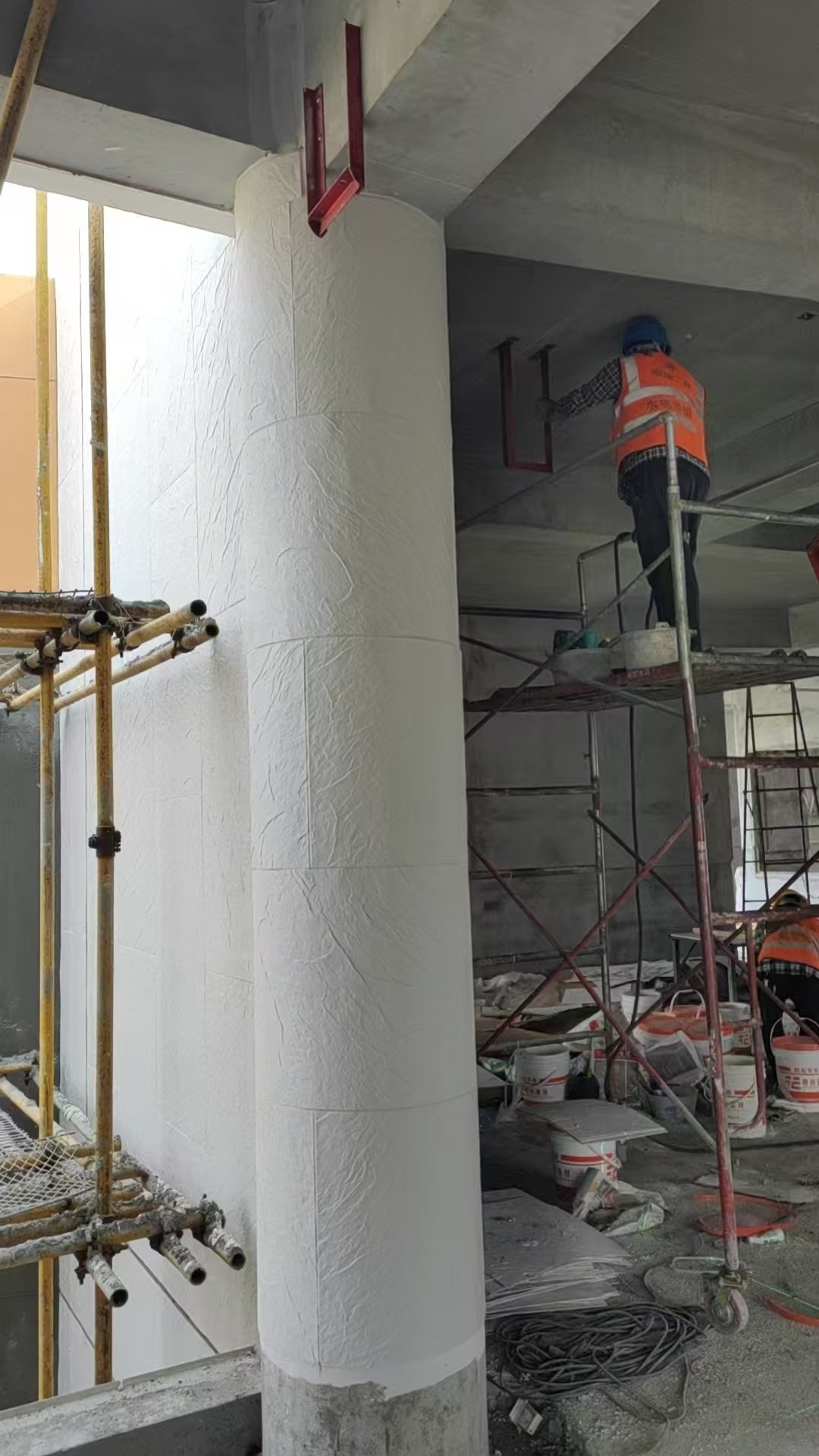
3. 반지름은 그 아래의 기판에 달려 있습니다. 곡면은 너비가 아닌 호를 따라 평탄도를 점검해야 하며, 공동이나 돌출부가 있으면 패널이 징크처럼 걸리면서翌日 가장자리가 떠오르게 됩니다. 곡선에 맞추어 빠르게 템플릿을 작성하면 패널 시공 전 이를 모두 찾아낼 수 있습니다.
4. 접착제는 표준 시스템을 따르므로 전용 접착제와 매칭된 실러는 패널과 동일 공급처에서 납품됩니다. 곡선 구간은 평면과 동일하게 드라이픽 방식으로 중앙에서 바깥쪽으로 공기를 밀어내며 작업합니다.
5. 곡면의 이음매는 아크의 정상부가 아닌 템플릿으로 평면 측정한 위치에서 마감합니다. 이음매를 낮은 곳에 배치하면 두 모서리가 계단 없이 맞물리며, 눈이 열 주위를 따라가는 경로에서 라인을 벗어납니다.
6. 7. 품질 관리 체계 하에서 생산되며, 모든 주문에는 배치 정보가 기록된 분석 증명이 동봉됩니다. 이 하나의 기록이 현장의 패널과 제조 건수를 연결해 줍니다. ISO 9001 8. 굴곡 반경 관련 자주 묻는 질문 4. 플렉시블 스톤 월 패널 제조업체 5. 에서 전체 제품을 확인하세요.
9. 패턴과 반경은 주문 전 확인합니다.

11. JMS Decor 표준 시트의 경우 약 200 mm입니다. 얇은 트라버틴 시트는 더 좁은 반경으로 구부러지며, 스타문스톤처럼 두꺼운 패턴은 약 300 mm가 필요합니다.
12. 두께가 굴곡 반경에 영향을 미치나요?.
13. 네. 두께는 2 mm에서 8 mm 범위이며, 시트가 얇을수록 더 밀도 높은 굴곡이 가능합니다. 두께 2.5~3 mm 얇은 트라버틴 시트는 상위 두께 패널보다 작은 반경을 따릅니다.
14. 플렉시블 스톤으로 원형 기둥을 감쌀 수 있나요?.
15. 네. 표준 시트는 곡률 반경이 약 200 mm 이상인 기둥을 감쌀 수 있습니다. 더 조밀한 장식용 기둥은 얇은 트라버틴 시트나 컴퓨터 절단 템플릿을 사용합니다.
Yes. A standard sheet wraps a column whose curve stays at or above the working radius of about 200 mm. Tighter decorative columns take a thin travertine sheet or a computer-cut template.
곡선 반경보다 더 좁은 곡선은 어떻게 처리하나요?
곡선은 컴퓨터 절단 템플릿으로 구성된 호(segmented arc)로 제작하거나, 성형 트림으로 마무리합니다. 둘 다 설계 단계에서 계획되므로 패널과 절단 패턴은 도면과 일치합니다.
굴곡 반경(bend radius)이 직경(diameter)과 동일한가요?
아닙니다. 반경은 호의 중심에서 패널 표면까지의 거리를 측정하며, 직경은 그 값의 두 배입니다. 도면에서 어느 기준을 사용하는지 확인하세요. 두 값에 따라 곡선 적용 가능 여부가 달라지기 때문입니다.