Flexible stone veneer can be used in a bathroom, but it is a finish, not a waterproofing layer. That single distinction decides whether a wet-area installation lasts. The models buyers ask are full of confident “yes, it is waterproof” claims that skip the part that actually matters: the water-management system behind the sheet. This guide explains what flexible stone does and does not do in a wet room, which surfaces it suits, the detailing that protects the wall, and the limits a careful specifier sets. Product-specific suitability must come from the installation manual, because wet-area approval depends on the exact system, not the material category.
Is flexible stone veneer waterproof?
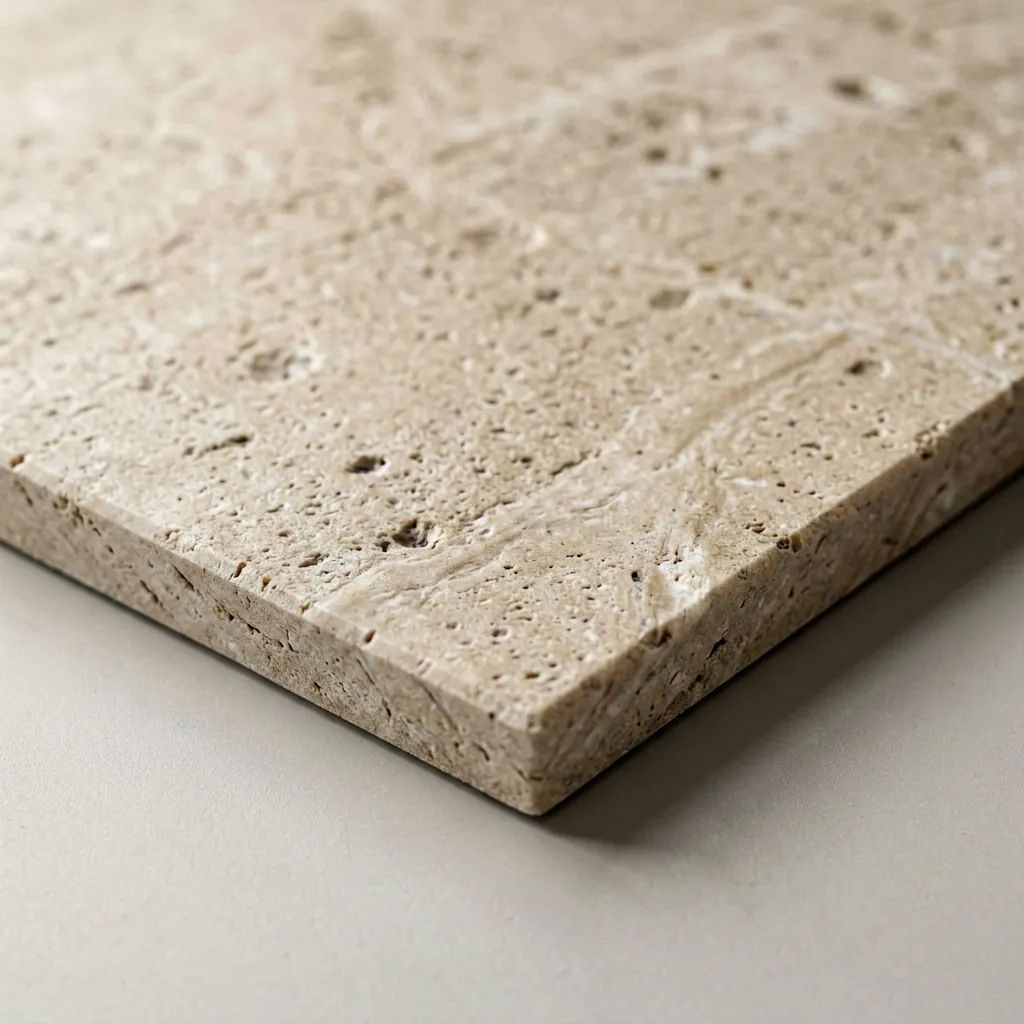
The honest answer is that the material tolerates moisture but the assembly is what keeps water out. A flexible stone sheet is a thin composite: natural stone powder and an inorganic binder with a fiberglass mesh backing. It is not a quarry slab, and it is not a membrane either. The stone face can absorb surface moisture, and the cut edges are the most exposed point, because a cut through a panel opens the material to capillary water the way a drilled hole does.
This is why “waterproof” is the wrong test. The right question is: behind this decorative sheet, is there a continuous, correctly detailed waterproof system that manages whatever water gets through the finish? In a wet room, the answer must be yes, and it has to be built before a single sheet is bonded. A veneer bonded over an un-waterproofed wall is a cosmetic layer over a slow leak.
For a bathroom feature wall away from direct spray, the moisture load is modest and the detailing is lighter. For a shower enclosure or a tub surround, the wall is being repeatedly wet, and the standard is closer to a tiled shower: a proper tanking or membrane system, sealed at every joint, with the veneer as the decorative surface on top. Confirm with the installation manual which application the specific product is approved for.
Where in a wet room does it work, and where does it not?
The wet room has zones with very different water exposure, and a good specification treats them differently rather than applying the same detail everywhere.

| Zone | Water exposure | What the detail must handle |
|---|---|---|
| Vanity or accent wall | Splash and humidity | A stable, sealed face; edges protected from standing water |
| Tub surround | Splash, occasional soak | Sealed joints to the tub, protected top edge |
| Shower wall | Direct, repeated spray | Full tanking behind the sheet, sealed penetrations and corners |
| Shower floor | Ponding and foot traffic | Generally not the right use for a thin decorative sheet |
| Steam or sauna | Heat plus moisture | Product-specific; confirm approval and fixings for the environment |
Vertical surfaces that see splash are the natural fit for a thin adhered sheet. A floor that must carry traffic, abrasion, and standing water is a different job, and a wall sheet bonded for vertical use is not automatically the right product for a horizontal wet floor. This is a suitability question for the installation manual, not a judgement call on site.
What does the substrate and waterproofing behind it need?
In a wet room, the wall behind the veneer has to do three jobs: stay stable when wet, drain or resist water that reaches it, and give the adhesive something sound to bond to. That usually means a cementitious or approved tile backer board over the framing, a waterproofing membrane or tanking applied to the wet zones, and sealed corners, seams, and penetrations before any decorative sheet goes up.
Three points decide the outcome:
- Continuity of the membrane. The waterproof layer must be unbroken at wall-to-wall corners, wall-to-floor junctions, around niches, and through every pipe or fitting penetration. A gap at a corner is where water finds the stud cavity.
- Edge and cut protection. Cut edges of the veneer are the entry points for capillary water. A protected, sealed, or detailed edge — rather than a raw cut sitting in standing water — is the difference between a finish that stays put and one that lifts.
- A compatible adhesive for wet conditions. The bonding adhesive must be rated for the moisture and temperature of the wet room and approved by the product manual. In a shower, an adhesive chosen for a dry feature wall is not automatically the correct product.
How do joints, corners, and penetrations behave in a wet room?
A wet room fails at transitions, not at the middle of a flat wall. Where the veneer meets the tub, the shower tray, a glass screen, or another wall, there is a change of material and a chance for water to track behind the edge. These junctions need a sealed, flexible detail that accommodates small movement without opening a path for water.
Corners, both internal and external, are points where a thin sheet is cut and bent, and where an unsealed edge can lift. Internal corners in a shower see water pool in the angle, so they need to be detailed as part of the waterproofing, not simply butted and caulked on site. Niches and shelves create ledges and penetrations where water sits; the waterproofing must carry into and around them.
Where the wall has a structural or design movement point, the veneer has to break there rather than bridge it, in the same way a facade movement joint works. The movement-joint guide explains the principle for a bonded sheet; a wet room adds the requirement that the break is also sealed against water.
What should I ask the supplier before specifying a wet area?
Treat the wet-room question as an approval request, and the answers become the basis of the specification.
- Is this product approved for shower or tub-surround use, or only for dry and splash zones? Get the written scope from the installation manual.
- What adhesive and primer does the manual require for a wet environment, and is it part of the system or a separate purchase?
- How are cut edges and terminations protected from standing water and capillary wicking?
- What is the cleaning method, and are there chemicals to avoid that attack the face or the bond?
- What ventilation does the room need so the wall can dry between uses?
Ventilation is the underrated factor. Even a correctly built wet wall has to dry between showers. A bathroom with poor extraction keeps moisture on every surface longer, and a detail that works in a well-ventilated room can fail in one that stays damp. The wet-area standards a specifier can point to are the ones written for the assembly behind the finish: the مجلس بلاط أمريكا الشمالية ينشر الدليل المرجعي لبناء غرف الاستحمام والمناطق الرطبة، بما في ذلك متطلبات العزل المائي والأساسيات والتفاصيل الدقيقة. خاصة دليل التنظيف والحماية يغطي كيفية العناية بالسطح دون الإضرار باللاصق.
كيف يقارن هذا بالبلاط والمايكروسمنت في الحمام الرطب؟
بالنسبة لدش الاستحمام، يفضل العديد من المشترين البلاط أو ألواح المناطق الرطبة المُصممة خصيصاً، وكلاهما له سجل حافل مع تفاصيل موثقة جيداً. يوفر الرقائق الحجرية المرنة سطحاً أرق وأخف وزناً وأكثر سهولة في التشكيل غالباً — بما في ذلك المنحنيات التي يصعب على البلاط الصلب التعامل معها — ولكن نظام المنطقة الرطبة خلفه يجب أن يكون بنفس درجة الحذر الموجود في النظام المثبت عليه بلاط. إنه ليس اختصاراً حول العزل المائي؛ بل هو تشطيب مختلف على نفس التجميع الانضباطي.
لدينا مقارنة المرنة الحجرية مقابل المايكروسمنت تغطي كيفية اختلاف هذين التشطيبين في التشقق والتركيب، و دليل المرنة الرخام مقابل porcelain للحمامات ينظر إلى حالة الحمام على وجه التحديد، بما في ذلك أين كل مادة هي والخيار الصحيح وغير المناسب.
ما هي أكثر أخطاء الحمامات الرطبة شيوعاً؟
تتكرر الفشلات بالترتيب المتوقع، ولا أحد منها يتعلق بفشل ورقة العزل المائي بحد ذاتها. إنها اختصارات في التفاصيل تبدو جيدة عند التسليم وتظهر بعد أشهر.
- معاملة الرقيقة كعازل مائي. ورقة زخرفية ملصقة فوق جدار غير معزول هي الخطأ الأكثر شيوعاً. يبدو التشطيب صحيحاً بينما الماء يتحرك خلفه.
- ترك حافة قطع غير معالجة في منطقة رطبة. A cut edge sitting in standing water at a base or a ledge wicks moisture into the core. Sealed, detailed, or raised edges prevent this.
- Using a dry-area adhesive in a shower. Bonding products chosen for a feature wall are not automatically rated for a hot, wet environment. The manual specifies the wet-area adhesive; it is not a substitution decision made on site.
- Buttering a corner instead of tanking it. An internal shower corner that is caulked rather than waterproofed as part of the membrane system is where leaks begin.
- Ignoring extraction. A wet room with no or undersized ventilation stays damp far longer than the detailing assumed. The wall needs a realistic drying window between uses.
- Skipping the ledge and niche details. Shelves and recesses trap water on their ledges and create penetrations; they must be drained and sealed like the rest of the wet wall, not added afterwards.
None of these require a better product. They require the same discipline a tiled shower uses — membrane continuity, protected edges, a wet-rated bond, and working ventilation — applied to a thinner decorative finish on top.
الأسئلة الشائعة
Can flexible stone veneer go inside a shower?
On walls, yes, when the specific product is approved for that use and it sits over a complete tanked, drained system with a wet-rated adhesive. The veneer is the finish, not the waterproofing.
Is it okay on a bathroom floor?
A wall sheet bonded for vertical use is not automatically the right product for a wet floor with traffic and standing water. Confirm floor suitability in the installation manual before specifying it horizontally.
Does water get through the seams?
Any junction, corner, cut edge, or penetration is a possible water path if it is not detailed. The waterproof layer behind, plus sealed transitions, is what manages water that reaches the joints.
Do I need to seal the face?
Follow the supplier’s maintenance guidance. A sealer or protective treatment, where recommended, helps cleanability; it is not a substitute for waterproofing behind the sheet.
What kills a wet-room veneer installation fastest?
A missing or broken membrane behind the sheet, an unprotected cut edge sitting in water, or an adhesive not rated for the environment. All three are specification and detailing failures, not material failures.