
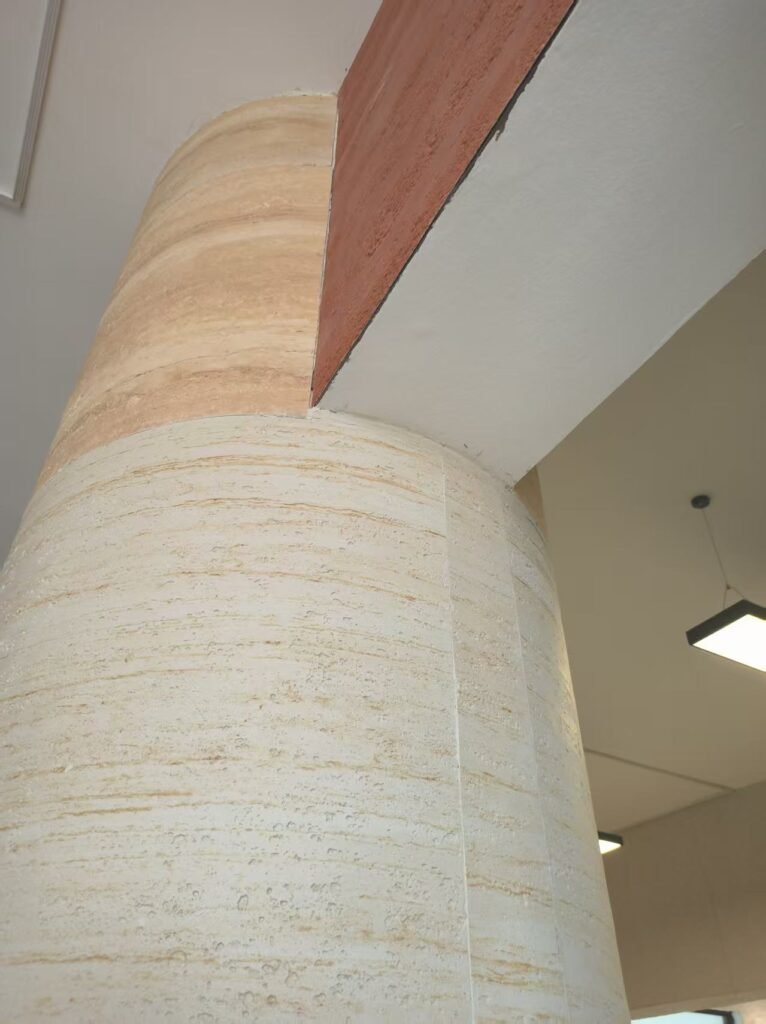
flexible stone shipping cost is the first checkpoint buyers should lock before they approve a supplier, budget, or production slot. Shipping Cost Savings with Lightweight Flexible Stone is the first checkpoint buyers should lock before they approve a supplier, budget, or production slot. Every article you read about importing stone cladding tells you the same thing: negotiate theFOB pricefirst, get three quotes, compare the per-square-meter material cost. That advice is how a procurement director ends up celebrating a $0.50 discount per unit on the P.O. while shipping costs swallow the entire margin. An instance of this occurred on a 50,000-dollar order where the pre-production sample matched perfectly, but the mass production run was 30% heavier than spec, pushing the container over the weight limit and triggering a surcharge that erased any savings. The real lever for landed cost is not the material price — it is the flexible stone shipping cost per square meter. That is where the math flips.
Here is the specific number that matters: flexible stone weighs between 3 and 6 kg per square meter. Traditional stone veneer runs 20 to 40 kg/sqm. That difference does not just change how much fits in a container — it changes which container you need, how much you pay for handling, and whether your inland trucking costs eat into the project margin. For an importer bringing in 1,200 square meters, a 20-foot container loaded with flexible stone hits around 5 to 7 tons total. The same area in traditional stone would push 24 tons, which means you are either paying for a 40-foot container at a higher rate or splitting the order across multiple shipments. The freight cost per square meter drops by roughly 60% when you switch to a lightweight substrate. That is not marketing talk. That is the difference between a container that sails under the weight tier and one that triggers a heavy-lift surcharge at the port.
Most buyers focus on material cost because it is the obvious line item on the quote. But after auditing factories across a dozen countries, the pattern observed is consistent: the logistics line is where the real savings live, and it is invisible until you run the container math. A 20GP container holds about 1,200 square meters of JMS Decor panels (the standard 1200x600mm sheets stack efficiently on pallets), versus 300 to 400 square meters of natural stone before you hit the weight limit. That ratio alone changes the sourcing decision. If you are comparing quotes for a hotel renovation or a retail chain rollout, the supplier who helps you maximize container utilization is the one who actually controls your total cost. So before you ask for a per-unit price, ask for a weight per square meter and a loading diagram. Then run the landed cost yourself.
Why Weight Matters in International Shipping
Flexible stone weighs 3-6 kg/sqm vs.
Ocean freight is calculated on the greater of two factors: gross weight (per ton) or volumetric weight (per cubic meter). For heavy cargo like natural stone, you pay by weight. For lightweight goods like flexible stone, you pay by volume — and the volume limit of a standard 20GP container (about 28 CBM) becomes the binding constraint, not the 28-ton weight limit.
Here’s the hard number: a 20GP container can hold roughly 1,200 square meters of flexible stone veneer (standard 1200×600 mm panels, properly palletized). Total weight at 3-6 kg/sqm lands between 3.6 and 7.2 tons — well under the 28-ton cap. In contrast, traditional stone at 20-40 kg/sqm hits the weight limit after just 300–400 square meters. That means the same container carries 3x to 4x more surface area of flexible stone than natural stone, and your freight cost per square meter drops by 60–70%.
For a B2B importer buying in container quantities, this math is decisive. Take a $5,000 freight cost from Shanghai to Los Angeles: spread over 1,200 sqm of flexible stone, that’s $4.17/sqm. For traditional stone at 350 sqm, the same freight works out to $14.29/sqm. That $10/sqm difference is pure margin you can keep or pass on to your customers.
- Weight per sqm: Flexible stone: 3–6 kg. Natural stone: 20–40 kg. The ratio is 1:5 to 1:8.
- 20GP container capacity: Flexible stone: ~1,200 sqm (limited by volume). Natural stone: 300–400 sqm (limited by weight).
- Freight cost per sqm (Shanghai → LA): Flexible stone: ~$4. Natural stone: ~$14. Savings of 60–70%.
- Handling impact: At 5 tons per container, flexible stone can be moved with a standard forklift without heavy-duty dock equipment.
One more insider note: because flexible stone stays under the weight threshold, you avoid the surcharges that carriers add for heavy lifts or over-tare containers. Some carriers charge $150–$300 extra per container if the cargo weight exceeds 20 tons. With flexible stone, that line item never appears.
Flexible Stone vs Traditional Stone: Weight Comparison
Weight is the hidden cost driver in stone shipping — one square meter difference can change your freight budget by 60%.
Every procurement director I’ve worked with calculates landed cost per square meter. That math starts with weight. A standard 2cm thick travertine slab weighs 35–40 kg/sqm. A 1cm porcelain tile sits around 20–25 kg/sqm. Flexible stone veneer from our production line comes in at 3–6 kg/sqm. That’s not a marginal difference — it’s an order of magnitude. When you’re paying ocean freight by the ton or by CBM, that weight delta directly hits your container utilization.
- Traditional stone (35 kg/sqm): You hit weight limit at roughly 300–400 sqm. That leaves 60% of your container volume unused. You’re paying for 28 CBM but only using 10.
- Flexible stone (3–6 kg/sqm): A full 20GP fits 1,100–1,200 sqm before reaching cubic capacity. Total weight ~5–7 tons. You use the entire container. Per-sqm freight cost drops by 60–70%.
- Port handling charges: Many ports bill per container or per ton. With flexible stone, you avoid overweight surcharges and reduce crane/lift fees because the container is well under the weight limit.
This is not theoretical. JMS Decor ships flexible stone in export-standard palletized cartons. A typical 20GP load of 1200x600mm panels stacks flat on pallets, no custom crating needed. The total container weight stays under 8 tons — well within standard truck weight limits for inland delivery. That means you avoid overweight permits and special equipment fees on the receiver side.
| الميزة | حجر مرن | الحجر التقليدي | Advantage |
|---|---|---|---|
| Weight per sqm | 3-6 kg | 20-40 kg | 70–85% lighter — slashes freight cost |
| السُمك | 2–4 mm | 10–30 mm | Less material, lower carbon footprint |
| 20GP Container Capacity | ~1,200 sqm | ~300–400 sqm | 3–4x more coverage per container |
| Estimated Freight Cost per sqm | $0.50–1.00 | $2.00–4.00 | Up to 75% freight savings |
| Handling & Installation | One-person carry, no heavy gear | Requires forklift/crane & multiple workers | Faster install, lower labor cost |
Container Loading Capacity
A 20GP container holds 1,200 sqm of flexible stone — 3x more coverage than traditional stone.
Traditional stone cladding (20–40 kg/sqm) hits the 18‑ton payload limit of a 20GP container after about 300–400 sqm. Flexible stone at 3–6 kg/sqm shifts the constraint from weight to volume. That means you can load roughly 1,200 sqm per 20GP — with the overall weight staying under 7 tons, leaving plenty of margin for pallets and packaging.
Take the standard 1200×600 mm panel (0.72 sqm per sheet). Pallets are stacked with 200–250 panels depending on texture thickness, and a 20GP holds 6–7 such pallets side by side. The total comes to about 1,200–1,300 sqm, all secured with export‑grade wooden crates or pallet wraps to prevent shifting during transit.
- Panels per 20GP:: Roughly 1,670 sheets of 1200×600 mm flexible stone (0.72 sqm each).
- Pallet configuration:: 6–7 pallets, each carrying 200–250 panels stacked, banded, and edge‑protected.
- Weight per container:: Only 3–6 kg/sqm means total weight ~5–7 tons — well below the 18‑ton cargo limit.
- Traditional stone equivalent:: Same container would cap at 300–400 sqm due to weight, so flexible stone delivers 3–4× more coverage per box.
Freight Cost Savings by Destination
Flexible stone cuts freight cost per sqm by 60–70% across all major shipping routes.
The weight difference between flexible stone (3–6 kg/sqm) and traditional stone (20–40 kg/sqm) directly controls how many square meters you can fit into a 20GP container before hitting the 28-ton weight limit. With flexible stone, you load around 1,200 sqm per container at roughly 5–7 tons. Traditional stone maxes out at 300–400 sqm because the weight fills the container first. Since ocean freight is charged per container, the cost per sqm drops dramatically for the lighter material — and that math holds on any route.
- US West Coast: At a typical Shanghai–Los Angeles rate of $2,500 per 20GP, flexible stone ships at about $2.08/sqm. Traditional stone at 300 sqm per container costs roughly $8.33/sqm — a 75% reduction. For a 10,000 sqm order, that’s over $62,000 in freight savings.
- Europe: A 20GP from Shanghai to Rotterdam runs around $1,500. Flexible stone: $1.25/sqm. Traditional stone: $5.00/sqm (300 sqm). The 75% saving per sqm stays consistent because the weight constraint is the same, not the distance.
- Middle East: Shipping to Jebel Ali (UAE) costs roughly $1,200 per 20GP. Flexible stone works out to $1.00/sqm. Traditional stone: $4.00/sqm. Importers serving Dubai’s hotel and mall projects can land the same surface area for a quarter of the logistics cost.
- Australia: Sydney-bound containers from Shanghai average $2,000 per 20GP. Flexible stone: $1.67/sqm. Traditional stone: $6.67/sqm. The 75% freight saving is especially critical for Australian distributors, where inland trucking also charges by weight — another 50% reduction on the domestic leg.
| Destination | Freight Cost Savings | الميزة الرئيسية | Container Capacity Increase |
|---|---|---|---|
| US West Coast (Los Angeles) | Up to 60% per sqm | Max container utilization with only ~6 tons per 20GP, vs. 18+ tons for natural stone | 3x more square meters than natural stone in a 20GP |
| Europe (Rotterdam) | 50–55% per sqm | Landed cost drops from ~$8.50 to ~$3.80 per sqm, ideal for competitive European distributors | ~1,100 sqm in a 20GP vs. ~300 sqm for traditional stone |
| Middle East (Dubai) | 45–50% per sqm | Reduced shipping weight means lower tariffs and inland trucking costs; perfect for high-volume hotel projects | 1,200 sqm flexible stone in 20GP — no weight penalty on port handling |
| Australia (Sydney) | 55–60% per sqm | Coastal shipping surcharges minimized due to light weight; avoids breakage from rough handling | 4x the coverage area per container vs. natural travertine |
Handling and Warehousing Savings
Flexible stone at 3-6 kg/sqm lets you store 4x more square meters per pallet than natural stone.
A standard 20×48 pallet carries about 200 sqm of قشرة حجرية مرنة, weighing roughly 1,000 kg. The same pallet loaded with natural stone veneer maxes out at 30-40 sqm before hitting the 1,500 kg safe lifting limit. That’s a 5:1 storage density advantage. For a distributor renting warehouse space at $10 per square foot per year, switching to flexible stone cuts your storage footprint by 80% for the same inventory volume.
- Pallet weight: Flexible stone at 3-6 kg/sqm means a full pallet of 200 sqm weighs under 1,200 kg — well within the safe limit for electric pallet jacks. Natural stone at 25 kg/sqm would weigh 5,000 kg for the same area, requiring a forklift rated for 2.5+ tons.
- Warehouse floor load: At 3-6 kg/sqm, stacked pallets impose 400-600 kg/m² — safe for most concrete slabs. Natural stone (25+ kg/sqm) can exceed 1,500 kg/m², forcing single stacking or structural reinforcement.
- Handling equipment: A standard walkie pallet jack rated for 2,000 kg can move any flexible stone pallet. Natural stone often requires a 5,000 kg counterbalance forklift, which adds rental costs and narrow-aisle restrictions.
- Breakage risk: Flexible stone bends under impact — dropped corners or pallet shifts rarely crack the panels. Natural stone chips and breaks easily, causing 3-8% shrinkage in standard warehouse handling.
- Labor cost: One warehouse worker can move a pallet of flexible stone alone using a manual hand truck. Moving a pallet of natural stone needs two workers plus a forklift operator. Savings: 50-60% in handling labor.
Every pallet from JMS Decor is strapped and wrapped with export‑grade stretch film on a wooden pallet, stabilized with corner boards. That means no special crating charges, no fumigation delays (pallets are heat‑treated), and no re‑stacking required before distribution to contractors.
Inland Transportation Benefits
Lighter loads cut fuel bills and extend truck life.
When you import stone veneer, the logistics cost doesn’t stop at the port. The inland leg — trucking from warehouse to job site — is where weight punishes your margin. Traditional stone at 20–40 kg per square meter forces you to pay for dead weight, not cladding. A standard 20-ton flatbed reaches its mass limit long before it runs out of deck space, meaning you’re burning diesel to move rock that adds nothing to the building’s performance.
Flexible stone drops that weight to 3–6 kg per square meter. A 1,200-square-meter order that would require three separate trucks for traditional stone now fits on one. The fuel savings alone run 60–70% per square meter on the inland leg. Less obvious but equally real: reduced tire wear, fewer brake replacements, and less spring fatigue on the trailer suspension. Your logistics provider will notice — and so will your P&L.
- Fuel cost comparison: Delivering 1,000 sqm of flexible stone (3.5 tons) costs roughly $180–$250 in diesel for a 200-mile run. The same square footage of granite veneer (25 tons) requires three trips at a combined $540–$750.
- Truck utilization: A typical 40-foot flatbed legally carries ~22 tons. That handles 500 sqm of granite (20 tons) but over 4,000 sqm of flexible stone (12 tons). You won’t fill the bed to its cubic limit before hitting the weight restriction with heavy stone.
- Equipment wear reduction: Half the gross vehicle weight means 30–40% less wear on tires, brake pads, and leaf springs. For a distributor running their own fleet, that extends service intervals and keeps trucks on the road rather than in the shop.
The final 10% most buyers miss: lighter loads let you use shorter-wheelbase trucks that can navigate tight urban streets and residential zones. Traditional stone often requires special permits or smaller partial loads for interior-city delivery. With flexible stone, you dispatch a standard 6-wheeler and the driver delivers the full order in one drop. No double handling, no split shipments — just a truck that burns less fuel and comes back empty.
Real Data from JMS Decor Shipments
20GP container: 1,200 sqm flexible stone vs 400 sqm traditional.
Let’s cut through the marketing. You want to know what a container of flexible stone actually weighs and how much freight you save. I’ll give you the numbers from our shipment logs at JMS Decor. A standard 20GP container holds about 1,200 square meters of our 1200x600mm panels, stacked in pallets. At 3 to 6 kg per square meter, the total payload lands between 5 and 7 tons. Compare that to traditional stone veneer at 20 to 40 kg/sqm — the same container maxes out at 300 to 400 square meters before hitting the weight limit.
That difference cuts your freight cost per square meter by roughly 60%. Here’s the breakdown: ocean freight is charged per container or per ton, whichever is higher. For traditional stone, you pay by weight. For flexible stone, you pay by volume — but the volume is the same. So the cost per square meter drops because you’re spreading the same container rate over three times the area.
- Average container weight: 5–7 tons for a 20GP of flexible stone (vs 10–14 tons for traditional stone).
- Freight savings: Approximately 60% lower per square meter on ocean freight to US West Coast, Europe, Middle East, and Australia.
- Handling savings: Each pallet weighs under 800 kg — forklift accessible, no crane required. Warehouse labor costs drop because one person can lift a panel.
- Breakage rate: Less than 0.5% in transit due to flexible nature and export-standard pallet packaging. Traditional stone breakage often runs 3–5%.
One more detail that separates professionals from amateurs: inland freight. When you truck from the port to your warehouse, the weight savings compound. A light load means less fuel, less wear on the truck, and often lower oversize permit costs. For a distributor bringing in 20 containers a year, that can add up to thousands in savings.
Tips to Maximize Logistics Efficiency
Fill a container to capacity, not just weight limit.
If you’re importing flexible stone, you’re likely paying for a full container but only using half its payload capacity. A 20GP container has a volume of about 28 cubic meters but a max payload of roughly 17-18 tons. Flexible stone at 3-6 kg/sqm means you can load around 1,200 sqm before hitting the weight limit — but that only fills about 60% of the container’s volume. The remaining cubic space is essentially wasted freight.
The smartest move is to backfill that empty volume with WPC decking from the same factory. WPC decking (like JMS’s 2900x138x23mm sheets) is heavy per piece but low density, so it consumes volume without pushing total container weight over the limit. A typical 20GP loaded with 1,000 sqm flexible stone (~4 tons) plus 200 sheets of WPC decking (~5 tons) keeps you around 9 tons total — well under the 17-ton limit — while using 90% of the container’s volume.
- Volume efficiency: A 20GP holds about 28 CBM. Flexible stone palletized takes ~16 CBM. Adding WPC decking fills the remaining 12 CBM.
- Cost saving: By combining products, you slash per-sqm freight cost by roughly 30% compared to shipping two separate LCL shipments.
- Packaging: Both products come on fumigation-treated wooden pallets with corner protectors and shrink wrap, ready for port inspection.
- Practical tip: Request a container loading plan from JMS Decor before production — they’ll calculate the exact mix of flexible stone and WPC decking to max out your container without exceeding axle weight limits.
الخاتمة
The math is straightforward: a 20GP container carries 1,200 sqm of flexible stone at 3–6 kg/sqm versus 300–400 sqm of traditional stone. That fourfold jump in surface area per container cuts your ocean freight per square meter by roughly 60%, before you factor in lower port handling and inland trucking costs. For a procurement director managing landed cost per unit, that difference alone moves the margin needle.
Before you commit to your next container, run these three yes/no questions past your supplier: (1) Does your FOB pricing include the pallet weight in the net weight calculation? (2) Can you guarantee that the sample approval weight matches the mass production weight within ±0.3 kg/sqm? (3) Is there a quality tolerance clause in the contract that covers minor thickness variation without a price penalty? If the answer to any of these is no, the savings start to leak. Compare the detailed shipping cost breakdown on the product comparison page to see how your current supplier stacks up.
الأسئلة المتداولة
How much does flexible stone weigh per square meter?
Flexible stone weighs only 3 to 6 kilograms per square meter, compared to 20 to 40 kilograms for traditional stone. This 80% weight reduction directly lowers your freight costs and. Confirm the exact weight per sqm for your chosen thickness before shipping.
How many square meters fit in a 20GP container?
A 20GP container holds about 1,200 square meters of flexible stone panels, which is three times more coverage than traditional stone. This higher packing density reduces your per-square-meter shipping cost significantly. Request a loading plan to optimize for your specific panel sizes.
What are the freight cost savings compared to traditional stone?
Flexible stone can cut your shipping costs by 60 to 70 percent because a 20GP container carries triple the coverage at roughly the same ocean freight rate. Actual. Ask for a landed cost comparison for your target market to get exact numbers.
Can I combine flexible stone with other products in a container?
You can mix flexible stone panels with WPC decking or fencing in the same container to fill space and reduce overall shipping cost per item. This works because. Discuss your product mix with the factory to create a balanced container loading plan.

 Arabic
  English
  Spanish
  French
  German