
Misinterpreting flexible stone wholesale pricing is the single biggest threat to your project’s profit margin. Many distributors and contractors calculate bids based on a simple per-unit cost, only to discover that variables like texture, thickness, and order volume have completely skewed their initial estimates. This gap between the expected and actual cost directly erodes profitability and can even turn a promising project into a financial loss.
This guide provides a clear, operational breakdown of our pricing model. We will explain how different texture tiers, from standard slate to premium wood grains, affect your unit cost. You will also learn the economic principles behind our Minimum Order Quantities (MOQs), volume discounts, and other potential expenses like custom molds or sample fees. The goal is to give you a complete framework for budgeting and requesting an accurate quote for your next project.
Factors Influencing Flexible Stone Price
The final landed cost of flexible stone is a direct function of the raw stone powder’s origin, the manufacturing complexity, and the panel’s physical dimensions, which dictates logistics expenses.
Raw Material Sourcing and Quality
The primary cost driver for any flexible stone panel is the raw material itself. The base price is set by the specific type and quality of natural stone powder used in our Modified Clay Material (MCM) composition, whether it’s common slate or premium travertine. Materials extracted from unique or geographically limited quarries carry higher sourcing costs. The consistency of the stone’s final pattern and color fidelity across a batch also directly influences the wholesale price, as higher-grade materials require more stringent quality control.
Manufacturing and Production Efficiency
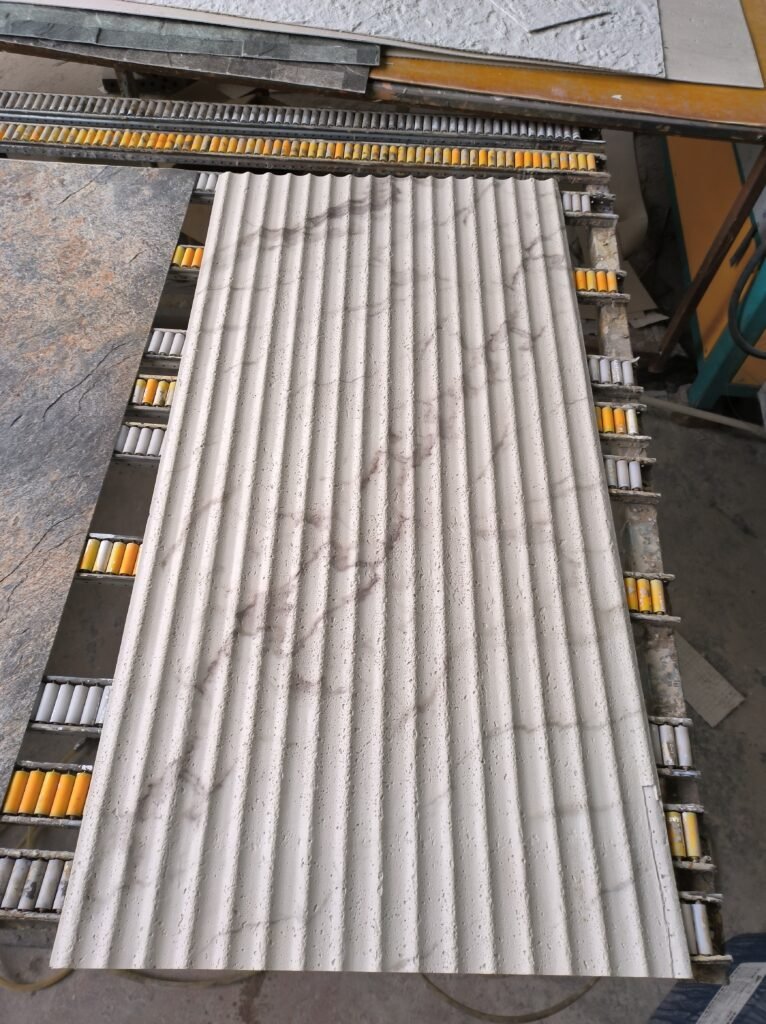
The manufacturing process is the second major cost variable. We use advanced techniques, including proprietary 3D printing for surface texturing, to minimize waste and optimize production runs. This efficiency allows us to offer competitive pricing, especially on large orders.
While the complexity of a custom texture can influence unit cost, high-volume production runs generate significant economies of scale. These cost savings are passed directly to our B2B partners, including distributors and contractors managing large-scale community developments.
Product Specifications and Logistics
Panel specifications and logistics determine the final landed cost. We engineer our panels to be exceptionally lightweight, typically between 3.5 to 6.0 kg/m², which is about one-sixth the weight of traditional stone. This drastically reduces freight costs and structural load requirements.
Standard panel sizes like 1200x600mm are the most cost-effective, while custom dimensions or oversized panels may require special crating and handling, adding to the total price. Our streamlined supply chain from our Shanghai factory to global ports helps manage and stabilize these logistics costs for our partners.
Texture Tiers: Slate (Low) vs. Wood/Weave (High)
The price of flexible stone is directly tied to manufacturing complexity; basic slate textures serve as the cost-effective baseline, while intricate wood grains and custom 3D-printed patterns command a premium due to advanced production requirements.
Low-Cost Textures: Natural Slate Finishes
Natural slate textures are our most cost-effective tier. These flexible stone panels provide the authentic look and feel of stone, making them a popular choice for large-scale projects where durability and classic aesthetics must be balanced with a strict budget. Their minimalist appearance suits a wide range of design styles, from modern commercial facades to residential renovations. This tier serves as the baseline for our pricing structure; more complex textures always incur higher costs due to the specialized manufacturing they require.
| Texture Tier | التطبيقات الشائعة | Key Pricing Driver |
|---|---|---|
| Baseline: Slate, Travertine, Concrete | Large-scale exterior facades, community developments, budget-conscious renovations. | High production efficiency and widely available raw mineral powders. |
| Premium: Wood Grain, Woven Fabric, Stacked Stone | Feature walls, luxury retail, hotel lobbies, “Instagrammable” spaces. | Complex molds, detailed hand-finishing, and advanced surface technology. |
| Custom: Imitation Leather, Bespoke Patterns | Branded environments, architectural specifications, unique design concepts. | Design complexity, uniqueness of pattern, and 3D printing for rapid sampling. |
Premium Textures: Wood and Woven Patterns
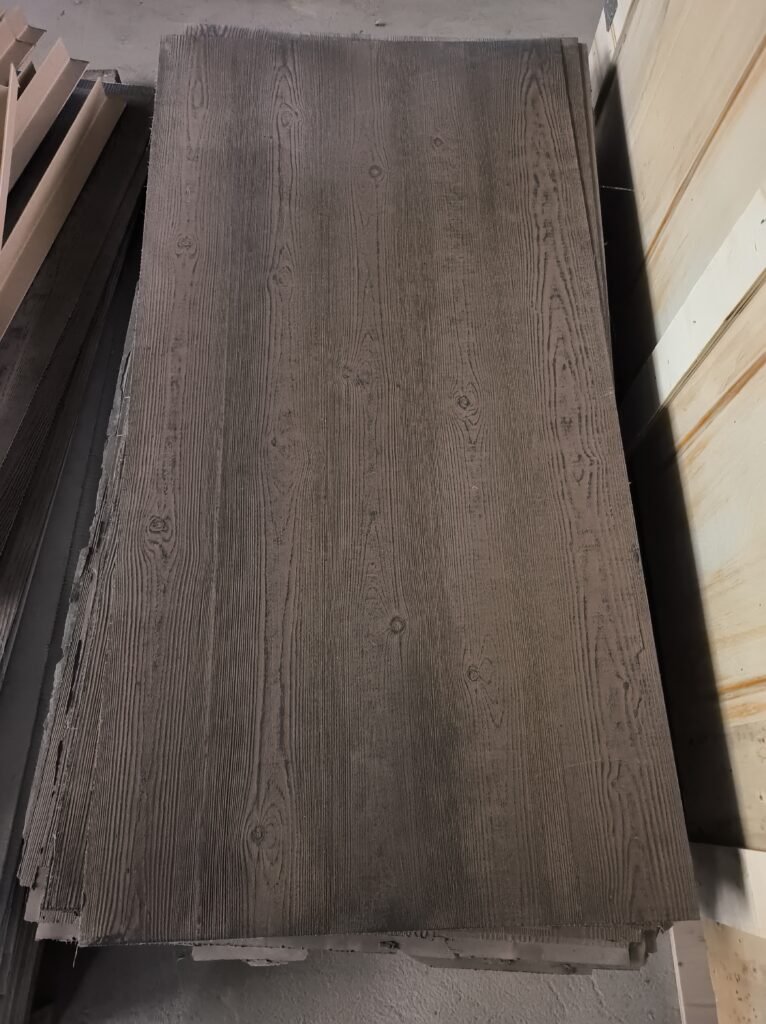
Our high-tier textures include realistic wood grains, woven fabrics, and other detailed patterns like our Ecological Wood or Crocodile Skin series. These options command a higher price because of the intricate production process required to achieve such a sophisticated aesthetic. They are engineered to replicate the appearance of materials like hardwood or designer textiles on our flexible, mineral-based MCM stone panels. Architects and designers specify these products for high-impact applications like feature walls, hospitality spaces, and high-end residential projects where visual appeal is paramount. The price directly reflects the advanced technology and detailed finish these designs demand.
Advanced 3D Printing for Custom Textures
We use advanced 3D printing for rapid prototyping and creating fully custom textures, including imitation leather and metal . This technology enables bespoke patterns that can match a brand’s identity or fulfill an architect’s unique vision, bridging the gap between our standard and premium tiers. Pricing is based on the complexity of the requested texture, but this method delivers the look of very high-end materials at a more accessible price point than their traditional counterparts. We can turn a design concept into a physical sample ready for shipping in just three days.
Transform Any Space with Flexible Stone Veneer
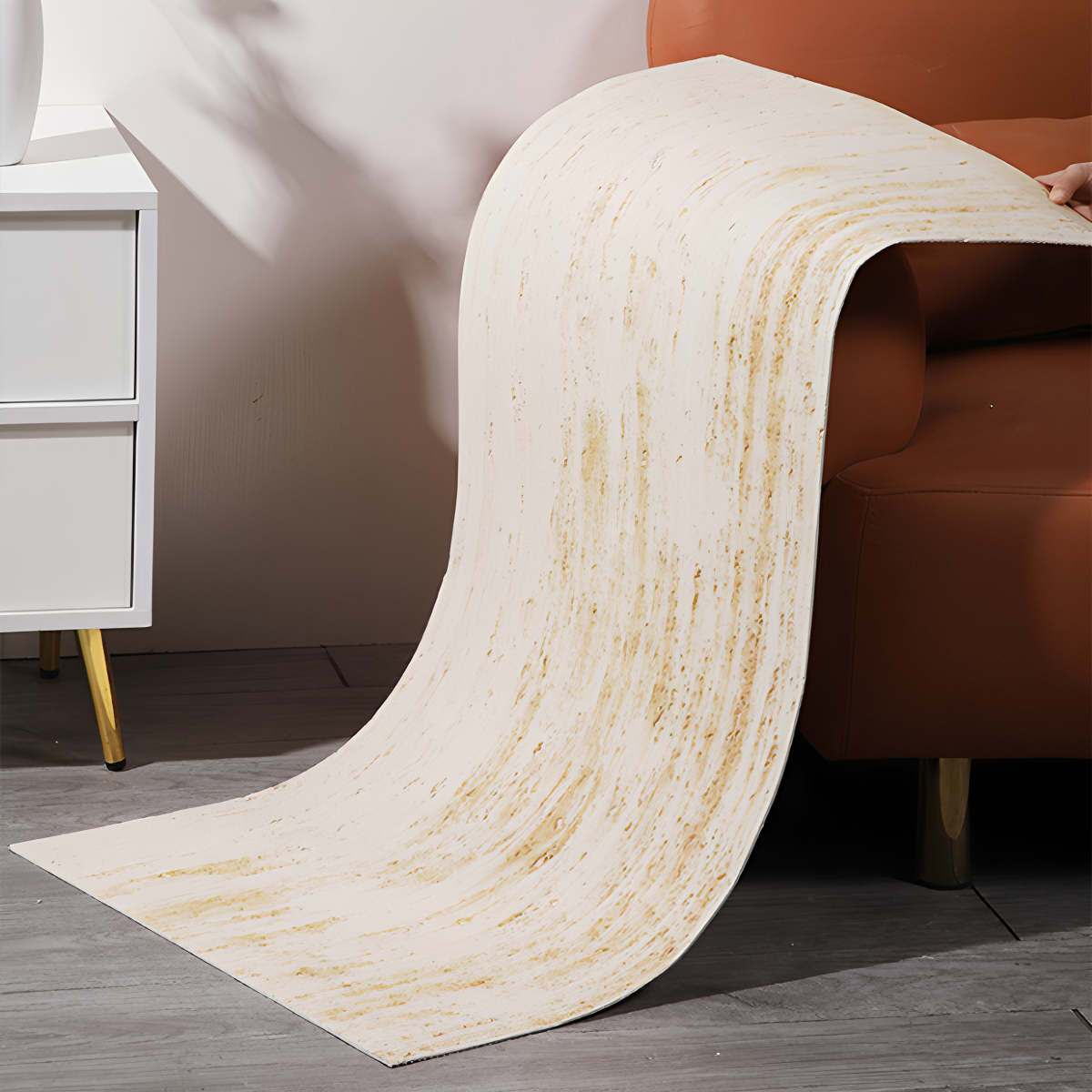
Thickness & Size Impact on Price
The physical dimensions of a flexible stone panel—its thickness and overall size—directly correlate to its final cost, driven by raw material consumption and increased logistical expenses for shipping and handling.
Material Consumption and Unit Cost
The dimensions of a flexible stone panel directly determine its base price because they dictate the amount of raw material needed. Every panel is composed of Modified Clay Material (MCM), natural stone powder, and a fiberglass backing. A thicker panel, such as one at 5.0mm versus our standard 2.5mm, consumes significantly more of these materials, which increases the production cost per unit. This cost-plus approach ensures our pricing reflects the actual material value of the product.
Standard vs. Custom Dimensions
We optimize production for standard panel sizes like 1200 x 600 mm and 2400 x 600 mm to achieve greater manufacturing efficiency and lower costs. Opting for custom dimensions requires adjustments to our manufacturing process and can lead to increased material waste during cutting. While we fully support project-level customization, the final price for non-standard dimensions will reflect the added labor and process adjustments needed to fulfill the order.
Shipping and Handling Considerations
Panel size and thickness are key factors in logistical costs. Our panels weigh between 3.5 to 6.0 kg/m², offering a huge advantage over traditional stone, but heavier and bulkier panels still result in higher shipping fees. For example, oversized panels might need special packaging, like reinforced wooden crates instead of standard pallets, which adds to the handling expenses. These logistical costs are always factored into the total price for B2B orders to give you a clear landed cost.
MOQ (Minimum Order Quantity) Economics
A supplier’s MOQ is a non-negotiable threshold to cover production costs, and our 200 sqm minimum is intentionally low to help partners manage cash flow and avoid the high inventory costs often forced by competitors.
Why Suppliers Set a Minimum Order Quantity
A Minimum Order Quantity (MOQ) is a supplier constraint, not a buyer’s ideal order size. We establish this threshold to cover the fixed costs inherent in any production run, from machine setup and material sourcing to labor allocation. Without it, manufacturing small batches becomes unprofitable. We have set our standard MOQ for flexible stone panels at just 200 square meters. This figure is low for the industry and designed to give our partners an accessible entry point without requiring a massive upfront capital investment.
The Link Between MOQ and Tiered Pricing
MOQ and pricing are directly connected. Meeting the minimum quantity secures the base wholesale price, but this is just the starting point. Most manufacturers, including us, use a tiered pricing model where the cost-per-unit decreases as order volume grows. This structure rewards distributors who commit to higher volumes with better margins. We offer progressive discounts for bulk orders, which allows our partners to improve their profitability as their sales increase.
Balancing Order Size with Inventory Costs
Securing a lower unit price with a large order can be deceptive if it inflates your inventory holding costs. When a supplier’s MOQ is significantly higher than your immediate demand, you are forced to purchase beyond your Economic Order Quantity (EOQ)—the ideal volume that minimizes total costs. This excess stock ties up capital in storage, insurance, and management. Our business model is built around a low MOQ to help you maintain a lean inventory, optimize cash flow, and avoid the financial burden of carrying slow-moving product.
Volume Discounts for Distributors
Our volume discounts are a core B2B strategy, designed to align our manufacturing scale with your market growth and create a shared path to profitability.
Tiered Pricing Structure
Our pricing model is straightforward: the more you order, the lower your per-unit cost. We use a tiered system that automatically applies greater discounts as your purchase quantity increases, directly rewarding larger commitments and enabling predictable cost management.
- Discounts are calculated based on predefined volume thresholds, such as 500 sqm or 1000 sqm.
- This structure helps you scale profitability as your own sales volume grows.
- Clear and transparent tiers make it easy to plan inventory purchases and pricing strategies.
Benefits for Our Distribution Partners
We design our volume discounts to improve your business’s bottom line. By purchasing in bulk, you gain a significant competitive edge through better pricing, which directly enhances profit margins and optimizes your cash flow.
- Lower your cost of goods sold on every large order you place.
- Improve inventory turnover and reduce the administrative frequency of reordering.
- Offer more competitive pricing to your own customers, helping you win more business.
Cumulative Rewards for Long-Term Partners
We value consistent partnership. Beyond single-order discounts, we offer cumulative volume arrangements that recognize your total purchases over a specific period. This model rewards loyalty with even better pricing as our relationship develops.
- Your discount level can improve based on your total annual or quarterly volume.
- This model supports partners who have steady, recurring business needs.
- We can tailor segmented pricing to align with your specific market conditions and growth targets.
Hidden Fees: Molds & Sample Costs
Tooling and prototype costs are the most common friction points in wholesale manufacturing, but they also represent the biggest opportunity for negotiation based on volume and long-term commitment.
Custom Mold Fees for Unique Patterns
For fully custom textures or OEM/ODM projects, a one-time mold fee is standard practice. This cost covers the tooling required to produce your exclusive design. Based on pattern intricacy and size, these fees can range from $80 for simple modifications to over $2,000 for complex, large-format designs. We provide a transparent breakdown of any mold fees before production begins, so there are no surprises.
- At JMS Decor, we see this as a shared investment in a unique product line.
- For large, committed orders (typically over 500 m² for a custom design), we can often absorb this tooling cost into the overall project budget.
Understanding Sample Charges
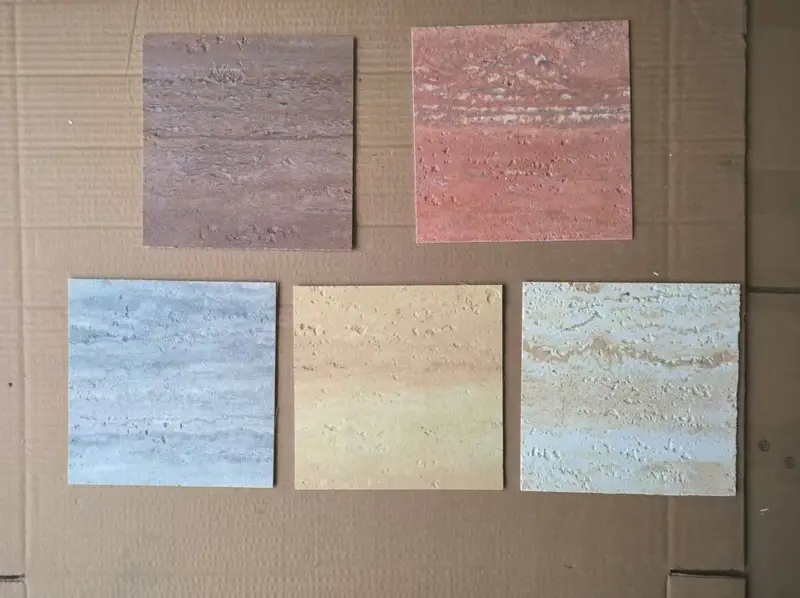
Sample charges cover the direct costs of material, labor, and machine time needed to produce a physical prototype. While we provide our standard texture samples free of charge, fees apply for custom-developed samples that require new tooling or unique material formulations. This ensures our production resources are focused on confirmed projects and serious partnership opportunities.
- Our standard samples ship within 7 days at no cost to qualified partners.
- For custom prototypes, we utilize 3D printing surface technology for 3-day rapid sampling to accelerate your decision-making.
- The cost for custom samples is typically credited toward your first bulk container order, effectively making them free for long-term partners.
Negotiating Fee Waivers and Credits
Upfront fees are not fixed obstacles; they are variables that can be negotiated. Partners with significant volume commitments or a consistent order history have the strongest leverage to reduce or eliminate these costs. We build relationships by creating agreements that align with your business goals, rewarding loyalty and scale.
- High minimum order quantities (MOQs) are the most direct path to waiving mold fees.
- Discuss your annual volume projections with our team to explore customized pricing structures.
- A consistent ordering history improves your negotiating position for future projects and custom development.
Requesting a Quote: What We Need

An accurate quote is built on precise data. Vague requests lead to pricing buffers for unknown variables, while detailed specifications for dimensions, materials, and logistics ensure you only pay for what you actually need.
Project Specifications & Dimensions
To provide an accurate quote, we need the exact dimensions and technical requirements for your project. This information defines the scope and material needs, moving us from a rough estimate to a firm, project-ready price. The more detail you provide on complex elements, the more precise the final cost will be.
- Total square meters or feet of paneling required.
- Preferred panel thickness (e.g., 2.5mm) and size (e.g., 1200x600mm).
- Details for any curved surfaces, such as columns, arches, or unique architectural features.
| Information Provided | Vague Request (Leads to Higher Price) | Specific Request (Ensures Accurate Quote) |
|---|---|---|
| Dimensions | “I need about 150 square meters for columns.” | “I need 44 panels of 1200x2900mm, for a total of 153.12 m², to cover hotel lobby columns.” |
| المواد | “Flexible stone.” | “3D Travertine Romantic 01 texture, Class A2 fire rating for a commercial interior.” |
| Logistics | “Ship to the USA.” | “FOB Shanghai to the Port of Long Beach, CA. Final delivery to warehouse address required.” |
Material, Texture & Finish
The choice of material and finish directly influences the final cost and aesthetic. Please specify which products you are interested in. If you have a custom design in mind, our 3D printing technology allows for rapid prototyping, often turning a design into a physical sample within three days.
- Desired material type: Flexible Stone or WPC Panels.
- Specific stone pattern, wood grain, or texture code from our catalog.
- Any custom colors or 3D printed designs to match your brand or project palette.
Order Quantity & Frequency
Your order volume allows us to calculate potential discounts and plan production. Let us know if this is a one-time project order or if you anticipate regular purchases for distribution. This helps us structure tiered pricing that aligns with your business model.
- Initial order quantity (our flexible stone MOQ starts at 200 square meters).
- Estimated annual volume for ongoing projects or distribution agreements.
- Any phased delivery schedules needed for large-scale developments.
Shipping & Destination Details
Logistics are a key component of your total landed cost. We need your shipping information to calculate freight accurately. Our standard terms are FOB Shanghai, but we can help arrange delivery directly to your final destination if needed.
- Final destination port and country.
- Your company’s full address for warehouse delivery, if required.
- Any specific packaging or handling requirements, like wooden box packaging for large-format panels.
الخاتمة
The price of flexible stone veneer is shaped by clear, predictable factors. Your choice of texture, panel dimensions, and order volume are the primary drivers of cost. Understanding these elements allows you to manage project budgets effectively and avoid unexpected expenses.
With these factors in mind, the next step is to get a quote tailored to your project. Provide us with your specifications, and our team will prepare a detailed pricing proposal for your review.
الأسئلة المتداولة
Flexible stone veneer price per square meter?
As of 2026, the price for flexible stone veneer typically ranges from €45 to €150 per square meter. The final cost depends on the stone’s rarity, finish, and the technological complexity of the manufacturing process. Entry-level slate or quartzite options are at the lower end, while premium marble or translucent varieties command higher prices.
Wholesale building materials price list?
Wholesale pricing for building materials is not provided in a static public price list. Instead, it is determined on a per-project basis through a Request for Quote (RFQ). Pricing is highly dynamic and depends on order volume, material specifications, supply chain logistics, and the specific terms of the B2B partnership.
Bulk discount for stone cladding?
Yes, bulk discounts are standard practice for large-volume orders of stone cladding. Discounts are typically tiered based on the total square meters purchased. While specific rates vary by manufacturer, commercial projects can expect discounts ranging from 5% to over 20% off the list price, with the highest tiers reserved for significant order quantities.
Factors affecting stone veneer cost?
Several key factors influence the final cost of stone veneer. These include the type and quality of the raw stone, its origin and rarity, and the slab dimensions. Additionally, manufacturing efficiency, supply chain logistics, transportation costs, and compliance with environmental regulations all play a significant role in the pricing structure.
Cheapest flexible stone texture?
The most cost-effective flexible stone textures are typically derived from common and abundant raw materials. Natural slate and certain types of quartzite are generally the most affordable options due to their widespread availability and efficient extraction processes. These materials offer a robust and aesthetically pleasing finish at an entry-level price point.

 Arabic
  English
  Spanish
  French
  German