إن القشرة الحجرية المرنة للمشاريع التجارية هي الضمانة الأساسية ضد تجاوز حدود الأحمال الإنشائية وعرقلة ميزانيات المشاريع. وغالباً ما يتقاعس المهندسون المعماريون والبناؤون عن استخدام الأحجار الثقيلة المحفورة في المشاريع، مستهينين بالآثار المترتبة على الهندسة الإنشائية وتكاليف العمالة والجداول الزمنية.
ويتطلب الوزن الهائل أساسات معززة وأنظمة تثبيت معقدة، مما يؤدي إلى مخاطر يمكن أن تعيق عمليات الفحص وتؤدي إلى إعادة عمل مكلفة. يمكن أن يؤدي سوء تقدير واحد في قدرة التحميل إلى الإضرار بسلامة الواجهة وجدواها المالية.
يوفر هذا الدليل البيانات الفنية اللازمة لتحديد القشرة خفيفة الوزن بثقة. نحن نحلل وفورات وزن المادة مقارنةً بالحجر التقليدي، ونراجع تصنيفاتها من حيث مقاومة الحريق مقابل معايير السلامة الحرجة، ونحلل فعالية التكلفة للواجهات التجارية واسعة النطاق. يعمل هذا التحليل كإطار عمل واضح لتقييم ما إذا كانت المادة تفي بالمتطلبات الهيكلية ومتطلبات السلامة والميزانية لمشروعك.
ما هي قشرة الحجر المرنة؟
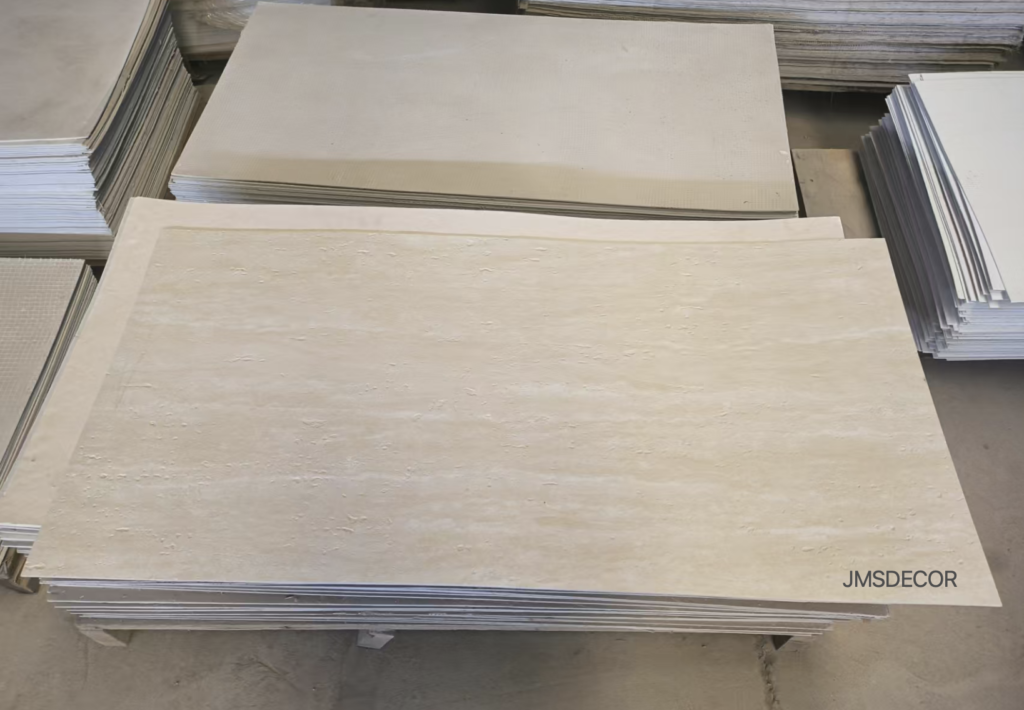
القشرة الحجرية المرنة هي عبارة عن مركب هندسي يربط طبقة رقيقة من الحجر المحفور بطبقة رقيقة من الحجر المحفور إلى دعامة مرنة من البوليمر أو الألياف الزجاجية، مما يحل مشاكل الوزن والصلابة التي تعاني منها الألواح الحجرية التقليدية.
التركيب المادي
القشرة الحجرية المرنة هي مادة مركبة مصنوعة عن طريق ربط طبقة رقيقة جداً من الحجر الطبيعي، مثل الألواح الحجرية أو الرخام، بطبقة دعم خفيفة الوزن ومتينة في نفس الوقت. هذه الدعامة، التي عادةً ما تكون من الألياف الزجاجية أو طبقة من البوليمر مثل مادة الطين المعدلة (MCM)، هي ما يمنح الألواح مرونتها المميزة. والنتيجة هي منتج يحتفظ بالمظهر والملمس الأصليين للأحجار المحفورة ولكنه يتصرف مثل الألواح الحديثة المصممة هندسياً.
السطح مصنوع من الحجر الأصلي، مما يحافظ على ملمسه ولونه الأصلي وجاذبيته البصرية.
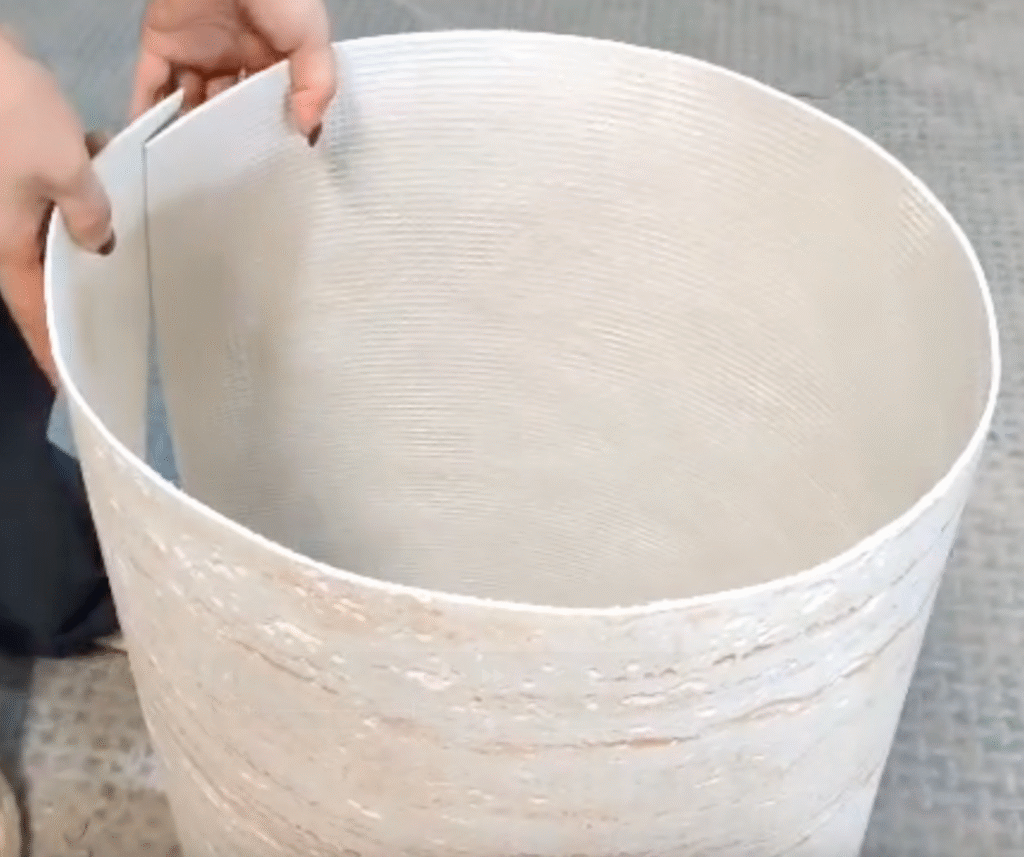
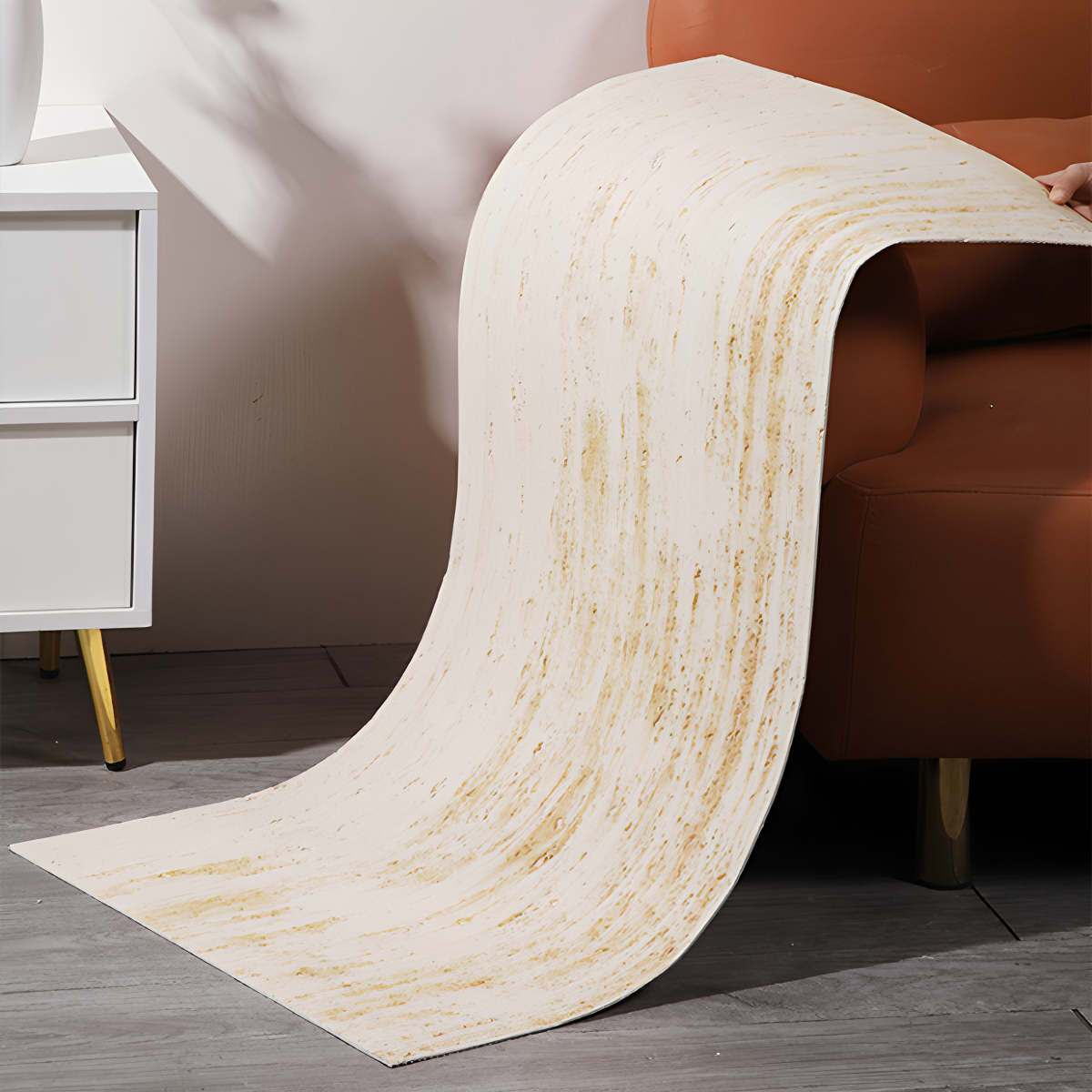
توفر الدعامة السلامة الهيكلية وتسمح للورقة بالتوافق مع الأسطح المنحنية أو غير المنتظمة دون حدوث تشققات.
تم تصميم المنتج النهائي بحيث يكون رقيقاً وسهل التحكم، مما يجعله بديلاً عملياً للألواح الحجرية الصلبة لمجموعة كبيرة من المشاريع.
المزايا الأساسية مقارنةً بالحجر التقليدي
تم تطوير هذه المادة للتغلب على القيود الرئيسية للحجر التقليدي، بما في ذلك وزنه الهائل وتكلفته العالية وتركيبه المعقد. وتتمحور فوائده حول كفاءة المشروع وعمليته، مما يؤثر على كل شيء بدءاً من الخدمات اللوجستية إلى العمالة.
كما أن وزنه الخفيف - غالباً ما يكون سدس وزن الحجر الصلب - يقلل بشكل كبير من تكاليف الشحن ويزيل الحاجة إلى الدعم الهيكلي الثقيل.
يكون التركيب أسرع وأبسط، وغالبًا ما يقلل وقت التركيب بنسبة تصل إلى 70% ويتطلب أدوات متخصصة أو مهارات عمالية أقل.
هذه المادة أكثر فعالية من حيث التكلفة بشكل عام، حيث توفر المظهر الأصيل للحجر الطبيعي بميزانية إجمالية أقل للمشروع.
التطبيقات الشائعة
إن الجمع الفريد بين اللمسة النهائية الحجرية الأصيلة والمرونة الهندسية يفتح نطاقاً واسعاً من الاستخدامات في المشاريع التجارية والسكنية. فهو يوسع إمكانيات التصميم إلى ما هو أبعد مما هو ممكن مع البناء التقليدي، خاصةً في التجديدات والتجهيزات التجارية السريعة.
تُستخدم لتكسية الجدران الداخلية والخارجية وواجهات المباني والجدران المزخرفة في الفنادق ومساحات البيع بالتجزئة والمكاتب.
مثالي لتغليف الأسطح المنحنية مثل الأعمدة ومكاتب الاستقبال والممرات المقوسة حيث يكون الحجر الصلب غير عملي.
يتم تطبيقها في الأثاث الراقي والخزائن وعناصر التصميم الداخلي الأخرى لخلق جماليات “قابلة للتطبيق على إنستغرام” في المساحات التجارية مثل الصالونات والمطاعم.
المزايا الرئيسية للمشاريع التجارية
توفر القشرة الحجرية المرنة مزايا مالية وهيكلية وتصميمية مباشرة تحل التحديات الأساسية للبناء والتجديد التجاري.
كفاءة التركيب وخفض التكلفة
تهاجم الألواح الحجرية المرنة بشكل مباشر الجداول الزمنية للمشروع وميزانيات العمالة. حيث يسمح وزنها الخفيف للغاية بالتركيب السريع بدون آلات ثقيلة أو تعزيزات هيكلية، وهي نفقات كبيرة مع الحجر التقليدي. بالنسبة لمتعهدي المتاجر ومجددي الفنادق والمطورين، يعني ذلك سرعة إنجاز المشروع وتحسين الربحية.
يقلل من وقت التركيب بنسبة تصل إلى 70% مقارنةً بالبناء الحجري التقليدي.
تزن أقل بحوالي 801 تيرابايت 3 تيرابايت، مما يلغي الحاجة إلى تعديلات هيكلية مكلفة أو دعم الحامل.
يقلل من نفقات العمالة، وهو عامل حاسم للحفاظ على التحكم في الميزانية في الإنشاءات التجارية واسعة النطاق.
المزايا الهيكلية ومزايا السلامة
يوفر التخفيض الكبير في الوزن فوائد هيكلية هامة، خاصةً في الإنشاءات الشاهقة وتعديلات المباني. فهو يتيح التشطيبات الحجرية على الأسطح التي لا يمكنها تحمل الحمل الهائل للحجر التقليدي. كما أن هذه الكتلة المخفضة تحسن أداء المبنى أثناء الأحداث الزلزالية من خلال وضع ضغط أقل على الهيكل وأنظمة التركيب.
يسمح بالتركيب على الطوابق العلوية والجدران غير الحاملة للحمولة حيث المواد الثقيلة محظورة.
يعزز السلامة في المناطق المعرضة للزلازل بسبب كتلته المنخفضة.
يمكن أن يساهم في خفض أقساط التأمين على المباني في المناطق النشطة زلزالياً.
تطبيقات تصميم متعددة الاستخدامات
على عكس الألواح الحجرية الصلبة، تتوافق القشرة المرنة مع الجدران المنحنية والأعمدة المستديرة وغيرها من الأشكال المعمارية المعقدة دون تشقق. تمنح هذه الإمكانية المهندسين المعماريين والمصممين حرية أكبر بكثير، خاصةً في التجديدات التجارية حيث تكون الهياكل القائمة ذات أبعاد غير تقليدية. كما أنها توفر مظهراً حجرياً سلساً وراقياً دون الحاجة إلى تكلفة التصنيع حسب الطلب.
يلتف حول الأسطح والأعمدة المنحنية للحصول على مظهر حجري متجانس.
مثالية لتجديد المساحات ذات العناصر الهيكلية الفريدة أو الصعبة.
يمكن وضعها على الجدران الداخلية والواجهات الخارجية وحتى الأثاث والتركيبات المخصصة.
المتانة والحد الأدنى من الصيانة
صُممت الألواح الحجرية المرنة المصممة خصيصاً للبيئات التجارية التي تشهد حركة مرور كثيفة، لتدوم طويلاً. فهي تقاوم بفعالية الأضرار الناجمة عن الطقس والرطوبة والأشعة فوق البنفسجية، مما يضمن ثبات اللون والسلامة الهيكلية على المدى الطويل. وتعني هذه المتانة العالية أن هذه المتانة العالية تتطلب الحد الأدنى من الصيانة، مما يقلل من التكاليف التشغيلية للمبنى على مدار عمره الافتراضي.
مناسب للاستخدامات الداخلية والخارجية الصعبة، من الردهات إلى الواجهات.
مقاومة للبهتان والتشقق وتسرب الرطوبة.
تُترجم متطلبات الصيانة المنخفضة مباشرةً إلى انخفاض النفقات التشغيلية على المدى الطويل.
مصدر القشرة الحجرية الممتازة والقابلة للتخصيص بالكامل
توفر ألواحنا الحجرية الناعمة خفيفة الوزن والصديقة للبيئة أداءً متيناً وطويل الأمد لأي مشروع فاخر. وبفضل إنتاجنا المعتمد من ISO ومعدلات الطلب المنخفضة، نوفر إمدادات ثابتة وموثوقة لتلبية الرؤية الفريدة لعلامتك التجارية.
إن الانخفاض الكبير في وزن القشرة الحجرية المرنة - غالباً ما يكون أقل من سدس الحجر التقليدي - يلغي بشكل مباشر احتياجات التعزيز الهيكلي ويقلل من تكاليف المشروع بدءاً من النقل وحتى التركيب.
الفارق الأساسي بين القشرة الحجرية المرنة والحجر التقليدي هو الكتلة. بالنسبة للمهندسين المعماريين والمقاولين والمطورين، فإن هذا الفرق ليس مجرد تفاصيل بسيطة؛ فهو يقود القرارات الأساسية المتعلقة بالهندسة الإنشائية والخدمات اللوجستية والعمالة. إن فهم هذه المقاييس المتعلقة بالوزن أمر بالغ الأهمية لتحديد نطاق المشروع ووضع ميزانيته بدقة.
تقليل الوزن بشكل كبير
توفر القشرة الحجرية المرنة ميزة كبيرة في الوزن، حيث يتراوح وزنها عادةً بين 3 و15 رطلاً للقدم المربع الواحد. وهذا جزء بسيط من 40 إلى 60 رطلاً للقدم المربع الواحد، وهو وزن شائع في الأحجار التقليدية ذات القاعدة الكاملة. وتترجم الكتلة المخفضة مباشرةً إلى فوائد عملية في الموقع تعمل على تبسيط عملية البناء بأكملها.
متري
القشرة الحجرية المرنة
حجر كامل السرير التقليدي
الوزن لكل قدم مربع
3–15 lbs
40–60 lbs
التعزيز الهيكلي
Typically unnecessary; reduces building load.
Often requires footings, ledges, or wall ties.
Logistics & Transport
Lower fuel consumption and handling costs.
High costs due to heavy, bulky shipments.
Strength and Durability
Modern manufacturing ensures that this weight reduction does not compromise performance. By bonding a thin layer of natural stone to a composite or fiber-reinforced backing, the veneer maintains impressive durability. These systems achieve high compressive strength, often exceeding 4,000 psi, and excellent flexural strength over 1,000 psi.
The material is engineered to resist impact, moisture, and environmental stressors, delivering performance comparable to traditional stone in most architectural applications while preserving the authentic stone aesthetic.
Effect on Project Costs
The lighter weight of flexible stone veneer creates compounding cost efficiencies across a project’s lifecycle. These savings begin with logistics, as lighter materials are cheaper to ship and easier to handle on-site. The most significant impact is on labor and structural engineering. Installation requires smaller crews and less time, and the ability to apply it directly over existing substrates in renovation projects—a “zero-demolition” approach—eliminates costly tear-out and disposal expenses. By removing the need for additional load-bearing structures, projects can proceed faster and with a leaner budget, making lightweight veneer a financially sound choice for large-scale commercial work.
Fire Ratings & Safety Standards
A material’s fire rating is a non-negotiable specification for any commercial project, directly impacting occupant safety, code compliance, and insurance eligibility. Our flexible stone panels meet the highest global standards for non-combustible materials.
International Testing and Certifications
Our flexible stone panels meet global fire safety standards to ensure compliance for commercial and residential projects. These certifications verify the material’s resistance to flame spread and smoke development under controlled testing conditions, making them a reliable choice for architects and contractors worldwide.
JMS Decor panels achieve a Class A2 fire rating, certified under the American ASTM E84 standard.
The panels also align with European EN 13501-1 and British BS 476 testing protocols.
These ratings are essential for public buildings, commercial spaces, and multi-family housing where strict fire codes are enforced.
Standard
Region
Key Requirement
ASTM E84
أمريكا الشمالية
Class A requires a flame spread index below 25 and smoke development below 450.
EN 13501-1
أوروبا
An A2-s1, d0 rating indicates a non-combustible material with very low smoke and no flaming droplets.
BS 476
United Kingdom
Evaluates fire propagation and surface spread of flame to ensure material containment.
Class A Fire Performance
A Class A fire rating signifies the highest level of fire resistance for building materials. It is determined by measuring how quickly flames spread across a surface and how much smoke is generated when the material is exposed to fire. This rating is not a recommendation; it is a requirement for many commercial projects.
Materials must have a flame spread index below 25 to qualify for a Class A rating.
This low flammability helps slow the spread of fire, providing critical time for evacuation.
Minimal smoke generation improves visibility and safety during an emergency.
Non-Combustible Material Properties
The composition of our flexible stone veneer, featuring a natural stone powder layer fused to a fiberglass backing, results in a fundamentally non-combustible product. This inherent property is a key differentiator for safety-critical applications, as the material itself does not contribute fuel to a fire.
Non-combustible materials do not add fuel to a fire, which is vital for containing its spread.
This makes the panels suitable for use in high-risk areas like corridors, kitchens, and exterior cladding on high-rise buildings.
Using non-combustible materials can also help projects qualify for green building certifications like LEED.
Exterior vs. Interior Applications
The core material is identical, but the application dictates the priority—aesthetic flexibility in controlled indoor spaces versus environmental durability for exposed outdoor facades.
Flexible stone veneer functions effectively in both interior and exterior settings, but project requirements shift dramatically between the two. Indoors, the focus is on design versatility and speed of installation. Outdoors, the material must prove its resilience against weather, UV radiation, and temperature extremes. Understanding these distinctions is critical for proper specification and long-term performance.
Interior Use Cases
Indoors, flexible stone veneer is an aesthetic tool for rapid, high-impact transformations in commercial spaces. Its light weight (around 3.5–6.0 kg/m²) and ability to wrap around curved surfaces give architects and designers significant creative freedom without needing costly structural reinforcement. This makes it a primary choice for shopfitters and hotel renovators who require fast, low-disruption installations that produce visually compelling “Instagrammable” feature walls.
Common Applications: Accent walls in hotel lobbies, retail backdrops, kitchen backsplashes, custom furniture cladding, and reception desks.
Design Flexibility: The material easily conforms to curved columns, arched ceilings, and other non-linear architectural elements that are difficult or impossible for traditional stone.
Installation Advantage: Minimal structural support is needed, and panels can often be installed directly over existing surfaces like old tile or drywall, accelerating renovation timelines.
Exterior Use Cases
For exterior projects, the focus shifts from aesthetics to pure performance. Panels must withstand constant environmental stress, including UV radiation, freeze-thaw cycles, and moisture. When properly sealed, the material serves as a durable, lightweight cladding solution for building facades, entryways, and outdoor architectural features. Natural stone types like slate and certain marbles are especially effective due to their inherent resilience.
Building Envelopes: Used for full building cladding, foundation covers, and renovating the facades of aging high-rise buildings without adding significant structural load.
مقاومة الطقس: Engineered to perform in extreme climates, from the high heat and UV exposure of the Middle East to the intense cold (-40°C) of Canada and Russia.
Architectural Features: Ideal for wrapping exterior columns, creating entryway accents, and cladding outdoor kitchens or retaining walls.
Shared Performance Advantages
Whether used inside or out, flexible stone veneer delivers core benefits that simplify construction and reduce total project costs compared to traditional stone. The dramatic weight reduction lowers material transport expenses and reduces the need for specialized installation crews or heavy machinery. This allows for greater design freedom on both new builds and retrofit projects where structural limitations are a major concern.
Cost Efficiency: Both applications benefit from lower shipping costs and reduced labor hours during installation.
Safety Compliance: The material is inherently moisture-resistant and typically carries a Class A2 fire rating, making it a safe specification for almost any commercial setting.
Structural Freedom: Because it is load-bearing free, architects can specify a natural stone finish on structures that could never support the weight of traditional masonry.
Cost Efficiency Analysis
Flexible stone veneer delivers project savings not just on material price, but across the entire value chain—from logistics and labor to long-term operational upkeep.
Labor and Installation Savings
Flexible stone veneer directly cuts project expenses by speeding up installation and lowering labor requirements. Contractors complete projects faster with a less specialized workforce compared to laying traditional heavy stone. Installation can be up to 70% faster than with conventional materials, which shortens project timelines and improves crew availability. The simpler process also expands the pool of qualified installers beyond specialized masons, giving project managers more flexibility.
Cost Metric
القشرة الحجرية المرنة
Traditional Solid Stone
Average Labor Cost
$4 – $6 per sq. ft.
$12 – $15 per sq. ft.
Material Weight
3 – 15 lbs per sq. ft.
40 – 60 lbs per sq. ft.
التعزيز الهيكلي
Generally not required
Often required
Required Workforce
General contractors; tile setters
Specialized masons
Reduced Material and Transportation Costs
The lightweight nature of flexible veneer panels creates immediate savings in logistics, handling, and structural preparation. Lower product weight reduces shipping and freight charges, a critical factor for large B2B orders and international projects.
On-site, the panels require minimal substrate reinforcement, which saves money on materials and the labor needed to install them. Easier handling also decreases the risk of damage and waste, further tightening control over material budgets from the factory to the final wall.
Total Lifecycle Value
The financial benefits extend far beyond the initial purchase price. The market now prioritizes total lifecycle cost, where long-term value is paramount. JMS Decor’s panels are engineered to resist weathering, UV radiation, and moisture, minimizing the need for future repairs or replacements. This durability translates into lower maintenance budgets and a predictable cost of ownership over the building’s life.
For our B2B partners—architects, contractors, and wholesalers—these combined savings enable more competitive project bids and healthier profit margins.
Sourcing from Manufacturers
Engaging directly with a manufacturer is the most effective way to control project costs, ensure material quality, and gain access to technical innovations before they hit the general market.
Key Sourcing Advantages
Sourcing flexible stone veneer directly from the factory floor offers clear financial and logistical benefits. The material’s inherent lightweight nature—often weighing only 1/6th that of traditional stone—slashes transportation expenses, particularly for full container loads. This weight reduction also simplifies on-site handling.
Furthermore, the straightforward installation process, which often allows direct overlay on existing surfaces, can significantly lower labor costs, making it a pragmatic choice for large-scale commercial builds and residential developments alike.
Reduced material transportation and freight costs compared to heavy, breakable natural stone slabs.
Lower on-site labor expenses due to faster, less specialized installation methods.
Simplified procurement, as a single versatile product can be specified for both interior and exterior applications.
Evaluating Supplier Capabilities
When selecting a manufacturing partner, the focus should be on their ability to meet specific project demands. Top-tier suppliers differentiate themselves through proven technical performance and logistical reliability. Look for manufacturers with established quality management systems like ISO 9001 and verifiable product certifications.
Their ability to provide rapid prototyping and consistent production lead times is critical for commercial buyers, including architects, contractors, and wholesalers, who manage tight project schedules and inventory turns.
Broad customization options for colors and textures to meet architectural specifications.
Verified material durability and weather resistance, essential for long-term performance guarantees.
Competitive advantage gained through predictable and rapid lead times for large-volume orders.
Manufacturing and Product Innovations
The flexible stone veneer market is constantly evolving with innovations that make panels thinner, stronger, and more adaptable. The core technology often involves Modified Clay Material (MCM) fused with natural stone powder, creating a composite that balances aesthetics with performance. Current R&D focuses on ultra-thin profiles and advanced backing materials, expanding the potential for complex architectural applications where weight and flexibility are primary constraints.
Development of ultra-thin panels, with some profiles measuring just 1-2mm thick.
Integration of fiberglass-polymer composite reinforcement to increase tensile strength and impact resistance.
Advanced customization capabilities, allowing for project-specific finishes and textures beyond standard catalogs.
الخاتمة
Flexible stone veneer addresses key challenges in commercial construction by combining the aesthetic of natural stone with significant performance advantages. Its lightweight profile reduces structural loads and simplifies logistics, while its Class A2 fire rating meets stringent safety standards. These factors make it a practical and cost-effective cladding solution for both new facades and large-scale renovation projects.
To see how this material can fit your design, our team can provide technical data sheets and rapid sampling to support your specification process. Contact us to discuss your project requirements or to request a sample kit.
الأسئلة المتداولة
What are the benefits of thin stone veneer?
The primary benefits of thin stone veneer include significantly reduced weight, which leads to faster installation and lower overall project costs compared to traditional masonry. Its engineered flexibility allows for versatile applications across commercial and residential projects, including wall cladding, architectural features, and even high-end furniture.
Does stone veneer increase home value?
Yes, stone veneer significantly increases home value by boosting curb appeal, which is a critical factor in property valuation. It provides the high-end aesthetic of natural stone at a more accessible price point, offering homeowners a high return on investment and making the property more attractive to potential buyers.
Is it suitable for high-rise exteriors?
Absolutely. Thin stone veneer is an ideal material for high-rise exteriors. Its key advantage is its low weight, which drastically reduces the structural load on the building’s frame compared to full-bed stone. This simplifies engineering requirements and makes installation safer and more efficient on multi-story structures.
What is the fire rating?
Since it is made from natural stone, the veneer itself is non-combustible. When installed as part of a complete wall assembly with the correct adhesives and a suitable substrate like cement board, the system typically achieves a Class A fire rating. This is the highest classification for fire resistance and minimal flame spread.
How long does it last?
With proper, professional installation, thin stone veneer is exceptionally durable and has a long service life, often lasting 50 years or more with minimal maintenance. Its longevity is comparable to other high-quality cladding materials like brick and stucco, making it a reliable, long-term architectural solution.
Is it eco-friendly?
Yes, it is considered a sustainable building material. It requires significantly less quarrying of raw stone to cover the same surface area as traditional full-dimension stone. Additionally, its lightweight properties reduce the fuel consumption and carbon emissions associated with transportation from the quarry to the job site.
شارك:
ليلي
مرحبًا، أنا كاتب هذا المنشور، وأنا أعمل في هذا المجال منذ أكثر من 6 سنوات.
إذا كنت ترغب في بيع الأحجار المرنة وألواح الألواح الخشبية الخشبية المرنة ومواد البناء الزخرفية ذات الصلة أو منتجات ديكور المنزل، فلا تتردد في طرح أي أسئلة.



 Arabic
  English
  Spanish
  French
  German