Your choice of tiny house siding directly impacts whether a build is road-legal or an overweight liability that violates federal Gross Vehicle Weight Rating (GVWR) limits. For builders, this single decision sits at the intersection of client aesthetics and non-negotiable safety compliance.
A beautiful, rustic design means nothing if the materials push the trailer chassis past its structural capacity, creating a dangerous and unsellable final product. One miscalculation with heavy materials can derail an entire project, leading to costly rebuilds and serious reputational damage.
This guide provides the technical framework for evaluating stone veneer as a viable siding option for mobile builds. We will break down the essential weight calculations, comparing thin stone panels against traditional wood siding on a pound-for-pound basis.
We will also analyze the aerodynamic and durability factors for frequent travel, as well as the installation process itself. Think of this as a standard operating procedure for integrating the high-end look of stone without compromising the engineering integrity of a tiny home on wheels.
The GVWR Challenge in Tiny Homes
Every material and design choice in a tiny home is dictated by its Gross Vehicle Weight Rating (GVWR). Exceeding this limit, set by the trailer’s axle capacity, makes the home illegal to transport and unsafe on the road, turning a mobility asset into a stationary liability.
Balancing Interior Space with Transportability
The fundamental challenge in tiny home design is maximizing livable space without violating strict weight limits. Designers must engineer functional, comfortable interiors that remain light enough for legal and safe transportation. This constraint forces innovation in everything from multipurpose furniture to optimized layouts, ensuring every square foot serves a purpose while keeping the total weight under the trailer’s specified capacity.
Understanding Axle Capacity and Weight Limits
A tiny home’s Gross Vehicle Weight Rating (GVWR) is a non-negotiable maximum determined by the trailer’s axle capacity. This single number dictates all subsequent construction decisions. Most finished tiny houses weigh between 500 and 550 pounds per linear foot, and common GVWRs fall between 3,500 and 7,000 pounds. Pushing past this rating compromises the trailer’s structural integrity and creates a significant safety hazard during transit.
| Weight Metric | معيار الصناعة | Primary Constraint |
|---|---|---|
| Finished Weight per Foot | 500–550 lbs / linear foot | Material and Component Selection |
| Total GVWR (Trailer Dependent) | 3,500–7,000 lbs | Trailer Axle Capacity |
Lightweight Materials as a Key Solution
To stay within GVWR limits, builders prioritize lightweight construction materials that reduce the overall structural load. This is where material innovation becomes critical. Builders actively seek out advanced composites, flexible stone veneers, and thinner engineered panels as alternatives to heavy, traditional options. These smart material selections are fundamental to achieving a successful build that is both durable and legally compliant for road travel.


Adherence to Transportation Regulations
The GVWR is not just a physical limitation; it is a matter of legal compliance. Federal and local transportation regulations enforce strict weight limits for towed vehicles to ensure road safety. Builders must accurately document the final weight and confirm it meets all legal standards. Failing to comply can result in fines, legal issues, and the inability to legally move the home, defeating its primary purpose.
Stone vs. Wood Weight Calculation
Flexible stone veneer weighs less than even some common wood sidings, making the aesthetic of real stone achievable without exceeding tiny home weight limits.
Traditional Wood Siding Weight
Wood is a common baseline for tiny home siding because it is relatively lightweight. Materials like cedar are often chosen, but they require consistent upkeep to protect against the elements. Standard wood siding typically weighs around 2-3 pounds per square foot. While this is generally manageable for mobile structures, it’s still a significant factor in the total vehicle weight. The main trade-off is the need for regular maintenance, including re-staining every 2-5 years to prevent rot and decay.
Conventional Stone Veneer Challenges
While offering an attractive, durable finish, traditional stone veneers are often too heavy for tiny homes on wheels. Natural stone is almost always impractical for mobile applications, as it requires additional structural support that adds excessive weight. Manufactured stone is a lighter alternative but still adds a substantial load that can strain the chassis and complicate road transport, pushing the home over its legal weight limit.
Flexible Stone Panels: A Lightweight Solution
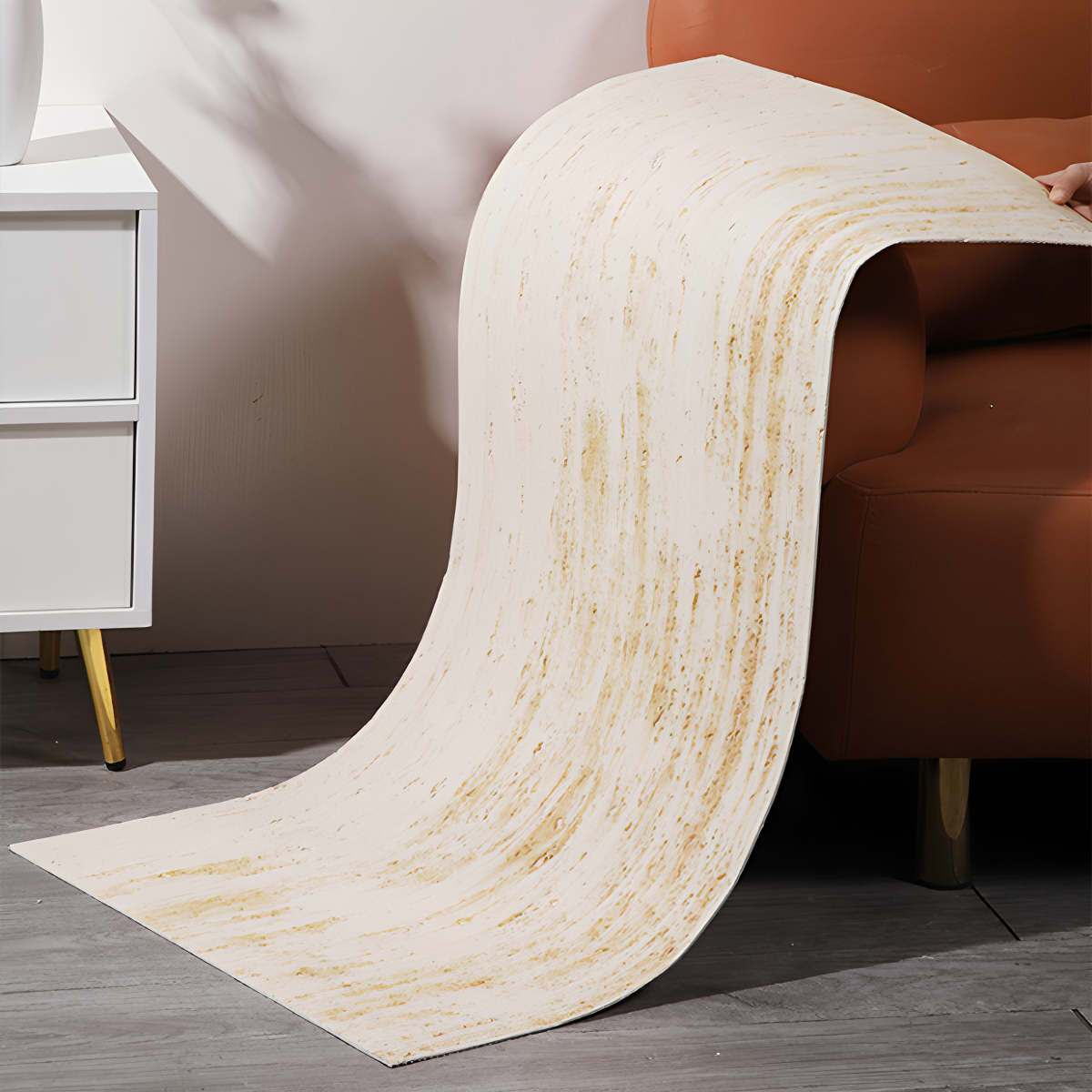
Flexible stone panels from JMS Decor provide the authentic appearance of stone without the prohibitive weight. These panels weigh approximately 0.7 to 1.3 pounds per square foot (3.5-6.0 kg/m²), making them lighter than even many wood siding options. This low weight simplifies the installation process and reduces the overall structural load on the tiny home’s frame and trailer. The result is a material that offers the durability and weather resistance of stone in a thin, easy-to-handle format perfectly suited for weight-conscious builds.
| Siding Material | Weight (lbs / sq ft) | Key Consideration for Tiny Homes |
|---|---|---|
| Traditional Wood Siding | 2.0 – 3.0 | Acceptable weight but requires frequent maintenance. |
| Conventional Manufactured Stone | 6.0 – 12.0+ | Almost always too heavy, straining the trailer chassis. |
| ألواح الحجر المرنة المرنة من JMS للديكور | 0.7 – 1.3 | Delivers stone aesthetic at a lower weight than wood. |
Elevate Your Brand with Custom Stone Panels
Aerodynamics: Thin Stone vs. Chunky Siding
Siding’s aerodynamic profile directly impacts a mobile tiny home’s fuel efficiency and handling, yet the industry lacks specific drag coefficient data to quantify the advantage of smooth surfaces over textured ones.
Impact of Siding Profile on Wind Resistance
For any mobile tiny home built in 2026, siding is more than a weather barrier; it’s an aerodynamic surface. A smooth, flat profile creates less wind resistance during transport. This directly affects towing stability and fuel economy. Materials like flexible stone panels, with a typical thickness of just 2.5-5.0mm, present a sleek, low-profile surface that allows air to flow past with minimal disruption. Chunky siding options with deep grooves, overlapping layers, or prominent textures can create significant turbulence, increasing the aerodynamic drag and the effort needed to tow the home, especially at highway speeds.
Data Limitations in Siding Aerodynamics
There is a clear gap in industry data comparing the aerodynamic performance of different siding materials for mobile tiny homes. Most product testing and research focuses on static properties for stationary buildings, like weight, durability, and R-value. Builders looking for hard numbers will find that specific metrics like drag coefficients for thin stone versus thick wood siding are simply not published. Standard wind load tests are designed to measure a material’s ability to withstand a storm, not its efficiency while moving at 65 mph. This forces builders to rely on fundamental aerodynamic principles instead of specific performance data when making design choices.
Airflow Dynamics: Smooth vs. Textured Surfaces
The texture of a siding material dictates how air interacts with the tiny home on the road. A smooth finish helps maintain “attached airflow,” where the air follows the contour of the surface cleanly. A rough or chunky texture causes “flow separation,” creating eddies and negative pressure zones that pull back on the structure, increasing drag.
A uniform surface, like a thin stone panel, minimizes this disruption and contributes to a more streamlined profile. Deep shadow lines and varied thicknesses from chunky siding disrupt this flow, working against the tow vehicle. While a golf ball uses dimples to manipulate air for distance, a large, flat-sided object like a tiny home benefits from the smoothest possible surface to reduce overall drag.

DIY Friendly Install for Builders
The installation process is engineered to reduce labor costs and project timelines for tiny home builders by using standard adhesives and eliminating the need for heavy framing or specialized masonry skills.
Lightweight Panels Reduce Structural Load
For tiny home builders, every kilogram counts. JMS Decor’s flexible stone panels are engineered to be exceptionally lightweight, weighing only 3.5 to 6.0 kg per square meter. This drastically reduces the overall structural load on the trailer and frame, making it easier to stay within road-legal Gross Vehicle Weight Ratings (GVWR). The lower material weight means panels are easy for a single person to handle and position, which speeds up the installation workflow and reduces transportation costs. It also helps builders avoid specifying heavy-duty, expensive framing just to support the facade.
Simple Application with Standard Adhesives
Our panels are designed for direct adhesion using standard construction adhesives or tile glue, eliminating the need for specialized tools, mortar mixing, or complex fastening systems. This approach saves significant time and labor compared to traditional siding or masonry. The process involves cutting the panels to size with a utility knife, applying adhesive, and pressing them into place. Because no specialized training is required, any skilled builder can achieve a professional result, minimizing installation errors and material waste.
| عامل التثبيت | حجر مرن مرن من JMS للديكور | القشرة الحجرية التقليدية |
|---|---|---|
| طريقة التطبيق | Direct adhesion with tile glue/mastic | Mortar-based system with metal lath |
| أدوات القطع | Utility knife (dust-free) | Angle grinder or wet saw (heavy dust) |
| Labor Requirement | Single person can handle and install | Often requires two people or specialized mason |
| Substrate Prep | Direct overlay on clean surfaces | Requires water barrier, lath, and scratch coat |
Flexibility for Custom Curves and Designs
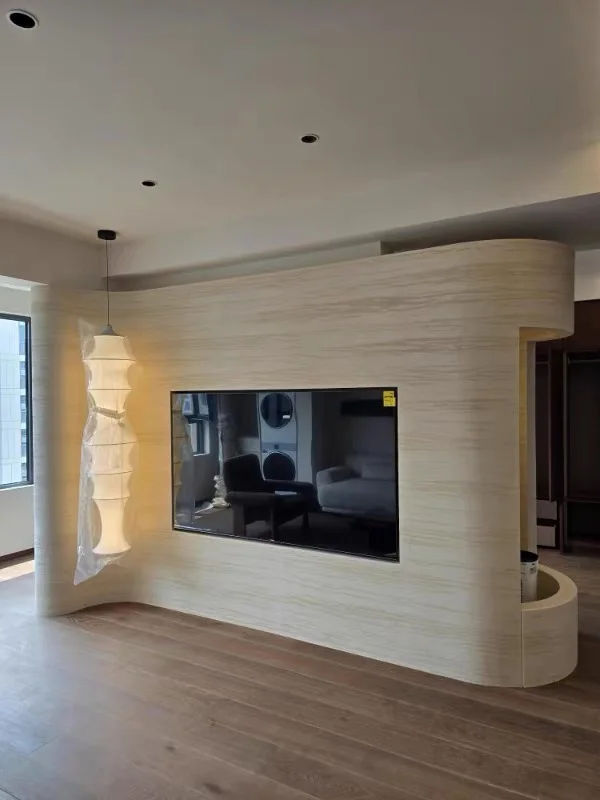
Tiny houses often feature unique curves and compact architectural details that are difficult to clad with rigid materials like wood, metal, or traditional veneer. JMS Decor’s panels are genuinely flexible and can bend to conform to curved walls, rounded corners, and arches with a diameter as tight as 200mm. This gives builders the freedom to execute creative designs without the cost and complexity of custom stonework. It allows for a high-end, custom-molded stone appearance that sets a project apart and provides a versatile solution for non-traditional architectural shapes.
Durability for “Road Warriors”
Siding on a mobile tiny home must perform like an automotive shell, engineered for constant climate shock, road vibration, and minimal upkeep rather than static residential exposure.
Resistance to Weather and Road Conditions
A tiny home on wheels faces an operational environment far harsher than a stationary building. It endures rapid climate shifts during travel, from dry heat to freezing rain in a single trip. The exterior must withstand constant UV radiation, salt spray in coastal areas, and physical abrasion from road debris. Materials that fail under these conditions will quickly degrade, compromising the structure’s integrity.
Performance in freeze-thaw cycles is a critical metric. Siding must accommodate expansion and contraction without cracking or delaminating. This is where engineered materials show a clear advantage over traditional options.
- JMS Decor’s flexible stone panels are tested to handle freeze-thaw cycles down to -40°C, preventing the micro-cracks that lead to material failure.
- The fully sealed, waterproof surface protects the home’s structure from moisture intrusion during transit through rain and high-humidity environments.
- Built-in UV resistance ensures colors and textures do not fade or become brittle after continuous sun exposure on the road.
Low Maintenance for a Life on the Move
For tiny home owners, time is a resource best spent on the road, not on exterior upkeep. Traditional materials like wood demand a regular maintenance schedule of sealing, painting, or staining that is impractical for a mobile lifestyle. The market has responded with a clear shift toward engineered composites and stone panels that eliminate these recurring tasks, reducing both long-term costs and labor.
JMS Decor panels deliver the look of natural stone without the associated maintenance burden. The non-porous and sealed surface simplifies cleaning, allowing owners to easily wash off road grime, dust, and environmental buildup. This “wash-and-go” capability is a significant quality-of-life improvement for anyone living a nomadic lifestyle.
Fire Resistance for Enhanced Safety
Fire safety is a primary concern in any compact living space, and it becomes even more critical in a mobile dwelling. There is a growing demand for siding made from fire-rated materials, providing a crucial layer of protection and peace of mind. Using fire-rated siding isn’t just a preference; it often helps meet stricter building codes and safety standards that are increasingly being applied to alternative dwellings.
JMS Decor’s flexible stone panels provide a tangible safety upgrade, having achieved a Class A2 fire rating under ASTM testing. This classification means the material is non-combustible and will not contribute to the spread of a fire. It offers a significant safety advantage over traditional wood siding and other flammable materials commonly used in tiny home construction.

Rustic vs. Modern Tiny House Designs
The tiny house market is clearly splitting into two dominant aesthetic paths: hyper-efficient modern minimalism and nature-connected rustic warmth. A growing third segment now hybridizes these styles, reflecting a demand for personalized, flexible living spaces.
Modern Minimalist Tiny Homes
Modern tiny house designs prioritize clean lines, neutral color palettes, and integrated smart technology to maximize visual space and efficiency. This approach appeals to individuals who need a functional, clutter-free environment, often for remote work or as an urban dwelling alternative. The goal is to create a seamless, open feel within a compact footprint.
- Flexible stone panels in light grays or whites, particularly from our Moderns series, create sleek, uninterrupted walls that enhance the sense of space.
- Custom 3D printed panels can replicate materials like smooth concrete or brushed metal, adding an industrial-chic texture without the installation complexity or weight.
- Lightweight composite panels offer excellent insulation and a clean, uniform finish, perfect for maintaining a minimalist interior while managing thermal efficiency.

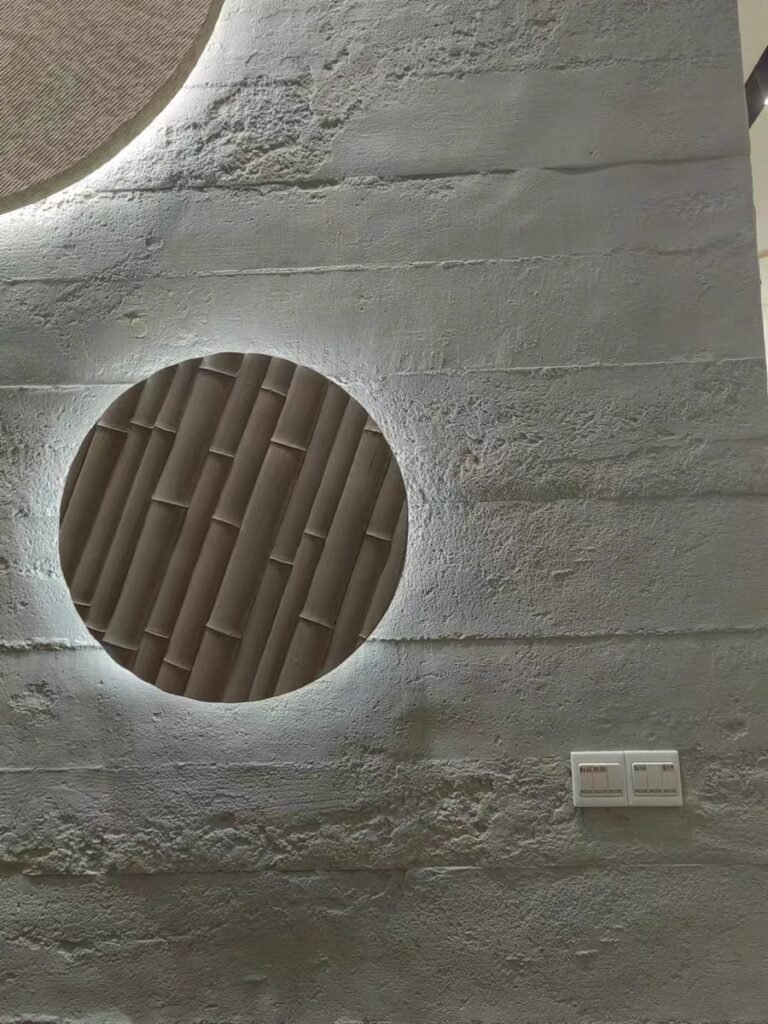
Cozy Rustic Tiny Home Retreats
Rustic designs emphasize natural materials, exposed structural elements, and warm textures to create an inviting, cabin-like atmosphere. This style is popular among owners who want their tiny home to feel grounded and connected to its natural surroundings. It’s about creating a sanctuary that celebrates traditional craftsmanship and organic forms.
- Flexible stone panels from our Naturals collection, particularly those with slate or travertine textures, add an authentic, earthy feel to both interiors and exteriors.
- 3D printed panels that replicate the look of reclaimed wood or weathered, stacked stone provide rustic charm without the weight penalty, a critical factor for mobile homes.
- The inherent durability of these materials ensures the home can withstand road travel and the elements while maintaining its natural aesthetic year after year.
The Hybrid Approach: Blending Styles
A growing number of tiny homes now blend modern efficiency with rustic warmth. This hybrid approach combines minimalist features with natural textures, offering a personalized and highly functional living space that feels both contemporary and comfortable. It allows for the best of both worlds: clean, efficient design punctuated by character and warmth.
- Use a modern, sleek composite panel for most walls but create a single feature wall behind a bed or in a living area with a textured, rustic-style stone panel.
- Combine minimalist, flat-front cabinetry with custom 3D printed panels that have a warm, tactile wood-grain finish for drawer fronts or backsplashes.
- This balanced design creates a unique aesthetic that leverages the clean installation benefits of modern materials with the visual appeal of natural textures.
الخاتمة
Using lightweight stone veneer allows tiny home builders to achieve a premium, natural aesthetic without exceeding critical GVWR limits. The material’s flexibility and durability are well-suited for mobile structures that face demanding road conditions. Its straightforward installation also helps builders manage project timelines and labor costs effectively.
To see how our flexible stone veneer can fit into your next tiny house build, contact our team to request a sample or discuss project-specific technical data. We can provide the information you need to ensure your design is both stylish and fully compliant.
الأسئلة المتداولة
Tiny house siding options?
A range of siding options are popular for tiny homes, balancing aesthetics, weight, and durability. Common choices include traditional wood siding like Cedar or Pine Tongue & Groove for a rustic look, engineered wood (e.g., LP SmartSide) for enhanced durability, and modern metal siding (steel or aluminum) for a low-maintenance, sleek finish. Vinyl and composite siding are also excellent, cost-effective options that offer durability with minimal upkeep.
Lightweight siding for tiny house on wheels?
For a tiny house on wheels (THOW), weight is the most critical factor. The top lightweight siding choices are Vinyl, which is exceptionally light and budget-friendly, and Aluminum or light-gauge Steel siding, which offers superior durability for travel at a very low weight. Thin-profile cedar or engineered wood can also be viable, but it’s essential to compare their specific weight per square foot to ensure you stay well below the trailer’s Gross Vehicle Weight Rating (GVWR).
Best exterior for tiny home?
The “best” exterior depends on your priorities. For mobility (THOWs), corrugated metal or vinyl is best due to its low weight and high durability. For stationary tiny homes where weight is less of a concern, fiber cement or engineered wood provides excellent longevity and weather resistance. For aesthetics, natural wood offers a classic, premium look but requires more maintenance. Ultimately, the best choice balances weight, budget, climate, and desired maintenance level.
Calculating tiny house weight?
A reliable rule of thumb for estimating the weight of a finished tiny house is 500–550 lbs per linear foot of trailer length. For a more precise calculation, create a spreadsheet itemizing the weight of all components: the trailer frame, framing materials, sheathing, roofing, siding, insulation, interior finishes, windows, doors, appliances, and fixtures. Always add a 10-15% contingency factor. The final, most accurate method is to take the completed home to a certified vehicle scale.
DIY tiny house stone veneer?
Yes, a DIY stone veneer is achievable using modern, lightweight manufactured stone products, not natural stone. These faux stone panels are significantly lighter and designed to be installed over standard sheathing with a weather-resistant barrier and metal lath. The process involves applying a mortar scratch coat, “buttering” the back of the stones with mortar, and pressing them in place. For a tiny house on wheels, use stone veneer sparingly as an accent to avoid adding excessive weight.

 Arabic
  English
  Spanish
  French
  German